Low emissivity glass helps to keep your warmth in in winter and the heat out in summer. Although there has been a distinct cost disadvantage with these products, this is lessening now due to mass production. Will your next set of windows be made with low-e glass? Read this to find out.
Using Low-E Glass to Reduce Solar Heating
Low-e glass is a commercially available, energy efficient glass that has a special coating that helps to control heat transfer to the building’s interior. Although these windows cost more than typical windows, they reduce the loss of energy as much as 30-50%. Low-e glass provides insulation from both heat and cold.
Low-e glass is coated with an ultra-thin layer of metal. This metallic layer not only allows seeing through, but also provides the actual insulation.
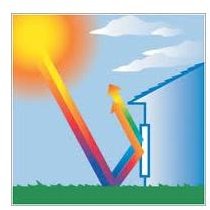
Image - WindowWorld.com - Low-e-summer.jpg
E is for Emissivity
The “E” in low-e stands for emissivity. Emissivity means the power of a surface to reflect heat by radiation. Or you can say that it means to give off or to throw off heat. Emissivity is the value of a material that is calculated as the ratio of heat emitted by that surface as compared to a black body (a thermally black surface). It is measured on a scale from 0 to 1. While a black body would have an emissivity value of 1, a perfect thermal reflector would have an emissivity value of 0.
Low-e glass is called this because it has a low rate of emission. If there is a heat source inside the house and you have low-e glass there, the heat will be bounced back. In winter, much of the heat given off by the appliances in your home will stay there if you have low-e glass.
Similarly, having low-e glass is wonderful for summers, too, as it does not allows solar heat to transmit into your home. This makes it beneficial to use low-e glass to reduce solar heating.
However, all low-e glasses are not equally efficient. They are differentiated on the basis of R-value. The R-value is the measure of resistance to heat loss. A material with higher R-value has better insulating properties.
Benefits of using Low-E glass
There are several benefits of using Low-E glass in your home.
- During winters, these low-e glasses reduce radiant heat transfer. The interior heat released from heaters is bounced back inside.
- The low-e glass is not only beneficial during winters, but during summers too. Due to the effect of this glass, outside summer heat is not transmitted inside to the cooler interiors.
- Low-e glass dramatically reduces transmission of damaging ultraviolet rays of sun. These results in protection of upholstery and carpeting that usually get faded due to these rays.
- It also results in lowering of the utility bills as you can keep your house at comfortable temperature using fewer heating and cooling BTU’s. Your air conditioner or furnace will need to work less often or as hard.
Furthermore, using low-e glass results in better comfort, large window areas, and a good appearance.
Resources
FM Windows and Doors - Low E-glass Replacement Windows
The Window Source - Solar Control Low-E Glass (Solarban 60 brand)
Certincoat - Low-E: Get the Facts
BobVila.com - Solar Heat Gain Control for Windows