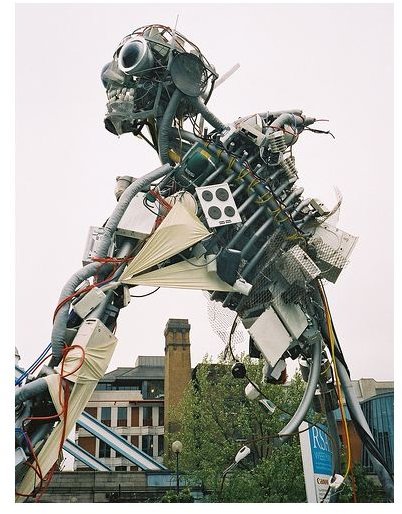
It is said, anything that can be plugged or runs with a battery can be recycled. Therefore, all electrical appliances whether at office or home can be put to further good use without throwing them away. Learn more about the recycled electrical equipment here.
Growing Electronic Waste
Our life in the modern world encompasses everything electronic. From toys to washing machines , hair dryers to refrigerators, telephones to vacuum cleaners, and lawn mowers to computers, everything we touch and use has become electrical.
The downfall of such a wired world has been the rapid pace with which waste electronic and electrical equipments (WEE) are discarded. A cell phone’s average life is one year. An old PC is replaced with a laptop, a plasma TV replaces the old television set. With technological advances, the rate at which electronics are thrown away has increased to such an extent that an average 4% of European municipal waste comes from electronics and more dangerously, the rate of this waste is increasing three times faster than any other waste.
It is Important to Recycle
There are a number of environmental problems that are created when electronic equipments are disposed along with regular waste. Some of these are:
The process of making new products requires huge amounts of natural resources. From elements like copper, aluminum, ferrous metals to use of energy for manufacturing and transportation, the annual usage of resources is in tones.
The environment is continuously damaged through mining, transportation, and water use during the manufacturing of new products.
Many chemicals used in the manufacture of equipment, like refrigerators, are toxic in nature, leading to health hazards for animals and humans.
Growing waste needs more waste disposal spaces, but landfill sites where electronic waste can be disposed of safely are increasingly rare.
Hence, instead of throwing these items away, a better option to extend the life of a product is by either donating it for reuse or recycling it. Whether it is a computer or a cell phone, any product that you use is a combination of many parts. Even if the product as a whole is no longer useful, the parts may still be in working condition, and therefore, can be retrieved and reused.
There are many recycling schemes by companies and governments that take any old electronic equipment and recycle it. There are also projects that collect goods from your home to be donated to other low income households or community centers. Recycled electrical equipment is definitely more useful and safer to the world than a continuous inflow of producing new products and throwing away the old ones.
What can be Recycled
All electronic and electrical equipments can be segregated into the following categories, depending on their functionality and the type of chemicals, or parts present in them. These are:
IT and Telecommunication related Equipments – These include computers, printers, laptops, notebooks, telephones, electronic typewriters, answering machines, calculators, fax machine, telex, copiers, and so forth.
Large Household Appliances – Air Conditioners, washing machines, refrigerators, clothes dryer, electric stove, microwave, and so forth.
Small Household Appliances – Vacuum cleaners, iron, toasters, grinders, coffee machines, hair dryers, massagers, electric knives, fryers, clocks, scales, and other small appliances.
Sound & Image related Equipments – Television, stereo, video recorder, camera, and audio amplifiers etc .
Toys & Sports Equipments – Battery operated toys, electric trains, car racing sets, video games, and other toy or sports items.
Electronic Tools – Drills, Sewing Machines, saws, welding machine, tools for nailing or screwing, garden mowers, and so forth.
Medical products - Radiotherapy equipment, dialysis equipment, ventilators, analysers, freezers, and other medical equipment for detecting, monitoring, or treating illness.
Lightening Equipments – Fluorescent lamps, halogen lamps, sodium lamps, high intensity discharge lamps, and the like.
When you donate your electronic waste to become recycled electrical equipment through recycling programs, they are usually dismantled to separate reusable and recyclable parts. Next, hazardous components are separated, and raw materials such as plastic, metal, and ferrous metals segregated. Finally, chemical and mechanical processes are employed to remove precious metals, hazardous chemicals, and raw materials, which can all be re-used, thus saving the depletion of natural resources.
Repair. Reuse. Recycle.
Electrical equipment waste is causing an immense burden on the environment because of their hazardous nature and the quantity that is being disposed every day. Take time to repair, reuse and recycle these items so that the life of the equipment extends and so does the life of Earth.
Reference
https://www.electronic-recycling.ie/what_we_recycling.html
https://www.wasteonline.org.uk/resources/InformationSheets/ElectricalElectronic.htm
Image Credit
Photo by polymer808 via cc/Flickr