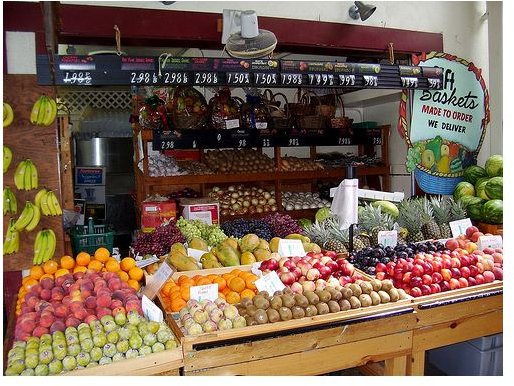
Believe it or not but the food that you buy and feed yourself every day has an environmental consequence. Would you change your diet if you knew it was for a good cause other than your health? Learn about how food purchases affect your carbon footprint.
What Is Your Carbon Footprint?
Many of your daily activities result in carbon dioxide emissions, thereby increasing your carbon footprint . For example, driving your car to run errands or to pick up your kids from extracurricular activities is increasing your carbon footprint. Driving your car for leisure or for necessity as well as traveling on an airplane or other mode of transportation for business or vacation purposes are more direct examples on how your carbon footprint is affected. However, there are everyday activities that still contribute to increasing your personal environmental impact that you might not be aware of, such as purchasing conventional textiles, washing laundry in hot instead of cold water, and throwing away items which could otherwise be remade into eco-friendly products.
Food purchases do indirectly affect your carbon footprint. If you become more conscious of your grocery purchases, you can decrease your environmental impact. At this point, you’re probably wondering where you or even your household stands with regard to a carbon footprint. An easy way to determine where you are now and what you need to change is to consult a carbon footprint calculator. You can find calculators online . By simply answering a set of questions to determine how much you travel, what type of food you eat, what types of products you buy, where you buy your products, etc. you can learn what your present household or individual impact on the environment is, and more importantly, how to lessen it.
How Important Are Your Food Choices?
Before beef hits the grocery store 
In an effort to combat your carbon footprint, one step is to reduce or even eliminate your meat intake. Then, the next step is to buy locally grown, organic food. Not only will this decrease your environmental impact, but it will also be better for your health since you won’t be consuming pesticide ridden foods .
Locating Farmer’s Markets
Fortunately, there are online resources such as the Local Harvest or U.S. Department of Agriculture, which can help you locate farmer’s markets in your area. At these markets, you will be able to find locally grown foods and possibly organic crops. You might already know of a roadside stand or neighborhood farm that does this. The best part about these markets is that you’re able to purchase fresh produce at a potentially lower rate than if you were to buy it at a grocery store.
Now even if you can’t find a farmer’s market close enough to you, keep an open mind when shopping at your grocery store. Sometimes they sell locally grown crops, and you will know from the sign or the label where the produce came from. It’s also worthwhile to check into coupons for organic brands and products to save money.
Knowing how food purchases affect your carbon footprint is an important first step to altering your lifestyle. Changing your grocery shopping habits and meal choices can be challenging, but when you know that you’re making the right decision for the planet and your body, the transition is not that difficult.
Sources Used
- The Nature Conservancy - Carbon Footprint Calculator: https://www.nature.org/initiatives/climatechange/calculator/
- Local Harvest - Farmer’s Markets: https://www.localharvest.org/
- USDA - Agricultural Marketing Services: https://www.ams.usda.gov/AMSv1.0/FARMERSMARKETS
- NY Times - “One Man’s 3-year Experience Eating Organic Food - All the Time”: https://www.nytimes.com/2008/12/04/health/04iht-snparker.1.18329349.html
- MSNBC - “New Reasons for Eating Organic?”: https://www.msnbc.msn.com/id/3076638/
- USA Today - “Eating can be energy-efficient, too”: https://www.usatoday.com/news/nation/environment/2009-04-21-carbon-diet _N.htm