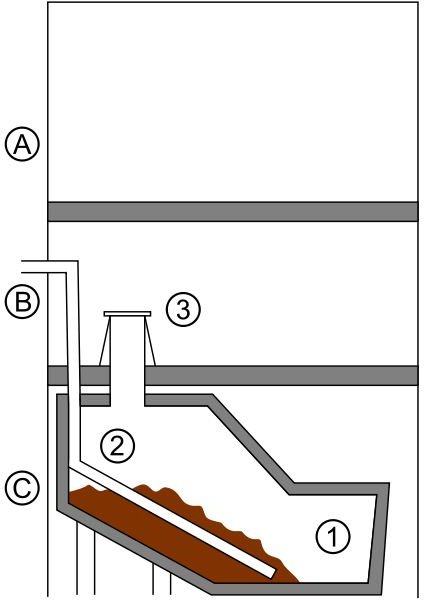
A composting toilet is an aerobic processing system whereas most waste water systems are anaerobic. This is a faster process which uses less water and is also kinder to the environment. It also protects areas from discharge of effluents. Various types of such toilets are available.
Toilets which use a limited amount of water and treat the wastes on site are known as composting toilets. Their end product is high nutrient valuable compost. Composting toilets are chosen as an alternative to septic systems or wastewater treatment plants. They reduce the need for water to flush toilets and thus place lighter loads on this fast diminishing resource in the world. Composting toilets also reduce the discharge of nutrients or pathogens into areas that are environmentally sensitive. These toilets capture all the nutrients from human excreta and the solid end product is a valuable soil amendment that can replace fertilizer.
Typical Layout of a Composting Toilet
- A. Second floor
- B. First floor
- C. Ground floor
- 1. Humus compartment
- 2. Ventilation pipe
- 3. Water closet
Theory of Operation
The aerobic process that works in composting toilets is the same process that is prevalent on forest floors where wildlife droppings and plant matter decompose in the presence of air. Composting toilets provide enclosed environments for this natural aerobic process by the use of air injection and heating. Other aids to this process are in the form of air baffles and mixing tongs to ensure full decomposition of the matter being treated. The process can be further hastened with the addition of macroorganisms or worms that help the process of decomposition.
Composting toilets have almost no waste and all end products are usable. The liquid end product is a valuable fertilizer or can be evaporated if local laws do not permit their use. The solid end product, or humus, is full of nutrients that can be safely used for plants. Health authorities all over the world do not permit composting toilets where sewerage systems are available probably because of concerns about the maintenance of such systems. Overloaded composting toilets can get clogged up and need to be used only to the capacity that they are designed for. Composting toilets also produce fewer smells than conventional toilets if used to within their design capacity.
Advantages of Composting Toilets
One of the main advantages of using composting toilets is the reduction in the use of water. This can be so marked that community sewerage charges are sometimes waived for houses with these toilets. One can also use kitchen waste and garden trimmings to add to the compost thus also reducing the need for garbage collection. The end product is a valuable fertilizer which can be used by the house owner or even marketed as such.
An entire community using composting toilets would have no sewerage charges and the allied sewage pipe installation and maintenance costs. The savings in water would be huge which is a decidedly environmentally friendly position. The recycling of kitchen and garden waste could reduce garbage collection charges, thus reducing municipal and civic charges.
The widespread use of composting toilets to treat waste water and sewage can minimize water usage and storage. This in turn would reduce the requirements of storage. Less building activity is a benefit to the environment. The use of fertilizers could be reduced and that much of manufacturing activity which uses resources from the environment reduced.
Types of Composting Toilets
The process factors in all composting toilets are the same and use rapid aerobic composting at high temperatures of 40 to 60 degrees Centigrade which oxidizes and breaks down the waste.
A remote type system would have a separate drain at the bottom for removal of excess liquid. This control on moisture level helps the aerobic process, which works ideally at 50 percent moisture. Increased moisture can cause the decomposition to become an anaerobic process and create undesirable smells. The separated liquid is diverted to a gray water system.
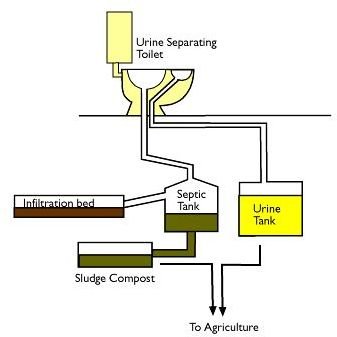
A dehydration toilet typically diverts urine so that the moisture content is controlled. Most composting toilets would have mechanisms to promote air movement which is so necessary for the aerobic process. Some toilets would also have air baffles or mechanical means of stirring the decomposing material so that the air permeates through the entire sludge.
Various manufacturers offer systems that can have varying periods for removal of the finished product. This can vary from a few weeks to a few months depending on the capacity and frequency of use.
Costs on composting toilets can be much lower than setting up comparative septic systems to treat sewage. The long run savings from water usage and other charges can further make the installation of composting toilets a very economical proposition.
Image Sources
https://commons.wikimedia.org/wiki/File:Clivus _Multrum_Composting_toilet.svg