Do you dispose unused and expired prescription medicines responsibly? Well, the best way to discard prescription medicine properly is to follow the guidelines laid down by the FDA and ONDCP. Read on to find ways to dispose of medications safely.
Do You Dispose Your Expired or Unused Prescription Medicines Properly?
Your medicine cabinet may have various prescription medicines stuffed inside. Most probably, almost half of the prescription drugs are either expired or unused. Troubled by the overstuffed medicine cabinet, you think of disposing all expired and unused prescription drugs. You dump those life-saving drugs into a dustbin or flush them down the toilet. Do you think it is the best way to discard prescription medicine? No, because dumping medicine in waste bins or flushing them down the toilet is a very irresponsible way to dispose them. These prescription medicines end up in small traces in community drinking water supplies, rivers and lakes, which can be very harmful to the ecosystem. Hence, it is very important to take certain precautions when discarding prescription medicines.
Why Some Precautions are Needed to Dispose Prescription Medicines Safely?
According to a recent investigation conducted by the Associated Press, traces of a variety of prescription drugs, including antibiotics, mood stabilizers and sex hormones have been found in community drinking water supplies of at least 41 million Americans. Although the concentrations of these medicines are negligible, environmental researchers and scientists are worried at the presence of prescription drugs as well as over-the-counter drugs like Ibuprofen and acetaminophen. Traces of these medicines in our drinking water supplies can lead to long-term health consequences to humans.
The main reasons for the substantial amount of prescription drugs found in water systems is the improper disposal of medicines by people. Most medicines are flushed down the toilet. Before the wastewater is discharged into the reservoirs, it undergoes treatment. Some of the water is cleansed again at special drinking water treatment plants and then supplied to consumers. However, the drug residue is not removed completely, despite of the cleansing process. Although, the level of traces of drugs is very low, researchers get worried about the persistent exposure to low levels of pharmaceuticals, which can severely affect human health.
Best Way to Discard Prescription Medicines Properly
Proper disposal of unused and expired prescribed medicines is very important to avoid mixing of drugs with drinking water in the future. The U.S. Food and Drug Administration (FDA), along with the National Drug Control Policy (ONDCP), issued certain norms for drug disposal. The federal government also has some guidelines for disposing prescription medicines to protect the U.S. water sources. The consumer guidelines for safe disposal of prescription drugs developed by the federal government, FDA and ONDCP are summarized as follows:
-
Avoid flushing expired or unused prescription drugs down the toilet or sink unless specifically mentioned on the instructions label.
-
Enroll for a state-recycling program that accepts prescription medicines. It is, by far, the best way to discard prescription medicine properly. These programs only accept unused, sealed prescription medicines.
Advertisement -
Community drug take-back programs are also excellent programs that allow people to bring unused, sealed prescription medicines in a central location for better disposal. To take advantage of such programs, you can call your county or city government’s recycling services.
-
Dump all your expired prescription medicines in a sealable bag to avoid accidental leaking out of your garbage can.
Advertisement -
If no specific instructions are given, then you can throw the prescription medicines in the trash can. But, make sure you remove them from the containers and mix them with undesirable refuse, such as cat litter or coffee grinds. You can then dump them in a sealable bag and then throw in a trash can. You will have to take this additional step to avoid accidental consumption by pets.
-
You can call your local health department, hospital or a local pharmacy to dispose your unwanted medicines safely. This is another best way to discard prescription medicine.
Advertisement
References
https://www.fda.gov/ForConsumers/ConsumerUpdates/ucm101653.htm
https://www.whitehousedrugpolicy.gov/publications/pdf/prescrip _disposal.pdf
https://www.msnbc.msn.com/id/23503485
Image References:
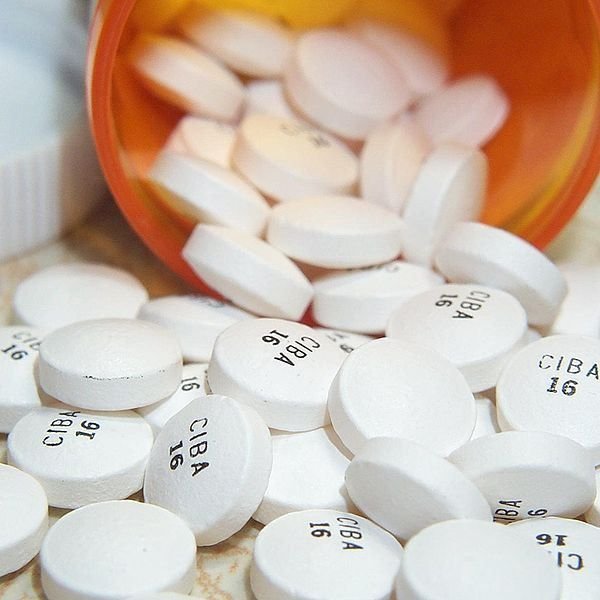
Image of a prescription drug (Ritalin) for illustrative purposes. Author: Calvero, Creative Commons Attribution ShareAlike 3.0/ GNU Free Documentation License_, Version 1.2/Wikipedia_