Worn vehicle tires are notoriously difficult to dispose of due to the high numbers being discarded. Many states have banned tires from landfill sites. However, there are many applications for recycled tires. Among these are the manufacture of residential floors which are becoming more popular.
Introduction to Recycling Tires for Rubber Residential Floors
Vehicle tires can be recycled or reused in many ways, one such method is to recycle them for use as residential flooring. This is carried out at a specialist tire recycling facility where the tire is shredded and ground into small pieces, before being further processed to produce the liquid material used to lay the floor.
This is another article on recycling materials; in particular vehicle tires. We begin by examining the make-up of a typical tire and the components we need to extract before the rubber can be used to produce the flooring material.
Components of a Vehicle Tire
The tire is made up of numerous components. Listed below are the major ones with average percentages.
- Rubber and carbon black - 58%
- Chemicals - less than 1%
- Steel wire - 41%
- Polyester – less than 1%
From the above list, the rubber, polyester and carbon black are the components we need to extract for processing into rubber floor material, as is explained in the next section.
Production of Rubber Flooring From Recycled Tires
The tires are recycled for use as flooring at a specialist plant, where they undergo shredding and grinding into small particles known as rubber crumb . This crumb can either be bagged and dispatched to another company specializing in rubber processing or they can be processed onsite.
We shall presume the rubber crumb is to be processed onsite as part of the recycling process and a overview of the process from receiving the tires to the end product follows.
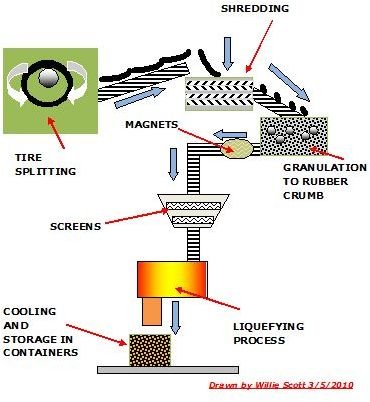
The tires are fed whole onto a manually or automated shredding machine which tears the tires into more usable pieces, which are conveyed to a rotating cutter machine.
From here, the rubber pieces are transferred to a granulator that grinds them into rubber crumb. These are then conveyed under an electromagnet, removing the pieces of steel reinforcing wire. The crumb is then passed through a set of screens which graduates them into different sizes, while air is injected removing the lighter nylon and small fluff pieces.
The crumb is then ready for melting. This is achieved by heating crumb in a steel cauldron, the heat being applied to the outside of the cauldron. This liquid rubber can then be poured into non-stick containers and allowed to cool, ready for reheating and laying as a rubber floor in a residential property.
Laying of Rubber Floor
The existing floor covering is removed to expose the original wooden floorboards or concrete floor and these surfaces require to be sanded and washed.
The solid rubber is removed from the containers and reheated in a portable pot to liquefy it again. Dyes can be added at this time, depending on the choice of color required. The liquid rubber is then pumped from the heating pot onto the floor and spread evenly, allowing the liquid to find its own level.
Once solidified, the rubber floor can then be buffed up to give a superior non-slip surface, or patterns can be cut into the floor using grinding tools.
Either way, the floor will last a lifetime, adding soundproofing and insulating properties. This would be particularly beneficial in apartments, where noise from upstairs apartment floors is always prevalent and is a great source of annoyance to the resident below.
Summary
Recycled tire flooring for residential use can be produced from the small pieces of processed tires known as rubber crumb.
The crumb is heated and converted to liquid rubber before being poured into containers ready for use as required.
Before laying the rubber floor, the old covering is removed and the surface on which the rubber floor is to be applied is thoroughly cleaned.
The rubber is then re-melted in a portable heater before being pumped onto the floor surface.
Once dried and solidified, the floor can be buffed up or sculptured to give a neat look and durable quality.
Sketch of Recycling Process and Example of Floors Made of Recycled Tires for Residential Use.

Internet Sites Visited
https://www.shorefloors.co.uk/
This post is part of the series: Recycled Tires
Here we will learn where we can recycle tires and some suggestions for uses of recycled tires including those for use in your home or business, such as in flooring.