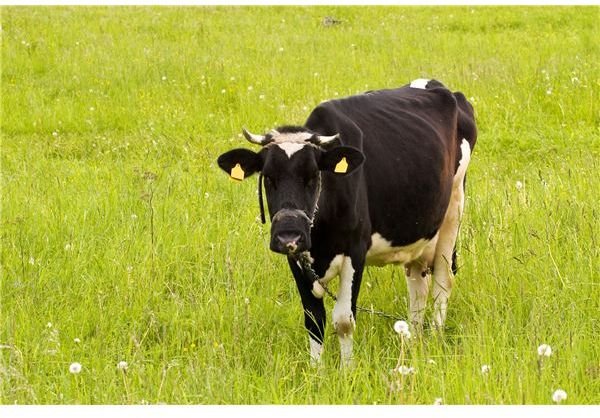
Cultured beef is created from the muscle tissues of a healthy cow and grown in the lab. Food critics have tried it, and found the flavor to be somewhat lacking. However, the experiment continues, and some think it’s just a matter of time until it turns up in a supermarket near you. Would you try it?
A world without cow-farms may be here sooner than you think. Ongoing research is providing promising results for faux-beef, and this beef could change the way that vegetarians and meat-eaters think about burgers. Cultured beef, or beef that is scientifically grown in a test-tube, could be the salvation for an ever-populating and ever-hungry planet.
What Is It?
To create cultured beef, scientists must first extract muscle cells from a healthy cow. After this harmless process, the cells are then cultured and allowed to grow into muscle tissue. After this process, the meat becomes nearly identical in structure to natural beef.
Why Create Cultured Beef?
In short, humans are growing faster than cows. In 40 years, there will be a nearly 60% increase in the demand for beef, and the current cultivating methods are not only unsustainable, they are harmful for the environment as well. If cultured beef can be as tasty, nutritious, and cheap as traditional beef, then it could help to satisfy the world’s growing hunger. However, the process may not be as cheap as once thought, and the current results leave the taste-buds quite unhappy.
The Downsides of Cultured Beef
The biggest problem with cultured beef is its current pricetag. At nearly $300,000, this is one expensive burger. The burger in question was prepared by a five-star chef before being eaten by a London-based food critic for an initial taste-testing trial. While the price alone makes this burger hard to swallow, its taste also left something to be desired.
Without any natural fat or blood, the burger originally had a cake-like texture. The chef added beet juice and safron to help simulate blood and grisle, yet the taste was still lacking. As the brave taster said, “it’s somewhere on the continuum between a Boca burger and a McDonald’s burger.” In other words, it was not worth $300,000.
While these downsides may be initially unappetizing, it must be remembered that cultured beef is still in its infancy. As the technology and competition grows, it is possible that the cultured burger will be just as cheap and tasty as natural ones are today. However, as with all new things, it may be best to be a late adapater to the cultured beef market and let others try it first. Should this ever become the norm, you can expect to see real meat become a luxury item. An all-natural hamburger selling alongside Ferraris behind glass windows; who knows? With the current price and taste aside, the promise of cultured beef helping to curb worldwide hunger while also helping the environment is a great thing, and the future is sure to hold more exciting updates.
References
- The $300,000 Lab-Grown Hamburger Is Not Very Tasty http://www.businessinsider.com/cultured-beef-taste-test-2013-8
- What is Cultured Beed? http://culturedbeef.net/what-is-it/