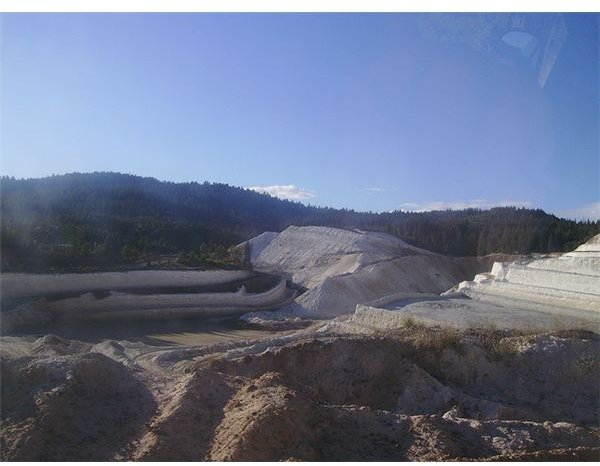
Diatomaceous earth has many uses for animals and humans alike. From controlling pests and odors to polishing metal and teeth. And that’s just the start of it.
When algae and other single-celled water plants fossilize, they turn into a porous, chalky sedimentary rock called diatomaceous earth. Composed mostly of silicon and calcium with other metal oxides and trace minerals, diatomaceous earth provides a wealth of beneficial uses.
Pest Control
A powerful pesticide, diatomaceous earth (or DE) controls ants, aphids, bedbugs, cockroaches, centipedes, earwigs, flea beetles, mites, scorpions, slugs, snails, and thrips. The way that diatomaceous earth kills insects is by absorbing the waxy layer on the surface of their skin, causing it to dry out. It also ruptures insect’s cuticles, causing cell sap leakage. Best of all, unlike with other pesticides, the insects and other pests DE destroys never develop a resistance to it. Another of the most common diatomaceous earth uses is as a medium for many fungicides and herbicides.
To use diatomaceous earth as a pesticide, you can hide it under rocks, in wood piles and other spots to control pests in your yard, or you can blend it with water (1 cup DE per gallon of water) and spray a barrier of it around your house to keep pests out. Note that if you take this latter approach, the mixture will only work once it’s dried and it may leave a visible white ring wherever applied.
DE Kills Parasites
Many dog-owners add Food Grade diatomaceous earth to their pet’s food for deworming and parasite cleansing, but humans can ingest it as well for similar purposes. Drinking water or any other beverage with 1-2 tablespoons of Food Grade DE mixed in can rid the human body of tapeworms. Just be sure to let the DE settle to the bottom of the glass before drinking and only drink the liquid down to the residue. You can even add water on top of the existing DE deposit on the bottom of the glass and sufficient silica will still eke out into the liquid to be an effective parasite killer and colon cleanser. While harmless for the human intestines, intestinal parasites either crawl through the DE and dehydrate or consume it themselves and get their little innards torn to bits.
Used as Filters
Sugars and syrups are often clarified using diatomaceous earth as a filter. Since that application was first discovered, DE is now widely used for nearly all kinds of filtering processes, including for making oils, antibiotics, chemicals, solvents, both nonalcoholic and alcoholic beverages and - yes - swimming pools.
Insulating Properties
Diatomaceous earth is used for insulating blast furnaces, boilers and other appliances that maintain temperatures above 1,000 degrees Fahrenheit (525 degrees Celsius). As insulation, DE proves to be more efficient than magnesia or even asbestos, since it’s better at resisting shrinkage and doesn’t fail at super-hot temperatures. In addition to thermal insulation, diatomaceous earth also makes great sound insulation.
Other Uses
One of the oldest ways diatomaceous earth is used, is as a mild abrasive in toothpastes and metal polishes. DE is often used as an extender or filler in the process of making paint, paper, bricks, ceramics, tiles, linoleum, detergent, soap and plastic. Food grade DE can be found in baking flour and cake mixes, as well as used to protect stored grain. Food grade DE also comes as a health supplement for humans and in livestock feed. DE is used as an odor eliminator in kitty litter and horse bedding. In fact, under the name “Kieselguhr”, DE is even used in making explosives.
Precautions When Handling & Ingesting DE
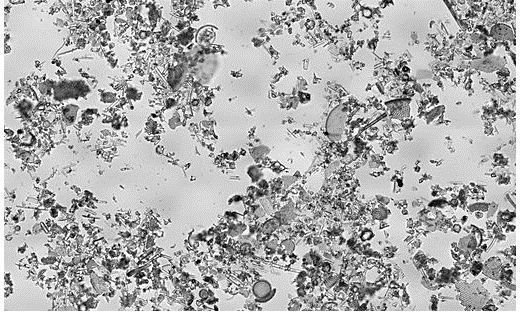
Under certain conditions, diatomaceous earth can be as harmful to humans as to pests. When inhaled, it can irritate mucus membranes in the mouth and nose and damage the eyes and lungs. Therefore, always wear gloves and a dust mask whenever working with this substance.
Also, be sure only to use food grade diatomaceous earth, whenever feeding DE to humans or animals. The DE used for swimming pools is chemically heated and could be deadly if taken internally.
Resources/References
“Diatomaceous Earth Effective Against Many Pests”
Britannica Online Encyclopedia: Diatomaceous Earth (Mineralogy), https://www.britannica.com/EBchecked/topic/161843/diatomaceous-earth
Human Parasite Symptoms: Diatomaceous Earth Humans And Parasites, https://www.humanparasitesymptoms.com/human-tapeworm/diatomaceous-earth-humans-parasites/
Image Credits
Diatomaceous Earth , Bright Field; Zephyris (Wikimedia Commons)
Mining Diatomaceous Earth ; AlishaV (Flickr)