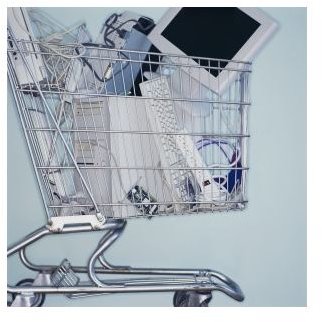
If you want to be green and would like to recycle your old printer rather than sending it to the landfill, read on. Recycling old printers is very convenient nowadays, thanks to the awareness created by manufacturers and environment specialists.
Recycling Printers
When your printer needs replacing, it can actually become a liability rather than an asset. If you are able to sell it, hats off. However, if not, you may want to consider recycling or donating it. This is because storing unneeded printers actually costs you. Apart from the potential hazards, they take up valuable space in your home.
With so many new and better printers coming in, Americans continually replace old models. Unfortunately, this trend is growing at a very fast pace. As a result, electronics have become one of the fastest growing waste streams of our trash. According to Greenpeace, almost 20 to 50 million tons of electronic waste is discarded globally every year. Moreover, according to their statistics e-waste makes up 5 per cent of all municipal solid waste.
Most printer manufacturers offer recycling and trade-in programs for old equipment. Other options for printer recycling include donating to organizations or local schools. Whatever you decide to do with your printer, do not throw it out in the trash. Trashing your old printer sends it to the landfill for it to decompose over many years.
Donating the Printer
The first option to consider is donating the old printer. If your old printer can be of use to anyone, there is nothing like it. Extending the life of printers and using them for a longer period of time can benefit both the environment and the society. Doing so can allow others (who cannot afford them) to own these products. Many organizations accept printer donations. Before donating, ensure that the printer is usable. This is because most organizations that accept donations have no resources to repair the hardware.
Recycling the Printer
Recycling old printers means lower net carbon emissions and lower content of toxins in the water supply. Most printers contain lead, brominated fire retardants, cadmium, and plastic that are hazardous to life. Lead can cause damage to the central and peripheral nervous systems, kidneys, and blood system.
Recycling appropriately also leads to conservation of valuable natural resources that can be recovered from these products. Precious metals like gold are used in many electronic components. Recycling these resources minimize the need to mine the earth for more natural resources.
When recycling your printer, remember to follow these options.
- Manufacturer’s Trade-in: Many manufacturers have trade-in programs that allow owners to trade-in their used printers for newer ones with a discounted price.
- Manufacturer’s return-for-cash program: Many manufacturers have return-for-cash programs that allow owners to trade-in their used printers for cash.
- Manufacturer’s disposal boxes: Many manufacturers have disposal boxes in their showrooms. Owners of old printers can pack them in proper packaging and dispose them at the manufacturer’s site.
- Recycle toner and ink cartridges: This is because these peripherals contain toxic materials. Secondly, these cartridges can be refilled and reused. Plastic and metals are recovered from these products to be reused in new products. Most manufacturers can be asked to send a postage-paid envelope in which the cartridge or toner can be sent.