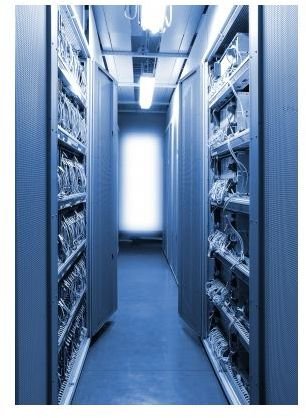
Server consolidation provides a number of benefits to companies wishing to become more green or save the money spent in their data centers. How does a consolidation project through virtualization save energy? How does it reduce the total cost of ownership?
What is Virtualization?
Virtualization is the concept of several servers in their own containers being hosted on a larger physical system. Each guest operating system accesses and uses the hardware of the host as if it were the only server present but in reality the host is intercepting and handling the requests of all of the virtual machines that are present.
Hosts are called hypervisors. Hypervisors represent the layer of software or technology that sits between the physical hardware and the guest operating systems. Each host must have sufficient hardware and resources to support the demands of numerous, simultaneous requests from the virtual machines being hosted.
VMware and Microsoft represent two of the major vendors who make and distribute virtualization technology. Several open-source virtualization applications also exist in the marketplace today.
Server Consolidation
One of the primary drivers for companies that virtualize their physical servers is consolidation. Where physical servers each have their own power supply, network connection, hardware and even physical space in a data center, virtual servers do not. In the space of one physical system, a hypervisor can host dozens, even hundreds of virtual servers. This allows companies to reduce the overall size of their data centers or to dedicate the space to other projects and activities.
Deployment of new servers is also enhanced as administrators no longer have to physically take the shipment of a server, place it and then install an operating system and applications. With the click of a button, a new virtual machine with an operating system can be deployed in a matter of minutes.
Each vendor provides automation tools to make the daily operations of virtualized servers easier. This allows companies to scale to higher numbers of systems at less cost.
Saving Money with Server Consolidation
As the virtualization of servers reduces the number of physical servers in the data center, the results ultimately reduce costs for the organization. Companies no longer have to consider the life cycle of a physical system. Physical servers age and eventually need replacing. Virtualization reduces the costs of purchasing and deploying servers; companies can increase the number of servers each system administrator manages without negatively impacting productivity. Higher server-to-admin ratios mean that more projects that can add to the bottom line can be run.
With each application residing on its own virtual server, there is less impact on other systems when one fails. This, coupled with server standardization, lowers the costs of troubleshooting and server replacement. VMware’s studies peg the the savings at $3,000 per year per server virtualized.
Disaster recovery becomes cheaper as the major virtualization vendors support high availability and fail-over architectures that allow for virtual servers to pick up the load when other systems fail. VMware provides a solution called vMotion which moves guest systems to other hosts in the event of a failure. Companies no longer need to have an entire data center dedicated just to disaster recovery as a result.
Save Energy with Virtualization
A major cost-saving point also saves energy as companies begin to virtualize their data centers. The reduction in physical servers lowers the amount of electricity used in their operations. The amount of heat generated by these systems also sees significant reduction. This allows the company to reduce the costs of cooling the data center.
According to VMware an organization can lower energy costs by up to 80 percent. This reduces the impact on the environment at a rate of four tons of carbon dioxide per server per year. Additionally, where old servers would wind up in landfills with their toxic chemicals and elements, virtualization reduces the number of systems that need to be replaced.
The Green Citizen website indicates that old computers are a source of mercury, lead, cadmium, barium, litium and other heavy metals. It cites a study by Carnegie Mellon that says there are over 70 million computers in US landfills, and these contribute between two and five percent of the solid waste in them. Eventually the chemicals leach from these system and wind up in local water tables.
Virtualization lowers the cost of removing old servers and computers. Companies no longer have to pay to have systems properly recycled to avoid contaminating landfills and ground water.
The Hazards of Consolidation
While server consolidation through virtualization does have its benefits, we would be remiss to ignore or discuss the potential disadvantages. One major concern with consolidating multiple servers onto one hypervisor is the fact that if the hardware on the host failed before a proper disaster recovery effort could be made, all the guest systems on that host could be lost. This represents a serious, single point of failure for any organization.
Additionally, increasing the number of servers a single administrator must manage increases job complexity. Administrators must learn to balance the workloads of each virtual server to ensure that no single system consumes resources to the point that the performance of other guest servers is impacted. They must also ensure that the hypervisor itself does not become a performance bottleneck.
References
- VMware, Inc., Energy Efficiency, http://www.vmware.com/solutions/green-it/
- Microsoft, Server Consolidation Explained, http://www.directionsonmicrosoft.com/sample/DOMIS/research/2004/07jul/0704i_sb.htm
- Image Credit: twobee / FreeDigitalPhotos.net
- VMware, Inc. Server Consolidation, http://www.vmware.com/solutions/consolidation/consolidate.html
- Golden, Bernard, Virtualization for Dummies, Wiley, Publishing, Inc., 2008
- Green Citizen, Harmful Effects Caused by Improper Computer and Electronic Waste Recycling, http://www.greencitizen.com/harmful_effects.php
- Muehlberger, Bryan, Top 5 benefits of server virtualization, http://www.itworld.com/nls_windowsserver050411