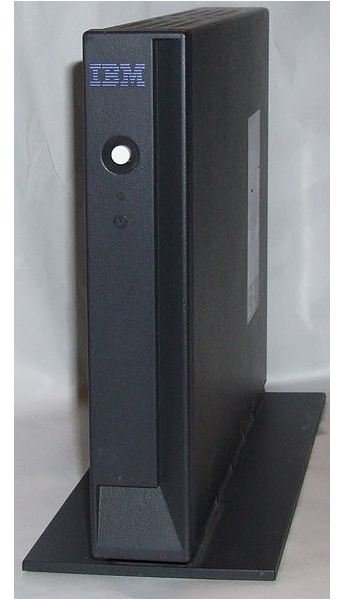
When the question, “What Is a Thin Client?” is asked, it becomes evident that thin clients are still relatively uncommon. Still, thin client technology is vital to building a green, sustainable IT industry because of its energy efficiency and other environmental benefits.
Introducing the Thin Client
Hewlett Packard presents an elementary definition of what that company considers a thin client: it is an access device on a network
where most processing is done on a server. From such a basic definition, however, thin clients can be further characterized by their limited I/O options, their operating systems, and amount of local storage. When thin clients are related to green computing, other considerations such as power usage come into play.
Because thin clients are basically stripped down computers , they can require a better than average skill set to configure and administer and many users complain that they are too restrictive. However, because applications, data, user profiles, and sometimes the operating system itself resides on a centralized server, the overall cost of ownership of a thin client is less than that of a conventional desktop or laptop PC. Additionally, businesses can often achieve higher security standards with thin client computing because of their lack of local I/O and because lost or stolen units carry with them either little or no corporate data and their network access can easily be turned off by administrators.
Modern thin client computers and their operating systems are very fast , addressing one of the complaints that may have given thin client computing a slow start. In fact, many thin clients operate so well that their performance can hardly be distinguished from that of a traditional workstation.
Although maintenance, security and cost issues have a significant impact on the growing popularity of thin client computing, another factor probably has equal influence as all the others combined: green computing.
Image Credit: Wikimedia Commons/Craig Spurrier
Green Computing with Thin Clients
The modern emphasis on environmentally responsible business practices calls on companies everywhere to reduce their carbon footprint and overall environmental impact. Because of this, attention is given to the nature and amount of waste disposed into landfills, the amount of electricity and gas consumed, and the amount of pollution generated by commuting workers. Coincidentally, thin clients can help with virtually every aspect of environmental responsibility, making them high demand items in the race to save the planet.
Energy
The energy savings associated with the thin client is a substantial benefit. According to TechRepublic, the average business PC consumes anywhere between 70 and 120 watts of power while the typical thin client uses just 10 to 20 watts. That power savings can shave more than $50 per year from every workstation in use, giving businesses a huge opportunity to save money.
But money is not the end of the benefit: less electricity used means less coal, oil or gas being burned to supply that electricity, Taking tons of CO2 and other pollutants out of the air. With many corporations using hundreds or thousands of computers, the move to thin client computing could literally change the world.
Materials
Because thin clients use less materials than full scale PCs, that means fewer resources are needed to make them, reducing the drain on the earth’s resources and eliminating the polluting byproducts of manufacturing.
When the thin client has reached the end of its life cycle, there’s not as much potentially toxic hardware to dispose of, further relieving the environment and protecting future generations from the harmful contaminants that can seep into water sources and farmland.
Conclusion
What is thin client computing? It is nothing else but the key to helping businesses save money and the environment through the efficient use of IT resources.
References
“When to consider a thin client solution?",https://www.hp.com/sbso/solutions/pc_expertise/article/thinclients_consider.html
“The outlook for thin clients in 2010 and beyond”, https://www.techrepublic.com/blog/networking/the-outlook-for-thin-clients-in-2010-and-beyond/2408