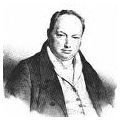
Richard Roberts made tools capable of making other tools. This technology was crucial to the development of industry in Europe and North America. Read more about the life of this notable English engineer in this article.
Richard Roberts
Chidhood
Born in the late 18th century on the border of England and Wales in a town called Llanymynech, Richard Roberts was the son of a shoemaker who was also a tollgate keeper. Details of Roberts’ schooling are sketchy, but it is believed that the local parish priest was responsible for his early education – very typical for that period. As a young teen, Roberts worked with a boatman on a canal and worked at limestone quarries. Later he also underwent training as a road surveyor.
Work experience
When he was a young adult, Roberts apprenticed at Bradley Ironworks in Staffordshire and gained valuable skills for his future profession. He also learned how to repair mill work. In few years, the Napoleonic Wars began and, Richard spent several years avoiding military service, first by moving to Liverpool, then Manchester, Salford, and London. He found work in some of these locations, working as a turner and a toolmaker. In London he began an important phase of his career by working with – and alongside - an engineer named Henry Maudslay as a fitter and turner.
Valuable Technology
Maudslay’s training was critical to Roberts’ success. Maudslay trained a generation of men in machine tool building during this time, as the Industrial Revolution accelerated. Technology generally made manual labor easier, or transformed manual labor into machine-based manufacturing, beginning with the textile industry. Canals, like the one Roberts worked on as a teenager, were crucial to the expansion of manufacturing, because it would be many years before steam locomotives were in common use.
Another important development was the making of all-metal machine tools, which allowed the manufacture of the machines that powered industry. Once this happened, Western Europe and North America rapidly followed with their own industrial production capabilities. And Richard Roberts have definitely contributed to this development by applying his experience and knowledge.
Own business and more
After Napoleon’s defeat at Waterloo, Richard was not subject to possible conscription, so he returned to Manchester and started a business. Later he expanded his shop to include lathe and tool making and it can be said that without his work, precision machining would not have taken off as it did in the early 19th century. Read more about Richard Roberts in the second part of his biography.
Read More
The Biography of Richard Roberts - Expanded Machine Works and Locomotives - Though considered to be the most important mechanical engineer in Britain during the 19th century, Richard Roberts remains relatively unknown despite his contributions to the Industrial Revolution. Without his work, precision machining would not have taken off as it did in the early 19th century.
References
https://www.neo-tech.com/businessmen/part6.html
https://makingthemodernworld.org/stories/manufacture_by_machine/03.ST.01/?scene=6&tv=true
https:// www.mosi.org.uk/media/33871700/manchestermachinetools.pdf
https://en.wikipedia.org/wiki/Richard_Roberts_(engineer)
https://en.wikipedia.org/wiki/Industrial_revolution