Need a “canned” email message you can send at a moment’s notice? Learn how to create a Microsoft Outlook template for your commonly used emails and how to find the template when you need it.
Create and Send an Email Template in Outlook 2003
Start Outlook and go to the Tools menu. Click on Options and click the Mail Format tab of the dialog box. Clear the check box next to Use Microsoft Office Word 2003 to Edit Email Messages check box and click OK.
Go to the File menu, point to New and select Mail Message. A new email message window opens. Type in any of the information you want in your Microsoft Outlook template, such as the recipients, a subject and the body of the email. You can even personalize the font and make other customizations to the message.
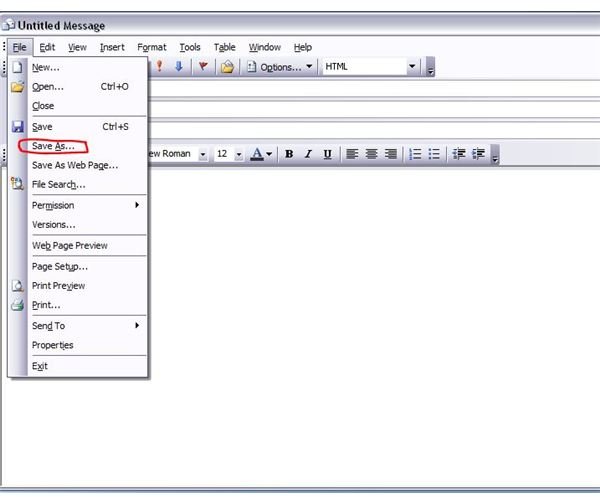
Go to the File menu again and select Save As. Select Outlook Template (*.oft) in the Save As Type list. Provided you entered text into the subject line, this will be the template’s file name. You can edit the file name if you choose. Click Save to save your new template.
Now that you have created a template, you can use it whenever you need to. From within Outlook, go to the File menu. Point to New and select Choose Form. Select Personal Forms Library in the Look In list. Find the template you created and click Open. Edit it in any way you choose and click Send.
Create and Send an Email Template in Outlook 2007
Open a new email message from the File menu or using the keyboard shortcut Ctrl+Shift+M. Enter the message or other information you want to use in your template. Click the Microsoft Office Button and choose Save As.
Select Outlook Template (*.oft) in the Save As Type list. Enter a file name if you do not wish to use the default file name. Click Save.
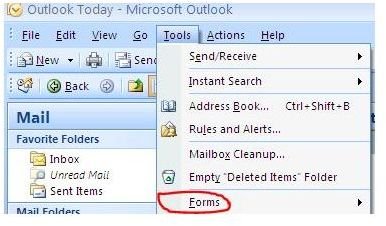
Now that you have created a template, you can use it whenever you need to. From within Outlook, go to the Tools menu. Point to Forms and select Choose Form. Select User Templates in File System in the Look In list of the Choose Form dialog box. Find the template you created and click Open. Edit it in any way you choose and click Send.
Create and Send an Email Template in Outlook 2010
If you are using Outlook 2010 , open a new email message by clicking New Email in the New group of the Home tab or using the keyboard shortcut Ctrl+Shift+M. Enter the message or other information you want to use in your template.
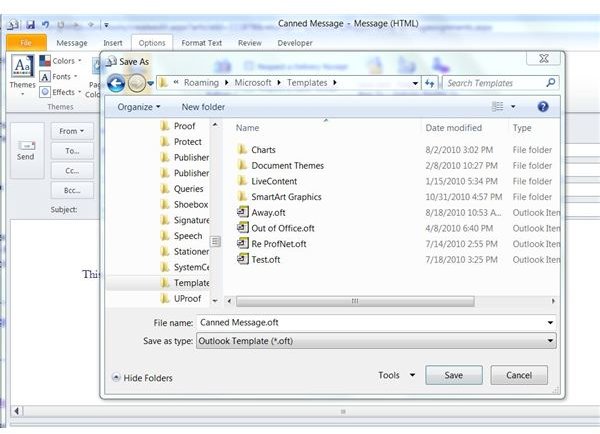
Go to the File tab and choose Save As. Select Outlook Template (*.oft) in the Save As Type list. Enter a file name if you do not wish to use the default file name. Click Save.
Once you have created a template, you can use it whenever you need to. Click on New Items in the New group of the Home tab and select More Items > Choose Form. Select User Templates in File System in the Look In list of the Choose Form dialog box. Find the template you created and click Open. Edit it in any way you choose and click Send.
Uses for Your Template
Once you have a custom template and know where to find it, you can use it for just about any purpose, from a standard weekly check-in email to an out of office message when you will be away. In fact, you can repeat the steps and create as many custom templates as you need.
References
Sources:
Microsoft Support: How to Create an E-Mail Message Template or an E-Mail Message Form in Outlook, https://support.microsoft.com/kb/258256
Author’s own experience
Image Credit:
Screenshots provided by the writer