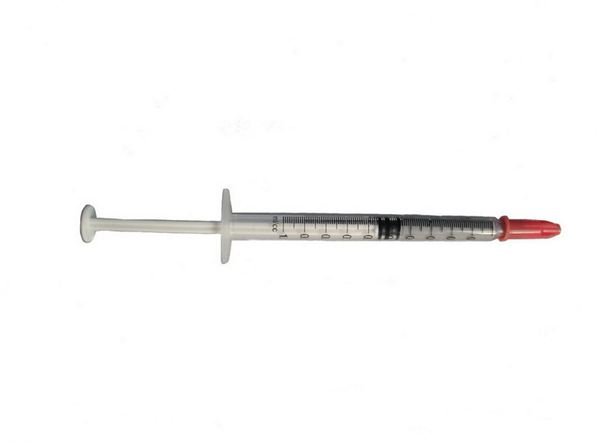
Thermal Paste is the thick, gooey material that is spread on a heatsink. There are many different brands available, and it is hard to tell at-a-glance which is best. This article will help you find the thermal paste that offers the best performance.
Thermal paste is a toothpaste like material that is spread on top of a computer processor before a heatsink is attached. This paste is used to improve the efficiency of the heat exchange between the processor and heatsink. Although your processor and heatsink may look perfectly smooth to your eye, each surface has tiny imperfections. These imperfections will trap air, which is a poor media for heat exchange. The paste forces the air out, increasing the efficiency of your heatsink.
Many companies make thermal paste. It is hard for the end user to decide which is best because performance can only be gauged through rigorous comparison testing using standardized hardware. However, some people have done this work for you. The three thermal paste products recommended here are proven performers.
CoolJag Shin-Etsu X23 7783D
Are you looking for the Ferrari of thermal paste? Well, you’ve found it.
Actually, the CoolJag is more like the Bugatti of thermal past. The product is very good, but the name just doesn’t have much clout among the general public. If you ask your typical computer user which thermal paste is best they’re very likely to say Arctic Silver. Very few will name CoolJag Shin-Etsu.
That’s a shame, because CoolJag has provided the very best performance in tests. In the HardOCP thermal paste shootout the CoolJag thermal paste resulted in the coolest processor. During the overclocked processor tests the X23 7783D paste resulted in a processor that was over one degree Celsius cooler.
However, this paste does have a flaw - it is expensive. You’ll pay $7.99 for a tiny .5 gram shot of this thermal paste . Still, that’s not a lot of money, and you’ll love the performance if you’re a hardcore overclocker.
Arctic Silver 5
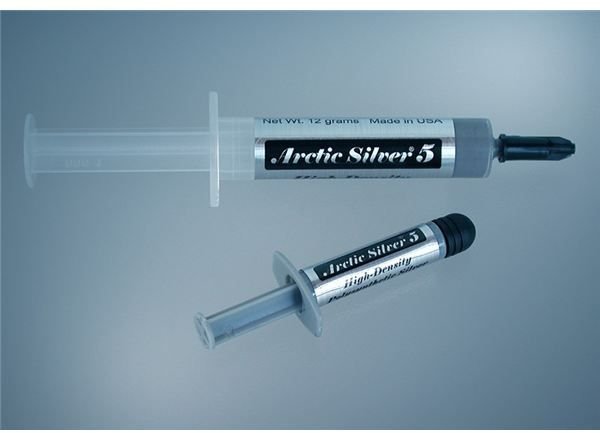
Okay, so the most popular compound didn’t make the top spot. But it did make second, and that isn’t bad.
The name “Arctic Silver” refers to the inclusion of silver in the paste compound. Silver is an efficient way to transfer heat, and the Arctic Silver paste literally includes some silver material in the paste. Arctic Silver claims that it contains 99.9 percent pure silver by weight and 88% thermally conductive filler by weight. Those two claims are actually a bit confusing when taken together (what, is some of the silver not thermally conductive?) but the point is this - there is a lot of stuff in Arctic Silver that conducts heat. Period.
Arctic Silver 5 performs very well in tests as a result. It is generally among the top two or three compounds, coming in just behind Shin-Etsu compounds. It is also sometimes bested by Arctic Silver MX-2, but the cost difference between the two makes me recommend Arctic Silver 5 instead.
Thermalright Chill Factor
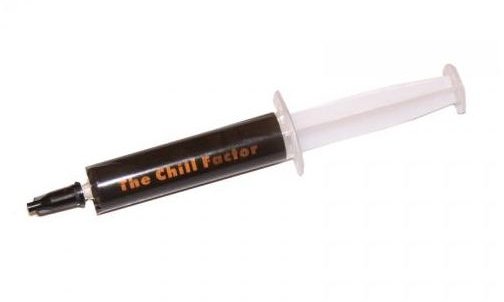
In terms of performance, Thermalright’s Chill Factor compound is generally middle of the pack. It is effective, but doesn’t manage to beat Arctic Silver 5 or Shin-Etsu compounds. We are talking about a small difference, however - typically no more than two degrees Celsius between best and worst.
The main advantage of Thermalright Chill Factor is the price. While a .5 gram of Shin-Etsu often costs around $7.99, a 2g tube of Chill Factor usually costs $3-$5 . That’s very inexpensive! While most users don’t go through thermal paste quickly, anyone who does use more than a few grams of paste a month may prefer the lower price of Chill Factor.