In their normal course of operating, computers will beep and make other sounds. Some are a single beep, while others are more persistent. Here is what it means if your computer keeps beeping and making error sounds.
In their normal operations, computers will always make sounds, but most peculiar of all these are the beeping sounds they occasionally make. In most cases a computer will make one beep before it starts and completes the boot up process. However, if the beeping sounds are more persistent something may be wrong with the computer.
What the Audio Error Codes Mean
Motherboard beeps are error codes that computers use to communicate that there is at least one hardware or configuration error. Once a computer receives power and initiates the boot up process, it does a routine Power On Self Test (a.k.a POST), to verify that all components are present and working, as well as verify that the associated settings are properly configured.
If a problem is found, the computer starts sounding error messages known as beep codes (a.k.a, motherboard beep codes or BIOS audio alerts). In some cases, the problem can be easily fixed by changing some BIOS settings, in other instances a technical approach may be required to fix the problem.
Some Common Beeping Sounds Error Codes
There are many reasons for which a motherboard can start raising audio alerts. To decipher what a error code means, take the following steps:
Make a note of the sequence of the beeps, including the number of beeps and the pauses in between.
Consult the motherboard beep code table to decipher the code. Several restarts may be required in order to hear and document the correct sequence.
Once the error codes are deciphered, a problem can be more easily diagnosed but the beep codes won’t always precisely identify the problem. Lets use the Phoenix BIOS beep codes as an example. This BIOS beeps in three sets of audio alerts. Each sequence of beeps is followed by a pause and then the next set, for example, 3 - pause - 3 - pause 4 - pause. This 3-3-4 beep sequence means that the computer has a problem with the video card.
Here are some other common Phoenix BIOS beep codes:
Code ——– Meaning
1-1-3 ——– The computer can’t read the CMOS configuration. The motherboard may need to be replaced.
1-2-2 ——– The motherboard has a critical fault.
1-4-2 ——– Some or all of the memory is bad.
3-3-4 ——– The computer can find a working video card
4-2-2 ——– The keyboard may not be connected, the keyboard port is faulty or the motherboard has issues.
Audio Code Standards
The sequence of the audio error codes will depend on who built the BIOS. However, several motherboards use the same BIOS error codes. Some exceptions include Dell and Apple, who have their own audio codes. To be sure, check the motherboard manufacturer’s website or the user manual.
Summary
While error codes can be quite helpful in deciphering what is wrong with a computer, by no means is using these codes a fool proof troubleshooting technique. Beep codes are designed to point computer owners and technicians in a general direction. Once the field of possibilities is narrowed, then other techniques can be used to pinpoint the actual problem.
Credit
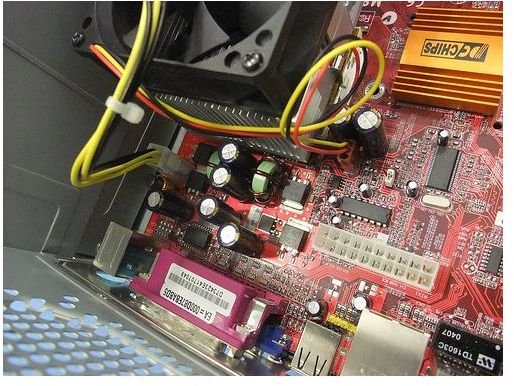
Image: “Computer Beeping Sounds.” https://www.flickr.com/photos/leehaywood/4313245815/