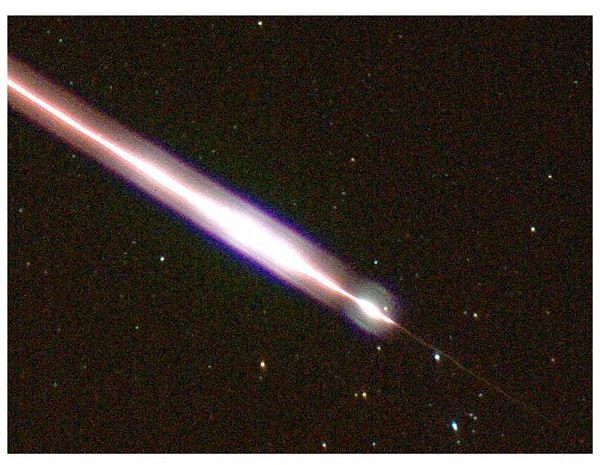
Have you ever wondered what a shooting star is? Well, for one thing, it isn’t a star at all. It is a meteoroid. There are certain times of the year when you can see hundreds of ‘shooting stars’ clustered together in meteor showers. The Perseids in August is one of the best.
Why Do We Call it a Shooting Star?
To understand what a shooting star is, we need to look at the objects orbiting the sun. A shooting star gets its name from its appearance; a bright streak of light racing across the sky and then disappearing in an instant. In fact, a shooting star isn’t really a star at all, it is a meteoroid. Meteoroids are simply pieces of rock or dust entering the Earth’s atmosphere and burning up on entry. This bright streak of light you see in the sky is known as a meteor.
Meteoroids can be as small as a grain of sand, known as interplanetary dust, or as large as a state; an asteroid. If a meteoroid makes it through the Earth’s atmosphere and hits ground, it is then known as a meteorite. When you get a large meteoroid, the streak in the sky is called a fireball, or bolide. This streak can last for longer than a minute and even make a crackling noise as they pass over.
What are Meteor Showers?
Several times a year the sky lights up more than usual with meteors, a phenomenon known as a meteor shower. A meteor shower occurs when the Earth passes through the trail of debris left from a comet. Each meteor shower is given a name, depending on which constellation is present in the sky at the time. The shower seems to originate from the constellation; for example, the Leonid Meteor Shower seems to come from the constellation of Leo.
Meteoroids do not originate from any stars or constellations; they just seem to come from that region. The reason for this is because of the way the Earth moves through the comet’s orbit and how the particles of the comet’s trail are seen from Earth. They name these meteor showers after the constellations so the astronomers know where to look in the sky.
Annual Meteor Showers & Vieiwing Info for the Perseids
Over the course of the year, you can catch various meteor showers; the most famous occurring in August and known as the Perseids. You don’t have to wait until summer to catch meteor showers, according to NASA, other meteor showers occur during the times listed below, although there are showers occurring in other months as well. Here are the dates for 2013:
- January 2-3: Quadrantids
- April 21-22: April Lyrids
- May 4-5: Eta Aquarids
- July 27-28 - Delta Aquarids
- August 11-12 - Perseids
- October 7-8 - Draconids
- October 21-22 - Orionids
- November 4-5 - Taurids
- November 16-17 - Leonids
- December 13-14 - Geminids
The best meteor shower is often the Perseids occurring in August.
It is possible during peak periods to see several meteors a minute. These meteors are thought to be the trail of the comet Swift-Tuttle, while the Germinids are thought to come from an extinct comet named 3200 Phaethon.
The best viewing time to see the Perseids is just before dawn on either August 11 and 12, because the Earth orbits the Sun dawn side first. Also, looking lower in the sky will give you the best views, as the Perseids tend to appear low on the horizon. Meteors spotted near the horizon are more colourful and are in view for longer; Astronomers call these meteors, “Earthgrazers”.
References
- The Differences between Meteoroids, Meteors, Meteorites and Comets, VinceSummers
- Photo: CC by Navicore, Ed Sweeney on Flickr 2009 Leonid Meteor (cropped, afterglow closeup)
- NASA: Starchild Question of the Month for August 1999
- Astronomy Calendar: http://www.seasky.org/astronomy/astronomy-calendar-2013.html
- Universe Today: What is a Shooting Star?, Fraser Cain
- NASA: The Perseids Are Coming, Dr. Tony Phillips


