What Are Exoplanets, How Are They Detected, And What Do They Mean For Astronomy?
Definition Of An Exoplanet
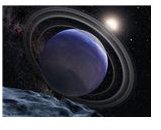
The exact definition of an exoplanet is just a planet, any planet, that is orbiting a star other than our own Sun, and is therefore not in our Solar System. That’s it. Nothing fancy about it. “Exoplanet” is just sort of “extrasolar planet”, which would be self explanatory if astronomers hadn’t saved some space by shortening the term by two syllables.
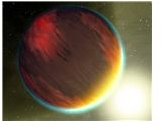
Some Artistic Renderings Of Exoplanets
How Do We Detect Exoplanets?
Consider the size difference between a tiny blip like the Earth and the Sun—and then imagine detecting it from light years away, a minuscule body that emits no light of its own, reflects barely any, and has scarcely any gravitational influence on surrounding bodies. That’s a pretty steep demand of astronomers. Frankly, astronomy hasn’t quite gotten to detecting exoplanets the size of Earth yet, even in the closest of star systems, but we have detected some.
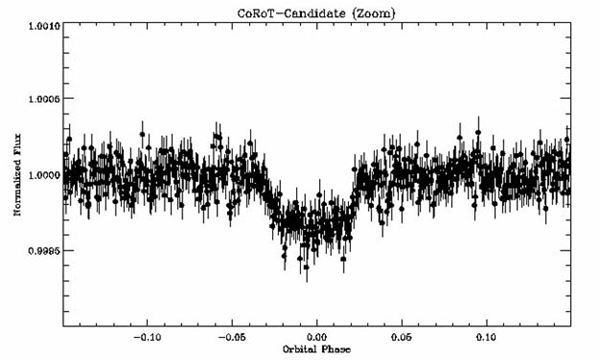
The larger the exoplanet, the easier it is to detect. Why? Because of their relatively large gravitational effect on their local star. This is how the majority of exoplanets are detected: by analyzing those slight wiggles in the movement of a star to see if they might just indicate a decently sized body orbiting it. This is usually detected either through the Doppler method (changes in the radial velocity of a star relative to Earth by blueshifting or redshifting), through astrometry, gravitational microlensing, and timing pulsar “beeps”. Indeed, the only non-gravity related technique is by looking at variability in the brightness of a star as exoplanets eclipse it from our Earthly perspective. Still, it’s quite a list of techniques that astronomers have managed to assemble!
What Do We Know About Exoplanets?
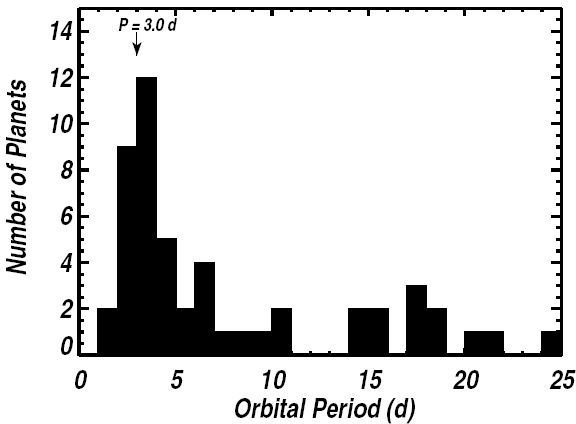
There are a total of 353 known exoplanets as of the writing of this article. Considering how difficult it is to detect them, that’s a pretty big number!
As you might imagine, most of the exoplanets we’ve detected so far are large gas giants, often many times the size of even Jupiter, and borderline brown dwarfs.
However, this doesn’t mean that the majority of exoplanets are, in fact, gas giants. It’s really just that they’re easier to detect. We won’t really know what the typical make up is of other solar systems, including the number and types of exoplanets, until either our detection techniques and technology improves. The guess is that rocky bodies vastly outnumber gas giants, based on our own Solar System and a bit of logic, though this has yet to be definitively proven.
Nor do we really know what percentage of stars have exoplanets. Since we can’t even detect the majority of potential size ranges for exoplanets, we can’t make a proper guess. The current estimate is 10%, but this is subject to a huge range of variation amngst astronomers. Pick an opinion, any opinion.
People often speculate on what sort of star systems would have more exoplanets on it. The general conclusion is that the fewer stars there are in the system, the more likely that there will be exoplanets, as any orbiting material would have otherwise long since been sucked up by such dynamic gravitational system. Similarly, more stable stars, that is, main sequence stars that haven’t already gone on to the red giant stage, are more likely to have not destroyed any exoplanets by that point.
Exceptions do exist, however. There are exoplanets that are known to orbit pulsars, for instance, and speculation on how this managed to happen has been floating in astronomy journals ever since their detection.
Want to see currently known exoplanets laid out? Check out the Exoplanet Atlas with NASA’s PlanetQuest search for exoplanets.
Exoplanet Graphs
What Do Exoplanets Mean For Astronomy?
Exoplanets form a fascinating field in astronomy, and the study of them is growing quickly. Why?
Well, detection techniques have only recently advanced to the level where we can detect exoplanets, which means it’s a new field with lots of basics to cover. While people have theorized about the existence of exoplanets for centuries, the first real speculation didn’t come until 1988, and confirmation until 1995! This attracts both scientists and astronomy enthusiasts alike as a pioneering field.
And then, there’s the niggling little curiosity we all share as to the possibility of life on other planets. If we can detect an exoplanet that isn’t downright hostile to life, existing within the so-called “Goldilocks Zone”, then maybe this means that life has, somehow, in some way, managed to evolve on it. Indeed, many astronomers who study exoplanets keep an especially keen eye out for organic compounds in the atmospheres of those exoplanets found—just in case.
Looking way ahead, if we can locate a potentially life-sustaining exoplanet in the vicinity, there’s the possibility of one day colonizing it…if we can locate one. This may be your children or you children’s children who will be realizing this, but the idea is a tangible one nonetheless.
For more information, check out the Extrasolar Planet Encyclopedia.