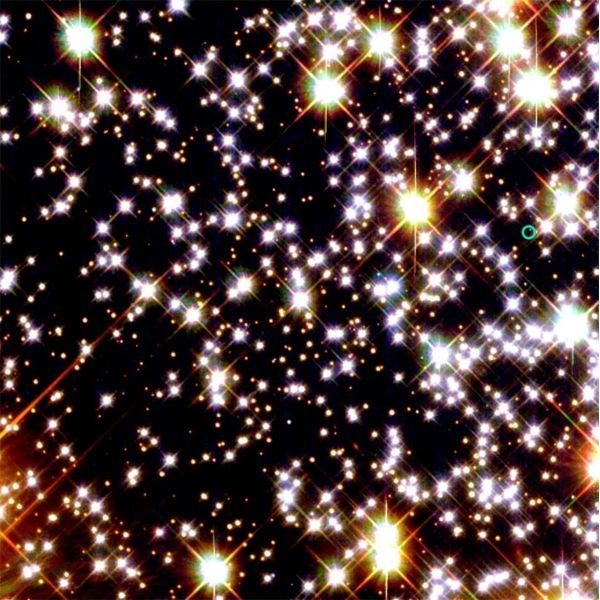
The next time you are lucky enough to have a clear night not destroyed by pollution, kick back and count how many stars you can see. A tough job, to be sure, but if you’ve got a few hours you must may be surprised to find yourself ending in the neighborhood of 6,000 stars. What about the rest?
The History of Counting Stars
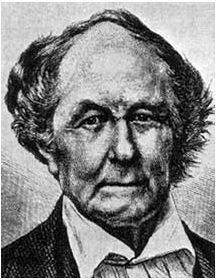
Clearly, there are far more than 6,000 stars in the sky. Counting them with the naked eye is tough enough, but think of the task of counting and then cataloguing the billions of stars that exist. Once the telescope was invented, astronomers were opened up to a whole new world of heavenly bodies. Think that it would drive a person crazy to count 6,000 stars? Consider the Prussian astronomer Friedrich Argelander who began counting stars with his state of the art 75mm telescope. By the time Argelander pulled his tired eyeballs away from that telescope, he had cataloged over 458,000 stars. Argelander was working from a position in Germany and as a result he failed to see many stars that are visible from below the equator. After a few Argentinian astronomers stepped to the plate, the number of stars that had been counted rose to over a million.
Friedrich Argelander
Counting and Photographing Stars
With the introduction of enormous telescopes and the ability to photograph the night sky came an exponential increase in the number of stars counted. The most powerful telescopes of the early 20th century were capable of discovering thousands of stars that had been far too faint to be detected previously. The ability to photograph these faint,blurry images of light made the process of counting stars much easier. Well, somewhat easier. The problem that arrives with counting stars from a photographic image received through a telescope is that any single photo could conceivably be populated with literally millions of images. The upshot being that it could take several months for an astronomer to completely count the stars on just that one photo.
Enter computers. Computer imaging allows this process to be cut down to a ridiculous level, just as computers have sped up every other facet of society. It is not just computers that facilitate the process of counting stars today; another technological innovation is also vital to the science of counting stars. Helium-neon lasers are beamed at the photographic plate so that the computer scanning takes place across a very narrow section. The star appears as a dark spot against a very bright background on the negative photographic plate. The laser’s beam that passes over the darkened image detects the star when the brightness of the star becomes dimmer. The computer then calculates the changes in brightness to record the star’s position and brilliance.
Voila! A new star is officially counted and added to the ever-growing catalog.
“My God, it’s full of stars!”