Galaxies are the largest structures in the Universe. Each contain hundreds of billions of stars, and there are billions of galaxies in the visible Universe. In fact, in one three degree section of the sky known as Coma Berenices, we can see more than 1000 galaxies.
The Facts
- Main Types of Galaxies: 3;
- Spiral
- Elliptical
- Irregular (Ellipticals and Irregulars exist in both normal and ‘dwarf’ sizes)
-
Number of Galaxies Visible: 100 billion
-
Most Abundant Type of Galaxy: Dwarf Ellipticals
Advertisement -
Distribution of Normal Size Galaxies in Hubble Classification: Spiral-75%; Elliptical-20%; Irregular-5% (Edwin Hubble’s data was skewed because spirals are generally brighter than any other galaxies, and he found more of them. Dwarfs are dim and were not found until bigger telescopes were built.)
-
Spiral Galaxy Nearest Our Milky Way Galaxy: Andromeda - 2.6 million light years away. (The Magellanic Clouds - dwarf irregulars–are only an average 200,000 light years away, but they are more giant star clusters than galaxies.) (See - Survey of Our Nearest Galaxies )
Advertisement -
Distance of Visible Galaxies Furthest From Us: Appx. 14 billion light years.
-
Size of Typical Galaxy: 3,260 light years to 326,000 light years across.
Advertisement -
Number of Stars in Average Galaxy: 40 billion
-
Number of Stars in Typical Large Galaxy (such as our Milky Way): 200 billion to 400 billion.
Advertisement -
Number of Galaxies in Local Group: Appx: 40 (there may be dwarfs so dim we can’t see them).
-
Largest Galaxy in Local Group: Andromeda
Advertisement
-
Smallest Galaxy in Local Group: Leo T, a dwarf irregular 600 light years across
-
Number of Galaxies in Average Galactic Group: <50
Advertisement -
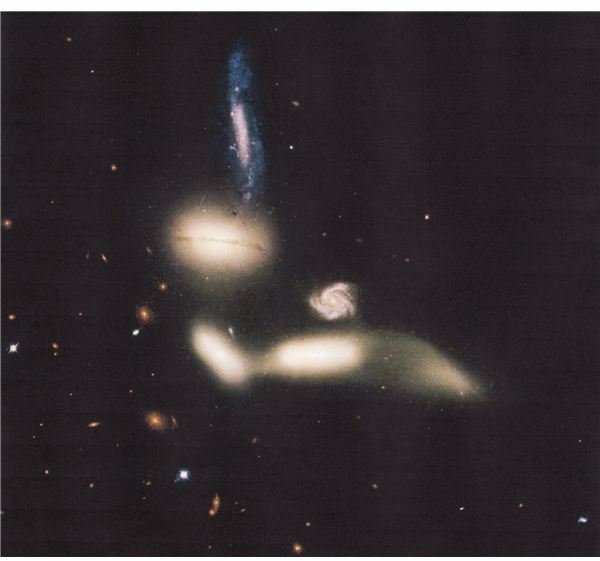
Fewest Number of Galaxies in Known Group: 4; Seyfert’s Sextet in the constellation Serpens (in the photo it appears there are 6 galaxies, but closer study reveals that one is much farther way, and one is not a galaxy at all but a wisp of stars pulled from one of the other galaxies by gravitational forces).
Galaxies Amazing Facts
- Massive black holes may be at center of large galaxies - It appears that most, perhaps all, spiral and elliptical galaxies hide a massive black hole at their core. This was suspected for years, but the Hubble telescope has given us direct evidence that it is a fact. Visual, infrared and ground based radio telescope images have produced clear images of high-speed jets of electrons and gas shooting from the core of a number of galaxies. The Hubble also has shown that the core of these galaxies are rotating at extremely high rates. That could be caused only by a massive gravitational field—far greater than that of the stars in the core of the galaxy. Recent findings show that virtually all galaxies have a supermassive black hole at their center—some perhaps more than one. Even more recent developments suggest it may not have been black holes that caused galaxies to form, but dark matter. In fact, dark matter may have formed the central black hole.
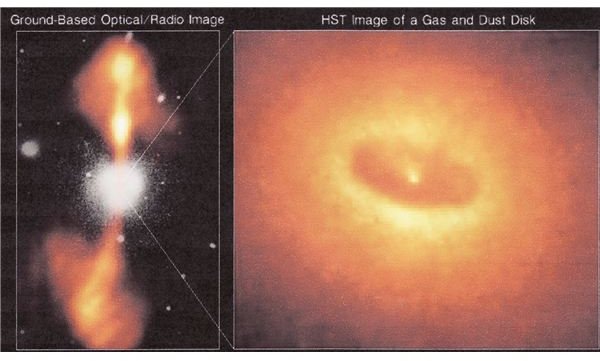
Our Milky Way contains such a black hole at its core. Our neighbor Andromeda may contain two, as it appears to have two distinct cores.
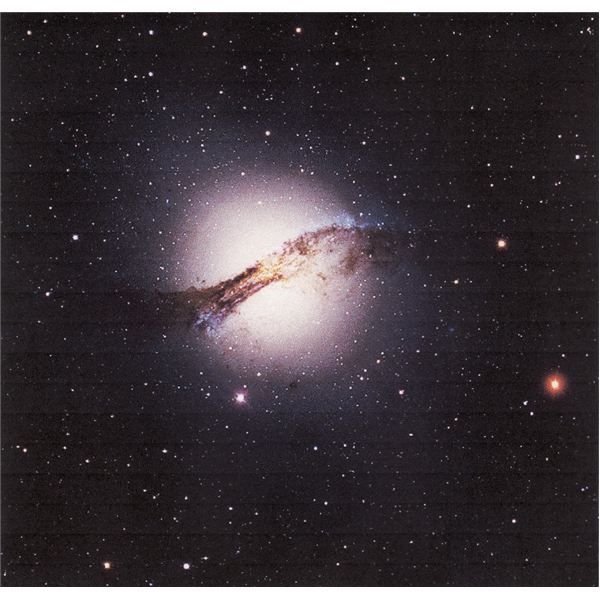
- Galaxies like company - Galaxies invariably form groups, and groups form clusters, and clusters form superclusters. Gravity is at the core of this tendency. When a large galaxy forms, its massive gravitational field captures smaller galaxies that have formed in its vicinity. These smaller galaxies often actually become satellites of the large galaxy. Our Milky Way has several small satellite galaxies that orbit around us. Sometimes two galaxies get so close they collide.
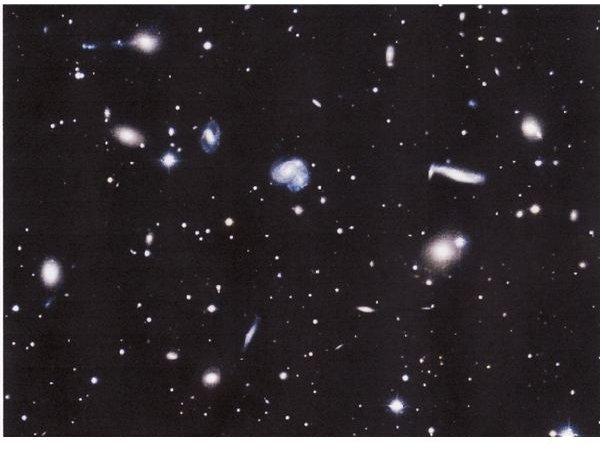
Then our local group, which includes Andromeda (our group is fairly unusual in having two large galaxies), has a gravitational connection with several other groups that together form the Virgo Cluster, so-called because they all appear in the constellation Virgo. Then the Virgo Cluster teams up with two other clusters to form the Virgo Super Cluster, a collection of 100 groups of gravitationally attached galaxies approximately 200 light years across.
A Galactic Family Album
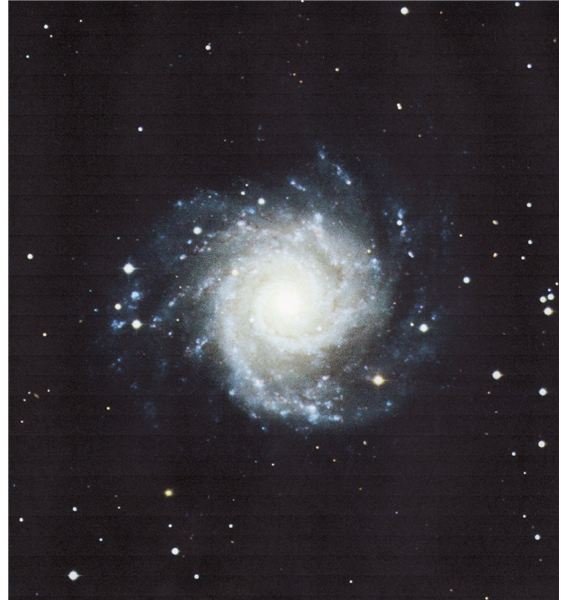
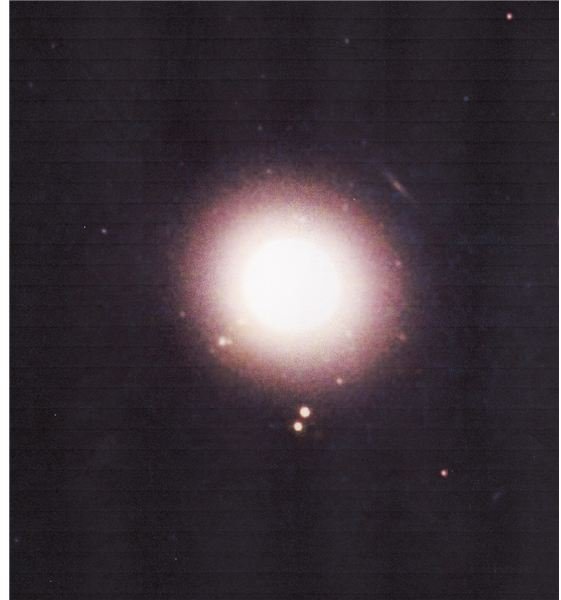
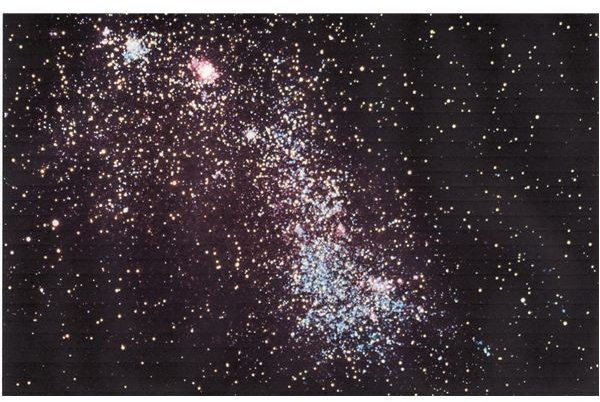
Credits
Andromeda: https://apod.nasa.gov/apod/image/0210/andromeda _gendler_sm.jpg
Seyfert’s Sextet:https://hubblesite.org/newscenter/archive/2002/22/image/a
Black hole: Hubble space telescope
Colliding galaxies: https://www.noao.edu/image _gallery/images/d2/cena-compared-1500.jpg
Galactic cluster: Dr. Victor Andersen (University of Alabama,KPNO) http:antwrp.gsfc.nasa.gov/apod/ap980827.html
Spiral galaxy: Todd Boroson/NOAO/AURA/NSF https://www.noao.edu/image _gallery/html/im0509.html
Elliptical galaxy: NOAO/AURA/NSF https://www.noao.edu/image _gallery/html/im0572.html
Dwarf irregular: NOAO/AURA/NSF https://www.noao.edu/image _gallery/html/im0561.html