Uncovering the Cause of Malignant Melanoma in the Search for New Malignant Melanoma Treatments
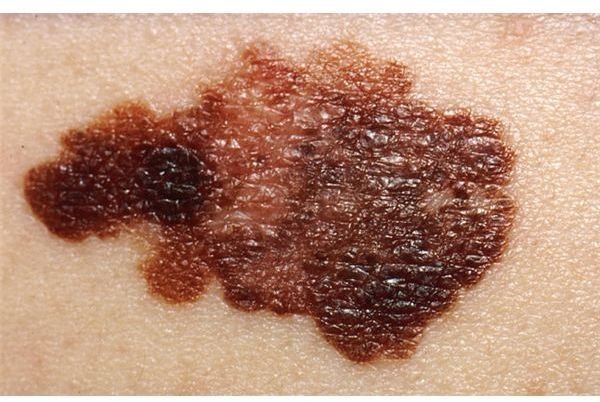
Skin cancer
The gene variant they’ve identified is cyclin D1. It’s not the first time that the gene has been fingered for its role as an oncogene. Nor is it the only gene that researchers think could be responsible for the development of malignant melanomas.
Melanoma and genes
Cyclin D1 plays an important role in the life cycle of the cell, for example in the timing of cell division known as mitosis. And it is well known that tumours form when the cullular regulatory processes go out of control.
This new work looking at melanoma and genes, was presented to the 33rd Congress of the European Society for Medical Oncology in Sweden.
Researchers had studied the DNA from blood samples of over a thousand individuals. 161 people had melanoma, and 892 were healthy. They found that those who carried two copies of the cyclin D1 variant were 80% more likely to develop melanoma. The variant, in other words a previously identified difference in the structure of the gene, was more common in those people with melanoma. The suggestion being that it was somehow responsible for the genesis of the condition. Though how that happens is still unknown.
Speaking to Science Daily about their work PhD student Raquel Catarino from the Portuguese Institute of Oncology said, “Our study demonstrates that cyclin D1 polymorphism is associated with a higher risk of melanoma development, indicating that this genetic advantage may confer growth advantage to cancer cells.”
Genes and malignant melanoma treatments
It seems very likely that several genes will be responsible for melanoma oncogenesis, and all of them probably haven’t been identified yet. As a clearer picture builds scientists will hopefully be able to elucidate which ones are the most important or significant for development of the condition. Then a more specific and personal health screening can be given to individuals, based on their genetic make up. This should then be able to identify people who are at higher risk of developing a melanoma.