The genetic disorder known as Shprintzen syndrome causes a multitude of problems for those born with it. Although diagnosis of the disease is relatively easy by modern standards, the extent of the problems can often cause a challenge for physicians in terms of treatment.
What is Shprintzen Syndrome?
Shprintzen syndrome is a genetic disorder caused by a missing gene. It is referred to by many names: DiGeorge syndrome, conotruncal anomaly face syndrome, thymic hypoplasia, Strong syndrome, congenital thymic aplasia and velocardiofacial syndrome. It was first identified as its own condition in 1968 by a pediatric endocrinologist named Angelo DiGeorge. Approximately one out of 4000 children are born with the disorder. Much of the time, the symptoms can be dealt with and the child can live a long and productive life. Sometimes, however, children die very early into their life.
Symptoms
There are many symptoms associated with Shprintzen syndrome. Patients suffering from the genetic disorder may experience all or just some of the problems. Each individual case can either be mild or very severe, impacting the quality of life of the individual.
The most common symptom impacting those with this disease are general learning difficulties. The brain of the individual cannot process or receive information properly. Roughly 90 percent of cases of Shprintzen syndrome are impacted. Sometimes this leads to schizophrenia or incidents of psychosis.
Half of those born with the disease also suffer from hypocalcaemia, low levels of calcium in the blood plasma caused by defects in the parathyroid gland . This leads to secondary problems in the individual. Common signs of hypocalcaemia include rashes, a tingling sensation in the extremities, the involuntary contraction of muscles and heart problems.
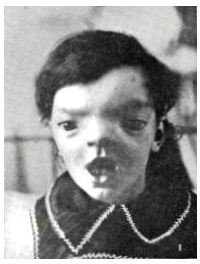
The same amount of patients are born with malformed palates. This is identifiable at birth as the child’s face did not correctly develop while in the womb. The most common occurrence is a cleft palate . However, other issues such as hypertelorism, the distance between the eyes is expanded, or velopharyngeal incompetence, the malformation of the mouth and nasal cavity. This can lead to vision or speech problems.
Other symptoms of Shprintzen syndrome include congenital heart disease, particularly problems with the aorta and pulmonary artery, as well as kidney issues. Some individuals may also have hearing loss, problems with growth and development, abnormal skeletal development and even disorders with the immune system. Over the course of time, people can also experience seizures.
Causes
Sphrintzen syndrome is a genetic disorder caused by the deletion of a gene. Most commonly this is seen in the loss of a gene on the long arm of chromosome 22, specifically 22q11.2. However, it can also occur when a gene is missing from the short arm of chromosome 10. This gene is essential to the proper development of certain features of the human body. During development in the womb, the lack of the gene results in a failure of certain parts of the face and skeletal structure to form. Despite advances in the understanding of the root cause, it is unknown why certain patients are born with specific symptoms while others are not.
Diagnosis
Much of the time, basic identification of the disorder can be seen at childbirth. Those born with malformed facial or palate features are prime candidates for Shprintzen syndrome. Once the genetic disorder is suspected, the patient can be tested using the fluorescence in situ hybridization (FISH) process. This is used to test whether the chromosome is complete. Fluorescent probes bind with the nucleotide sequences in chromosomes. Researchers than use an optical microscope to identify the agent. The FISH technique detects messenger RNA and can determine if the gene is present or not. This can even be done while the child is still in the womb if Shprintzen syndrome is suspected.
Treatment
Since this is genetic defect, there is no known cure for the condition. Certain facets of the symptoms, however, can be treated. Those born with facial deformities such as a cleft palate can be treated with a form of plastic surgery. Children with autoimmune problems can be receive vaccinations prior to surgery or blood transfusions. Hypocalcaemia requires the use of supplements for calcium and vitamin D deficiencies . Those suffering from congenital heart conditions may also require cardiac surgery.
References
“Definition of Velocardiofacial Syndrome” MedicineNet: https://www.medterms.com/script/main/art.asp?articlekey=5972
Velo-Cardio-Facial Syndrome Educational Foundation: https://www.vcfsef.org/
Image Source
Hypertelorism. (Supplied by David Middleton Grieg at Wikimedia Commons; Public Domain; https://upload.wikimedia.org/wikipedia/commons/1/10/Mary _mac_dougal_1.jpg)