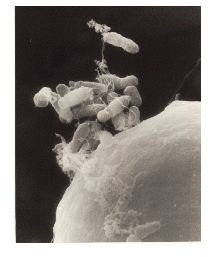
Agrobacterium is commonly found in the soil and is known to cause crown gall tumors in plants. These bacteria are also used in plant genetic engineering to modify or change plant genes. The bacterium can carry a gene of interest in its DNA and transfer it into the plant genome.
Understanding Plant Genetics
Genes are DNA segments that contain genetic information. These DNA segments can be manipulated by splicing and deleting certain genes and gene sequences to engineer desired traits in plants. This is how researchers modify existing plant species and develop new varieties.
Plant genetic engineering has proved to be an immense boon to the agricultural industry. It has led to the development of transgenic plants that are resistant to pests and herbicides, and contain essential nutrients and vitamins. A good example is the genetically engineered tomato .
The process of inserting a new gene into the plant genome can be done by the Gene Gun Method and by the Agrobacterium method. In the first, the gene of interest is injected into the plant genome. The second, which we will presently see, is more favored by researchers and makes use of the Agrobacteria to carry the gene into the plant genome.
Agrobacterium tumefaciens
Agrobacterium tumefaciens is a very commonly occurring pathogen that is found in the soil. This pathogen is known to infect wound sites in dicotyledonous plants and insert its DNA into the plant cells. The bacterial DNA plays havoc in the plant genome, affecting plant hormone production and attacking the plant root system. This leads to the formation of galls or tumors; the plant is weakened and eventually dies. On a large scale, the growth of crown gall tumors can wipe out entire crop fields and cause great financial loss.
Researchers first became interested in Agrobacterium tumefaciens for its possible use in cancer research. Now the main interest factor is its capability of transferring a DNA segment into the plant genome.
Structure of Agrobacterium tumefaciens
The Agrobacterium tumafaciens contains 5400 genes and the genome is made of -
- A circular chromosome
- A linear chromosome
- Two circular plasmids
This is rather remarkable, as other bacteria only have either circular chromosomes or linear chromosomes, never both simultaneously.
Genetic Modification of Plants
This is how the Agrobacterium method is carried out -
- The researchers remove the tumor inducing gene from the transfer DNA and replace it with the gene of interest and a marker.
- The modified transfer DNA is then inserted into the plant genome.
- The marker lets the researchers know if the new gene is accepted by the plant genome.
- The tissue is cultivated in an antibiotic medium.
- The antibiotic medium kills the Agrobacterium.
- The gene of interest and the marker continue to grow in the tissue culture.
- Whole plants are developed under controlled environmental conditions.
- Seeds from the grown plants are cultivated and produce a future generation of plants with the desired traits.
Benefits of Agrobacterium tumefaciens
The Agrobacterium method, which got its start in the 1970s, has revolutionized plant genetic engineering. It is now a standard method used in plant genetics research and plant modification. It has been used to create, amongst others, plant mutants of potato and alfalfa, and transgenic tobacco, tomato, corn and soybeans.