Restriction Enzymes as a Tool. The Use of Restriction Enzymes in Biotechnology
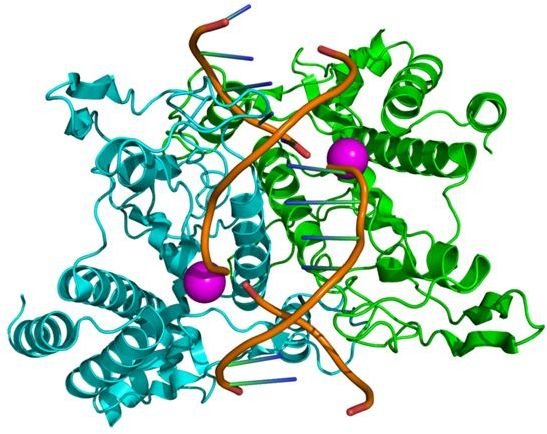
Restriction Enzymes as a Tool
Simply put, a restriction enzyme is a molecular scissor that is used to cut DNA strands at predetermined locations. The significance of these enzymes lies in the fact that they do not cut a strand of DNA at random. Rather, they recognise a specific pattern of bases and then cut only at that specific position. Any piece of DNA that needs to be manipulated, needs to be cut to a certain requirement with these restriction enzymes. Therefore, all modern molecular biology methods involve the use of restriction enzymes or restriction endonucleases to manipulate DNA. Without the existence of restriction enzymes one cannot imagine how processes like genetic engineering and recombinant DNA technology would work.
The Discovery of Restriction Endonuclease Enzymes
Werner Arbor, Dan Nathans & Hamilton Smith were awarded the Nobel prize for Physiology or Medicine for the year 1978 for their roles in the discovery of restriction enzymes. The discovery of restriction enzymes were in actuality an accident, as most great discoveries are. They were the findings of an experiment done to investigate why certain strains of bacteria could not be infected with bacteriophages. At the time, phage molecular biology was at its height and had already explained some of the most fundamental concepts of modern molecular genetics. Werner Arbor was involved in the study of phages that could not infect certain strains of bacteria, in which he observed that the phage DNA was broken down into small pieces some kind of enzymatic process then called as host controlled restriction.
Later, Smith, Nathans, and Arbor reported the isolation of the first restriction enzyme from haemophilus influenzae called as “endonuclease R”. Later they also showed that the enzyme recognised a specific pattern of bases in the DNA sequence and cleaved them at a particular position. Although there were several findings in the field, no one had yet discovered the potential that the discovery had in shaping future applications. The first glimpse of it came when Kathleen Danna & Daniel Nathans employed endonuclease R to completely map the DNA virus SV40. The information regarding the location of genes provide great insight into studying and mapping specific regions of the genome.
Restriction Enzymes in Biotechnology
The Nobel prize was awarded to Arbor, Nathans, and Smith for their discovery of restriction enzymes. The reason for this was that they each made important contributions to the discovery. Just the discovery in itself, the science behind the mechanism, was not enough. It was the third integral part played by Daniel Nathans, who provided the first application for the restriction enzyme technology, that opened the gates of innovation. Today companies have reworked the whole system and have produced recombinant restriction enzymes that are more accurate and act faster than their natural counterparts.
This kind of innovation is needed when every single soul on the planet who wants to manipulate DNA has to make use of these enzymes. Everything from PCR based cloning to DNA fingerprinting make use of restriction enzyme as either a primary or secondary method of verification and processing. In fact, students like me start our day with with these very molecules to investigate much complex life processes.