Many cloned animals are alive today. Some are expected to contribute to medications for human use and even organs for transplantation to humans. There have been successes, some rescues, and some worries, but the future looks bright on the human health front.
Beyond Dolly, the future holds promise of many commercial utilizations of cloning technology. One such commercial application is the
creation of herds of transgenic animals. Transgenesis is the ability to add new genes to an animal, as was done byVajta and Jørgensen in Norway when they inserted human genetic material for the inheritable form of Alzheimer’s disease in cloned piglets.
Animals have long been used for the production of drugs. For example, hundreds of thousands of pigs have been sacrificed over the years to provide insulin for diabetics. Transgenesis takes this process to another level. Transgenes introduced into the nucleus of cow, sheep, and pig eggs become part of the animal’s own. One such transgene causes a cow to secrete human proteins in its milk. In Scotland, this process is employed in sheep to produce alpha-1-antitrypsin, a drug used in the treatment of cystic fibrosis (Sinha).
In the future, cloning research may allow scientists to reprogram cells. For example, skin cells might be reprogrammed as insulin-producing cells and autographically (from a donor site to a recipient site of the same individual) placed into the pancreas. Also, defective neurons in Parkinson’s Disease eventually may be replaced with reprogrammed cells.
Cloning research may make organ transplantation a more successful process. There is a chronic shortage of suitable donor organs in the US, and many deserving patients die while waiting for an organ to become available.
In an interview (Ross) Ian Wilmut predicted that, through using nuclear transfer, transgenic animals would be produced that create human proteins on their cell membranes. This common surface would then reduce the risk of rejection during xenotransplantation, which is transplantation from another species.
Human patients may be able to grow their own cloned organs one day. A useful application of cloning technology would be to clone skin cells for grafting in burn victims, or bone marrow cells for leukemia patients. The rejection danger is eliminated, as well as the need for immunosuppressive drugs.
Another application of cloning technology is in the field of animal husbandry. Current methods of breeding superior livestock involve the artificial insemination of an animal with frozen semen and embryo transfer. The problem with artificial insemination is that it only provides half of the desired elite genes. Cloning, however, would reproduce the entire gene set of an elite individual.
Also, cloning research will allow genetic manipulation to produce animals that are disease resistant, just as research in agronomy has yielded similar disease resistance in plant crops. Clones of these transgenic animals would produce herds of superior livestock (Infigen).
Scientific research itself will benefit from cloning techniques. Animals such as monkeys and mice could be cloned especially for research. Genetically identical laboratory animals would reduce variability in experiments. As the successful cloning of three generations of genetically identical mice at the University of Hawaii has demonstrated, large numbers of these animals can be produced.
With the “green movement” becoming politically influential and with the worldwide resurgence of interest in ecology, the prospect of applying cloning technology to preserve endangered species such as pandas and cheetahs is likely to be acceptable to a broad range of people.
In August, 1998, scientists in New Zealand cloned the last surviving member of a rare breed of cow, and, in so doing, cloned the first member of an endangered population (Wiess). The cow was a descendant of a herd abandoned on Enderby Island, New Zealand, almost a hundred years ago.
In that time, these cattle developed long bodies and short, sturdy legs. When the cattle became so numerous that they were harmful to the island’s ecosystem, the government ordered the herd destroyed. A female named Lady, however, was not destroyed, and scientists harvested the semen from ten bulls, in the hope of establishing the unique herd in another location. Before this could be accomplished, Lady had grown older, and the birthing process became hazardous for her.
Cloning Lady and then implanting her zygotes into surrogate mothers was considered safer. The scientists and an organization called the New Zealand Rare Breed Conservation Society hoped to inseminate females cloned from Lady with the preserved semen and start a new generation of these cows. By 2006, there were seven “pureblood” Enderby cattle — all clones of Lady. Embryos from three of these, fertilized with semen taken from the bulls on Enderby Island in 1991, were implanted in cross-recipient (different breed) cows. Six purebred Enderby calves were produced,including three bulls.
Despite the many successes in cloning around the world, cloning techniques are probably not advanced enough to produce a human today. The success rate in the rhesus monkey experiment was three to four percent of pregnancies. What success rate would be acceptable in humans? Considering how devastating it is to lose a child during pregnancy, cloning techniques would have to render success rates as high as or higher than that of clinical fertility-enhancing procedures to be acceptable to even the most desperate parents.
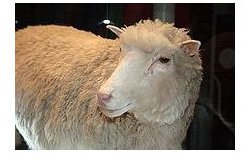
Pregnancy, in the case of Dolly, was complicated by another poorly understood effect of the cloning technique — high gestational birth weight. Dolly weighed one-third more than a normal lamb, and researchers at the Roslin Institute were even criticized for having Dolly’s zygote implanted in a smaller breed of sheep.
Researchers also worry about the effect of using mature DNA in clone embryos. Ian Wilmut has found genetic variation in Dolly’s genes that more closely match that of an older sheep — Dolly’s genetic mother. (Dolly herself was euthanized in February 2003. She had developed a form of lung cancer that is relatively common in sheep that live indoors. Her lifetime was half that of a normal blackface sheep.)
Also, there is a great risk of miscarriage, birth defects, and premature death in cloning. Megan, Morag, and Dolly survived, but a French calf named Margeurite died in 1998 from an infection that she obtained from the birth process. Throughout the world, there have been other premature deaths among cloned animals.
Next: Human Cloning and Series References