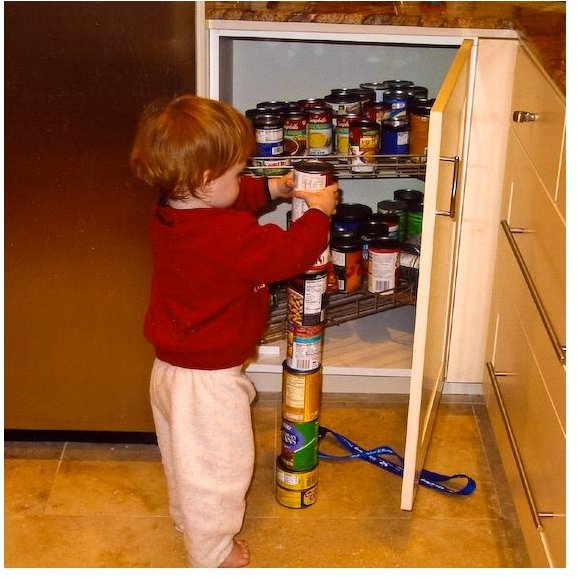
Although the exact causes of childhood autism have not been identified to date, there has been much emphasis on genetics as the most important factor in its causation. Other factors in addition to heredity, are now being linked more closely to this developmental disorder.
History of Autism
Over the last thirty years, an increase in the prevalence of autism has been reported, and awareness of the condition has risen as well. Autism has been recognized since the early 1900s when Swiss psychiatrist Eugen Bleuler first used the term to refer to a group of schizophrenia symptoms.
“Autism,” which comes from the Greek word “autos,” meaning “self,” has been in use for the last century to describe conditions in which a person is isolated from social interaction. Until the mid-century, it was thought to be related to schizophrenia, a psychiatric condition characterized by withdrawn behavior. Treatments focused on methods and medications such as LSD, electric shock and behavior change techniques which involved pain and punishment.
Today autism is considered as part of a spectrum of childhood developmental disorders that is pervasive and is characterized by problems in three key areas of development — social interaction, language and behavior. It is now recognized as a separate entity that is clearly distinguished from schizophrenia and treated mainly by behavioral techniques.
Is Autism Genetic?
Is autism hereditary? That question is on the mind of many worried parents. The most important factor that has always been considered as an important cause of autism is its genetic origin, since:
-
There is a familial tendency to inherit the disorder; and
-
It is linked with other inherited disorders, such as the fragile X syndrome, tuberous sclerosis, Tourette syndrome and epilepsy.
Advertisement
Strong evidence that shows a genetic predisposition to autism includes new findings of genetic variants found in hundreds of children and families representing 15 percent of the people studied. This was disclosed by Hakon Hakonarson, MD, PhD, the director of genomics research at The Children’s Hospital of Philadelphia . This study was a cooperative effort among numerous institutions, was co-authored by respected autism researchers nationwide and published online in 2009 in the journal Nature.
New Findings on Other Possible Causes of Autism
An increasing number of factors are being closely linked to autism based on reviews and a meta-analysis of different studies done at the Harvard School of Public Health in Boston on children with the disorder. These findings were published online in Pediatrics by Hannah Gardener, ScD, and co-authors who wrote that complications during pregnancy and delivery may lead to autism. These include:
- Abnormal presentation
- Umbilical-cord complications
- Fetal distress
- Birth injury or trauma
- Multiple birth
- Maternal hemorrhage
- Summer birth
- Low birth weight
- Small for gestational age
- Congenital malformation
- Meconium aspiration
- Neonatal anemia, ABO or Rh incompatibility, and hyperbilirubinemia
- Anesthesia complications
- Assisted vaginal delivery
- Post-term birth
- High birth weight
- Head circumference
The study suggests that several of these complications may be related to autism risk, either alone or in combination, or they may affect only those who are genetically vulnerable.
California Autism Study on Twins
Another study recently published online (Arch Gen Psychiatry, July 2011_)_ provides evidence that the influence of genetic factors on the susceptibility to develop autism may be overestimated while other factors are less emphasized. Finding that many fraternal twins both had autism suggested that the significant influence of environmental factors may be at play during pregnancy. Their findings showed that genetics accounted for 38 percent of concordance, while the shared environmental component was found to be 58 percent. Nongenetic risk factors that may point to environmental factors influencing autism include advanced parental age, low birth weight, multiple births and maternal infections during pregnancy.
Since evidence shows that overt symptoms of autism usually emerge around the end of the first year of life, the prenatal and early postnatal environment that are shared between twins may impact their susceptibility to autism during this critical period of life.
Other possible risk factors that have recently been investigated are the mother’s use of antidepressants, particularly SSRI antidepressants (selective serotonin reuptake inhibitors) during pregnancy.
Vaccines and Autism
There has been concern about the association of autism with the use of childhood vaccines, such as the measles-mumps-rubella vaccine (MMR) or other mercury-containing thimerosal a preservative vaccines. At present, other childhood vaccines are manufactured without the preservative, except for the flu vaccine. Furthermore, studies have shown that there is no direct relationship linking the preservative or the vaccine with autism.
What Can Parents Do?
The major focus of research in autism has mostly been on uncovering the underlying genetic causes with less emphasis on potential environmental causes. However, these recent findings show the significant influence of the baby’s environment or experiences before birth that may be risk factors to the development of a pervasive developmental disorder.
Parents, especially pregnant mothers, must be educated on matters that may affect their pregnancy and delivery because many of these factors may be affected by lifestyle and health habits. For instance, a mother must ensure she follows the recommended diet and exercise for pregnant women and must avoid certain medications, food and activities that may put her baby at risk for the disease.
Regular visits to the obstetrician’s office are advisable during the pregnancy. If you are suffering from any health disorders, such as diabetes or hypertension, you should seek out specialized medical advice.
Although some of these non-genetic factors are unpredictable or non-modifiable, modern technologies and advanced medical knowledge now allow mothers and physicians to be more educated on what can be done to decrease the chances of unwanted birth complications.
More research must be done to explore not only genetic links to autism spectrum disorders, but to identify environmental and lifestyle factors that may increase the risk for the disorders. Lay advocacy groups must also encourage more funding for research, education of parents and finding treatments for children with these problems.
References
Medpagetoday.com, https://www.medpagetoday.com/Pediatrics/Autism/27484
Hallmayer, Joachim MD, et al. “Genetic Heritability and Shared Environmental Factors Among Twin Pairs With Autism” Arch Gen Psychiatry, Archpsyc.ama-assn.org, July 2011, https://archpsyc.ama-assn.org/cgi/content/full/archgenpsychiatry.2011.76
WebMD, https://www.webmd.com/brain/autism/history-of-autism
WebMD, https://www.webmd.com/brain/autism/news/20090428/gene-variants-hold-new-clues-to-autism
Image: Autism-stacking cans by Countincr, under CC BY 2.0