The focus of 1920 airplanes was mail delivery, military applications and transportation as well as entertainment and the occasional industrial use such as crop dusting. While airships were dominant as a form of travel, a few nations dominated the construction of 1920 airplanes, advancing aviation.
Civilian 1920 Airplanes
Civilian uses for airplanes of the era were heavily focused on transporting passengers and mail over medium-range distances. There was also a strong movement for the adventurism of airplane flights, prompting many models of 1920 airplanes to be used in races of different formats. During this period of development, the aviation industry was heavily focused on developing different types of seaplanes and flying boats , due to the fact that many regions around the world lacked airports or even simple runways. Seaplanes could be used to land at an existing infrastructure such as docks.
The airliner industry was one of the most prevalent marketable sections of the airplane business in 1920. While airships were the primary mode of transportation through the air for many people, the fledgling airlines were working to develop the modern form of travel people enjoy today. At the forefront of this development was the United Kingdom and France, each designing and launching a number of different models of 1920 airplanes.
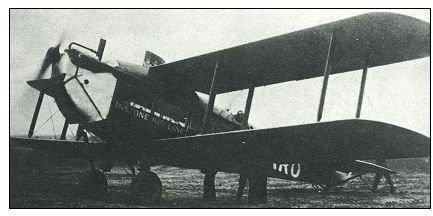
Many British and French companies developed airliners, capable of carrying different amounts of passengers, usually never more than a handful, however. The De Havilland DH.18, as one of the first commercial airliners, was the most successful of these, capable of carrying eight passengers. Another British, the Bristol Pullman could house up to 14 passengers and featured a two-person crew cabin, the first design of its kind. The Bleriot-SPAD S.33, with room for five passengers became the first of the 1920 airplanes to begin standard commercial travel throughout Western Europe. The model was designed in France, but used by many countries.
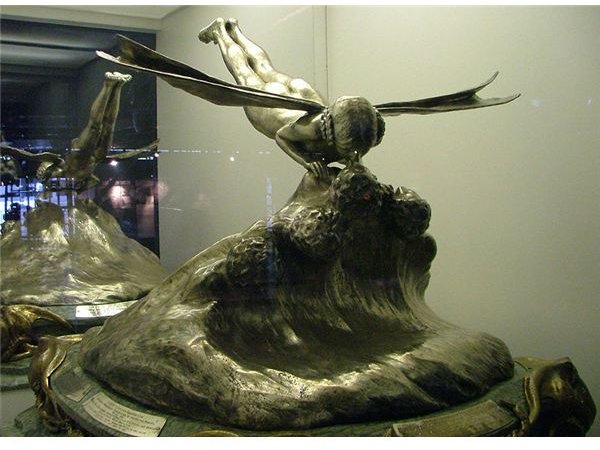
In 1920, airplanes were also featured prominently in a number of different contests, challenging airplane designers to compete against each other. Among the most popular of these was the Schneider Trophy race, held in Venice and featuring seaplanes. This particular year was dominated by Italian designers, particularly SIAI-Marchetti. The company introduced a number of different prototypes, one of which crashed during the race. Historians cite the success of the Schneider Trophy race as one of the principle factors influencing the popularity of seaplanes in the early 20th century.
Above left: De Havilland DH.18. (Supplied by Bzuk at Wikimedia Commons; Public Domain; https://upload.wikimedia.org/wikipedia/en/f/f3/De _havilland_dh-18.jpg)
Above right: Schneider Trophy. (Supplied by Trounce at Wikimedia Commons; Creative Commons; https://upload.wikimedia.org/wikipedia/commons/9/95/Schneider _Trophy_2006-08-10.jpg)
Military 1920 Airplanes
Following World War I, a new emphasis on airplanes as a fighting force for the military was proposed by a number of nations. The United States and the United Kingdom led the movement to build strong air capabilities in the face of future potential conflicts. However, during the first few years after the war, many new designs simply built on the same concepts as had been utilized during the previous conflict, with the exception of a major push for the development of seaplane-type fighters and bombers. The 1920 airplanes and their components reflected this methodology.
Bombing of enemy positions became a primary focus early on in the war, with pilots simply dropping bombs from the cockpits of their aircraft. In 1920, new designs for bombers included ways to position explosives along the wings and under the fuselage. The U.S.-based company Glenn L. Martin Company built the Martin NBS-1, which became the standard bomber in the country’s Air Service from 1920 until 1928. The design was so successful for other countries as well that the only considerable design to challenge its position was the Nieuport London, a British night bomber which was eventually scrapped due to unreliable engine function.
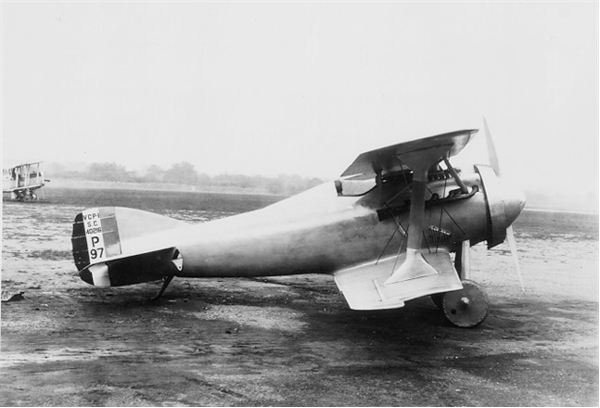
Fighters and surveillance craft were also very important to the continued military aviation industry. Again, the U.S. led this effort with the development of the Leoning PW-2 single-seat monoplane and the Verville-Clarke-Pursuit. Other nations, such as Czechoslovakia and France also became involved with their own designs. The Aero Ae 02 and Letov S-1 were both early successes at surveillance fighters by the Czechs, while the French focused on military training vehicles such as the Bleriot-SPAD S.34 and the Hanriot HD.14, which they sold to Japan, Poland and the Soviet Union.
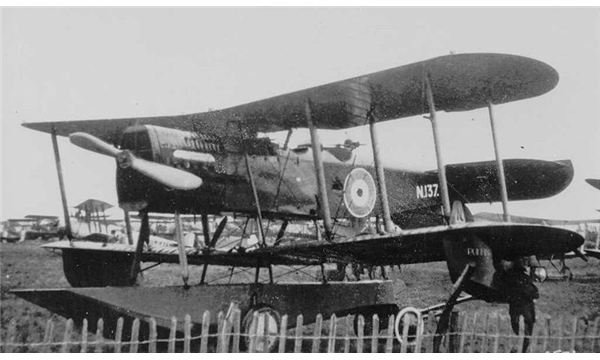
Flying boats were also heavily used by the military as 1920 airplanes were designed. The U.S. Built the Naval Aircraft Factory Tandem Fighter, while the British introduced two models: the Supermarine Sea King and the Parnall Puffin, albeit the latter in a strictly experimental capacity. Italy, too, built a seaplane fighter based heavily on civilian designs. The Macchi M.18 became heavily used by both sides during the Spanish Civil War.
As aviation history unfolded, the 1920’s were a very influential time for the building of airplanes, both for civilians and the military.
Above left: Verville-Clarke-Pursuit. (Supplied by McCook Field Airman at Wikimedia Commons; Public Domain; https://upload.wikimedia.org/wikipedia/commons/9/9c/Verville _Vcp-1.jpg)
Above right: Parnall Puffin. (Supplied by Wikimedia Commons; Public Domain; https://upload.wikimedia.org/wikipedia/commons/b/b4/Puffin2a.jpg)
Resources
1920-30: https://www.1920-30.com/aviation/
Skyways: https://www.dmairfield.org/people/colby _to/Berryloid_color_charts.pdf
AIAA: https://www.aiaa.org/content.cfm?pageid=260&period=1920s