Top 3 Reasons You Should Own a 50mm Prime Lens: Advice for Beginning Photographers
Overview
Prime, or fixed-focal length, lenses were once considered the standard for photographers using single-lens reflex (SLR) cameras. The 50mm prime lens is considered a normal lens and was the kit lens primarily sold with SLR cameras. A normal lens is one with a focal length producing images closest to a person’s normal perspective and field of view.
As technology improved, camera manufacturers began shipping cameras with zoom lenses. Even with the increasing popularity of zoom lenses, many pro photographers continue to use prime lenses for their sharpness and large maximum apertures. While it may be more convenient to have a bag full of zoom lenses, there are still reasons to have a 50mm prime lens in your kit.
For Controlling Depth of Field
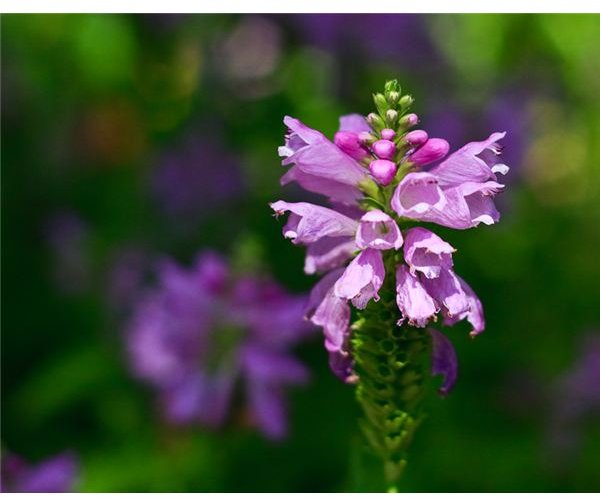
The depth of field in a photograph is the portion of a scene that is considered to be in focus. One factor affecting depth of field is the lens aperture used when taking a photograph. Images taken using a large aperture setting will have a shallow depth of field while a small aperture setting will produce an image with large depth of field. To illustrate, the first photograph shown below was taken using a large aperture of f/2.8. Notice how only the flower is in focus while the background surrounding the flower is completely out of focus. In the second photograph where a small aperture of f/22 was used, most of the scene is in focus.
Many 50mm prime lenses have an aperture range between f/1.8 and f/22 while most consumer zoom lenses have a maximum aperture of f/3.5. The added aperture range of the 50mm prime lens provides a beginning photographer the opportunity to learn how to control depth of field in their images.

For Using in Low Light Situations
In order for the camera and lens to create a proper exposure, a certain amount of light needs to hit the film plane or sensor. Not only is a large maximum aperture useful for controlling depth of field, it also allows the lens to gather more light. Using a larger aperture setting results in a faster shutter speed (time the lens aperture is open) for obtaining a proper exposure.
When shooting in low light using a zoom lens with a maximum aperture setting of f/3.5 or f/5.6, the resulting slower shutter speed often produces blurry pictures. In these situations, the larger maximum aperture of a 50mm prime lens would allow for use of a faster shutter speed to minimize blurry pictures from camera shake.
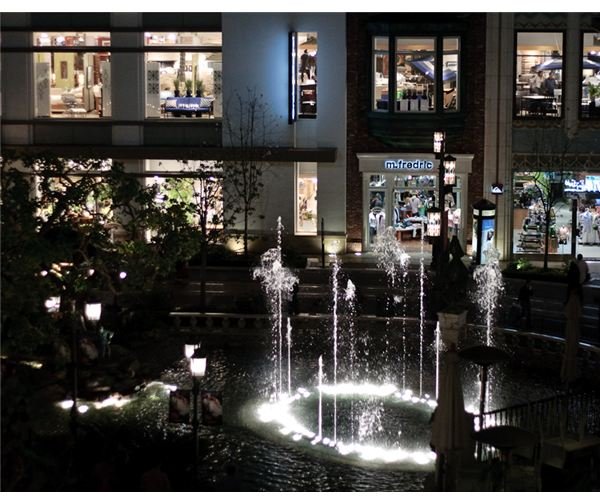
The sample pictures below show the usefulness of a 50mm prime lens in low light situations. Both images were taken with a 50mm prime lens at an aperture of f/1.8.

For Learning Composition
Some photographers feel prime lenses are inconvenient and difficult to use because of their lack of zoom. Prime lenses require the photographer to zoom with their feet to properly capture their subject. While it is true that zoom lenses make photography easier, they can also make us lazy photographers. Zoom lenses allow us to stand in one spot and simply snap away at a subject without though of perspective or composition.
Using a 50mm prime lens requires moving around to properly capture a subject. This process can make a photographer more conscious of what is within the frame of their viewfinder and how perspective and composition changes as they move. For this reason, a 50mm prime lens is ideal for someone wanting to learn more about composing good photographs.