Ever wondered who is best out of Android Market and the iPhone App Store? We approach this question based on various parameters, from the point of view of the developer as well as the user.
Android Market vs iPhone Appstore
Google and Apple are the two major heavyweights battling it out in the mobile arena. Microsoft’s Windows Phone 7 is becoming a popular option, but they are still trying to gain ground on the big boys. Palm and Nokia (Symbian) seem to be clueless about what to do next. BlackBerry has its own marketplace (BlackBerry App World) but that seems to be nowhere when compared with the Android App Store (Android Market ) or the iPhone App Store.
So, let’s compare the Android Market and the iPhone App Store in a number of ways to try and assess which is best, both from the point of view of the developer and the user.
Development
Both Android and iPhone platforms have excellent resources for developers. Android provides the Android SDK for free - as well as basic Android development tutorials.
Apple needs you to sign up to the iPhone Developer program for a fee of $99 per year in order to download the iPhone SDK and access developer resources. Besides these, there are multiple online forums for both the platforms and various development guide books available.
Also, Android uses a Java based programming language whereas iPhone (iOS) uses Objective C with the Cocoa Touch API. Both of them provide excellent testing and debugging tools and allow you to easily publish the applications to the respective stores.
Developer Fees
Google charges a one time fee of $25 to sign up as an Android developer and upload applications to the Android Market. On the other hand, Apple charges $99 to sign up as an iPhone developer and allows you to upload applications to the App Store after a review process. Also, both of them take a 30% cut on all application sales.
Size
Apple’s iPhone App Store is much larger in size than the Android Market - or at least that is true at the time of writing. It houses more than 350,000 applications and games, while it was reported in Business Insider in March 2011, that the Android Market has hit the 250,000+ mark. However, the gap is closing, as in October of 2010, figures put Apple 185,000 apps to the good, over Android, compared to just 100K now.
Finding Apps
Application discovery is a big problem in both the platforms. As there are too many applications in the iPhone App Store, getting your application noticed after publishing it is a huge problem, and may need a huge advertising budget. One of the best ways to get it noticed is to get it in one of the “Top Apps” list. However, the Appstore can also be accessed through iTunes which makes it easier for the users to search and find the applications they need. Also there are various websites which maintain a library of iPhone apps with user reviews.
Visibility in the Android Market is better than the App Store, primarily because there are less applications in it. However, Android Market is not as user friendly as the iPhone App Store, nor does it have a desktop client which makes the application discovery process a bit more complicated (it has improved with the recent updates to their website).
Payments and Refunds
Payments on the iPhone App Store are handled via your iTunes account which is linked directly to your credit card. The payment system is easy and allows you to purchase apps easily via the App Store app or the iTunes interface. Payments on the Android Market are handled via Google Checkout which is nowhere near the iTunes system in terms of usability or convenience. Android has made steps at improving their payment system overall, recently announcing the launch of an in-app payment system to upgrade games etc. without the need to go back to the Market.
Also one major difference between the Android Market and the iPhone App Store is refunds. Android allows you to try out an application and then uninstall it to obtain a refund, whereas the iPhone App Store doesn’t allow that. Android Market’s policy is much better for the user in this respect, although at the end of 2010, they did alter their app return policy , reducing the return period to a more unhelpful 15 minutes, from the previous 24 hours, so you have to be quick. It still means you can (quickly) try out new applications, whereas the App Store’s policy results in greater sales, enabling more revenue for the developer.
Open vs Closed System
This has been a major issue for Apple bashers . The iPhone App Store is a completely closed system controlled by Apple. Once you submit your application to the iPhone App Store, there is no guarantee that it will be published. Apple has been known to reject applications on flimsy issues and whimsical grounds. Common reasons to get rejected are if your application mimics the core OS functionality, does not perform well, is vulgar etc.
The Android Market, on the other hand, has a very open policy; they allow almost all applications that are submitted unless they infringe on some copyright etc. Android also allows pornographic apps, while Apple has purged the iPhone App Store - that may be a major concern for many users.
However, the quality of the applications increases when the approval process gets tougher, which many think leads to much better applications on the App Store.
Fragmentation
Fragmentation has been a major concern for Android developers in the past. Android has a growing number of OS versions from 1.0,
to the recent 2.3 Gingerbread (3.0 if we’re including the tablet OS), and an ever increasing number of devices running them. The more recent good news for developers though is that 2.2 has become the most popular, and when coupled with 2.1 makes for 90% of current users.
As an Android developer there is more concern about supporting older Android OS versions, with each having different display resolutions, different hardware specifications, etc. which leads to application incompatibility. If you are an Android developer, you also have to worry about supporting devices without cameras, devices with or without physical keyboards, devices with varying display resolutions and the UI element orientation on each of them. Android developers have to keep upgrading their apps to make sure they work with every new device and OS release. This leads to an inconsistent user experience. This was one of the reasons which led to the eventual death of J2ME.
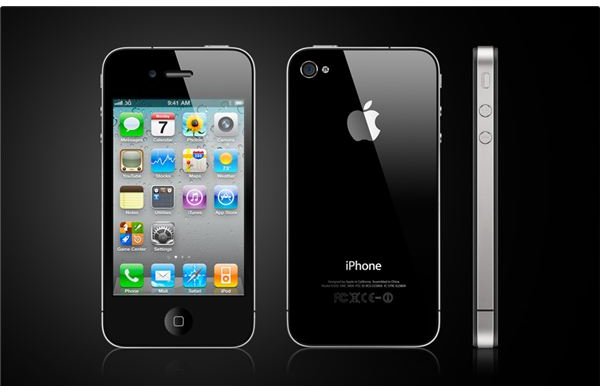
The iPhone on the other hand has only four phone devices to support – iPhone, iPhone 3G, iPhone 3GS , iPhone 4 – and 4 major OS releases. All devices are backward compatible and support similar resolutions except the iPhone 4. They have similar hardware and thus offer a much better user experience across the board.
Conclusion
So what’s the verdict in the App Store vs Android Market showdown? As we can see, both the Android Market and the iPhone App Store have their pros and cons. In a recent forecast report by Gartner, the outlook for Android was decidedly positive, as they predicted Android would account for 49.2 percent of the market share by the end of 2012, versus Apple’s iOS predicted share of 18.9 at the end of the same year.
However, both are great platforms for developers. If you are an application developer, then at the moment your revenue is likely to be higher with Apple apps. In the future though, you need to keep at least one eye on the great expansion that Android is surely set to achieve with their greater number of devices, and higher market share, in relation to Apple.
References
- App Store Features, https://www.apple.com/iphone/features/app-store.html
- Android Market in App Payments, https://www.businessinsider.com/android-market-in-app-payments-2011-3
- Returning apps, https://market.android.com/support/bin/answer.py?answer=134336
- Gartner Forecast Analysis: https://my.gartner.com/portal/server.pt?open=512&objID=260&mode=2&PageID=3460702&resId=1634717&ref=QuickSearch&sthkw=Android+to+become+the+most+popular+OS+by+2012
Image Credits