The Harmful Effects of Nuclear Power Plants After Accidents or Disasters
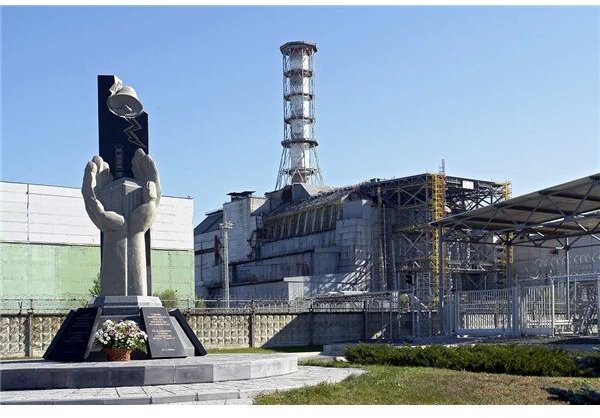
What Happens After a Nuclear Accident?
The “1986 Chernobyl Nuclear Power Plant” accident disrupted and damaged the ecology within the 30 km radius of the power plant in Chernobyl, a town in the Ukrainian region formerly known as the USSR.
Up to this date, the degree of radionuclide contamination due to Caesium-137 or C-137 is still being measured, because it takes about 240 years before the substance loses its radioactive properties. The presence of the mineral Caesium in agriculturally grown foods like wheat, wild berries, mushrooms, milk, as well as those produced by fowls, is still being monitored. This is to determine the present state of soil and ground water contamination.
Post-monitoring of the Chernobyl aftermath disclosed that there were high levels of radionuclide absorption in the soil, which resulted in the loss of coniferous trees (e.g.pines, firs, spruce), deaths among mammals and other animals, as well as a decline in the reproductive capacity of the animals located within 12 to 18 miles of the high-radiation contaminated areas.
The “liquidators” or the clean-up men were not spared despite their protective suits. Twenty-four of these men died of high doses of radiation after four months, 11 died in 1998 while a great majority of them had developed cancers, cataracts, leukemia and other cell mutations or genetic instability.
The harmful effects of the nuclear power plant accident in Chernobyl resulted in the death of 50 employees who suffered from acute radiation illnesses. Nine children developed thyroid cancer within the first five years after the catastrophic incident. The “United Nations Scientific Committee on the Effects of Atomic Radiation (UNSCEAR) 2000 Report” disclosed that 1,800 children residing in highly contaminated areas developed radiation induced thyroid cancer. The children referred to were those who were younger than 18 years when the Chernobyl accident happened in 1986. Due to the damaging effects of ionizing radiation, the numbers are expected to rise to 12,500 by 2036.
Ionizing radiation refers to the absorption of the gamma rays found in manmade radioactive C-137, which is considered as a serious hazard to the human body. Gamma rays have no charge or mass and can easily pass through the body, yet a fraction will always be absorbed or will penetrate into tissues. Hence, the effects of radiation will be passed on to offspring particularly to daughters, due to the instability of genetic materials. Accordingly, brain tumor cases increased at a rate of 5.8 times in young children and by 10 times among newborn.
The Chernobyl plant provided hundreds of jobs to the Ukrainians that its loss also reduced them to poverty, because even their lands were no longer fit for farming. According to those who were tasked to provide assistance to the populace, the most difficult disorder they had to handle were the psychological impacts of the disaster. People lost jobs, land, and health. They broke social ties and were relocated. The fear of the effects of radiation caused terrible stress and trauma, which was too much to bear along with their economic hardship.
The Importance of Post-Monitoring a Nuclear Disaster
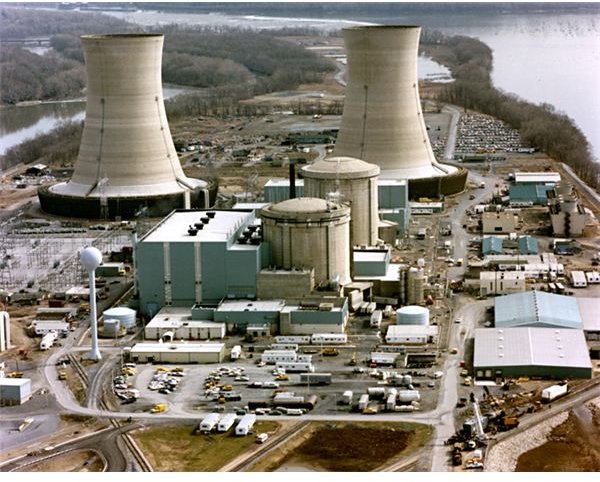
In stark contrast to the amount of attention given to the 1986 Chernobyl accident, was the handling of an earlier nuclear event known as the 1979 U.S. Three-Mile Island (TMI) Accident .
Initial investigations disclosed that about 50 percent of TMI plant’s reactor core melted, wherein 20 tons of uranium fuel was spread out on the containment floor. It took the plant officials more than a few hours before the incident was reported to the authorities. Accordingly, gas continued to escape and radiation had already reached the surrounding community, while the people still went about their businesses. Some of them sensed something was wrong because they remembered having the taste of metal in their mouth.
After five days, all the mess had been cleaned up and people went back to their homes and to their lives . The plant officials informed the people that the average radiation they received was just equivalent to a chest X-ray. In fact, a doctor at Penn State University gave assurance that the long-term effects of radiation on the human body, has yet to be proven.
Despite the high-incidences of cancer reported in areas near the plant, no formal post-monitoring was ever documented. The husband and wife team of physicists assigned to do the task, had to leave town and cut short their engagement. This was after the husband and the wife’s visiting brother was run off the road by an onrushing car, resulting in the brother’s death.
After more than thirty years, the people near the Three-Mile Island nuclear power plant seemed to be contented with how life went on despite the rising number of deaths due to cancer in their community. All that mattered was they still had their jobs, their homes and their family members, albeit dying of cancer.
To date, the Three-Mile Island nuclear power plant is still providing jobs for the community. The plant’s renewal of license to operate was granted in 2009 and is expected to continue its operations up to 2034. In the earlier days, post-monitoring the harmful effects of radiation brought about by power plant accidents was not a rigid requirement.
The changes took effect after the 1986 Chernobyl accident took place, in which attempts to cover up the incident was thwarted by the international community.
What Happens if a Power Plant’s Flawed Systems and Design are Ignored ?
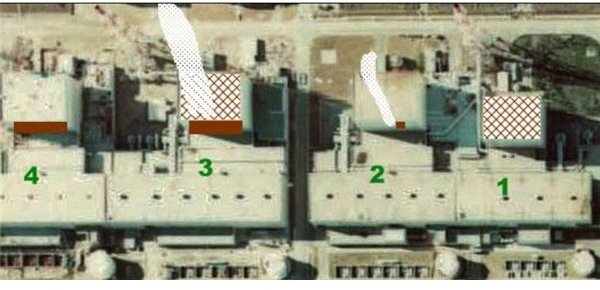
Two years after the 1986 Chernobyl accident, Mitsuhiko Tanaka, a nuclear engineer who helped design the Daiichi nuclear power plant in Fukushima, Japan, communicated with Japan’s Ministry of of Economy, Trade and Industry to report a cover-up, which he himself orchestrated.
Tanaka, revealed that the steel vessel containing the fuel rods in Daiichi plant’s number four reactor was faulty. The engineer disclosed that in 1976, he and his team performed a steel-strengthening procedure by subjecting the container to a temperature of 600 degrees Celsius or an equivalent of 1,112 degrees in Fahrenheit. Thereafter, Tanaka found out that the steel walls of the vessel had warped under the intense heat and that the steel braces, which should have been placed as support inside the container, were missing.
The engineer decided to manipulate the computer-aided designs, in order to pass regulatory inspections.. Accordingly, this was with the blessings of Babcok-Hitachi, K.K., the company tasked to manufacture the steel vessel. Unfortunately, Mitsuhiko Tanaka’s confession, which was made ten years after the cover-up and two years after the Chernobyl accident, was not enough basis for the Japanese government to order Daiichi’s shut down. .
In 1990, in his desire to make a clean-breast of everything he knew about nuclear power plants, Mitsuhiko Tanaka wrote a book entitled, Why Nuclear Power Is Dangerous. Still, it was apparent that the engineer’s information did not create enough impact.
In 2002, Chairman Hiroshi Araki of Tokyo Elecrtic Power Co. (TEPCO), the operator of the Daiichi facility admitted that their company had submitted hundreds of falsified data and fake maintenane reports in order to pass the scrutiny of government regulators. The admission resulted tin Chairman Araki’s resignation while TEPCO and its Daiichi plant continued to operate after a brief suspension.
In 2007, TEPCO was once again faulted for concealing information about six incidents of emergency stoppages at the said plant’s number three (3) reactor.
Last March 11,2011, the faulty designs and systems of the Daiichi nuclear power plant bogged-down, when the site was struck by the powerful forces of nature. This was after an unexpected magnitude 9.0 earthquake shook the grounds and a great tsunami lashed against the power plant. The severity of the nuclear disaster was initially placed at level four (4), and has since elevated to level seven (7), which is the highest on the INES (International Nuclear Event Scale).
The government of Japan had to evacuate around 200,000 people, as the radioactive materials released by the plant reached far and wide. Threats of radiation has reached Tokyo’s outskirts – as far as 135 miles or 210 kilometers toward the south. Although, reports coming in from neighboring countries and even from as far as the U.S. disclosed that radioactive materials have entered their respective atmospheres. However, they were monitored to be at low levels and still within the safety limits.
To date, Japan is in a state of economic limbo because of the enormous devastation problems they have to face. The magnitude 9.0 earthquake and the 15-meter wavelength of the ensuing tsunami, substantially destroyed their livelihood and their environment. As if this wasn’t enough, the worsening condition of the Daiichi power plant has aggravated their economic problems.
Why Do Advocates Insist that Nuclear Plants are Safe?
The advocates and supporters of nuclear facilities insist that they are safe because of the unique “defense-in-depth” system. Defense-in-depth refers to the multiple layers of safety measures against the anticipated human and mechanical failures of a nuclear facility. Each layer independently functions as a safety control, without the need to rely on the performance of the other layers. Yet today, we could never be sure because many have admitted that they resorted to cover-ups and falsified data to hide the flaws in their systems.
Nuclear engineers and power plant operators overlooked the possibilities of accidents that can happen beyond systems and human error or even terrorist attacks. There is always the Greater Power; hence, there is no guarantee that the accidents will not happen again.
References
- Japan Nuclear Disaster Caps Decades of Faked Reports, Accidents
- [Startling Revelations about Three Mile Island Disaster Raise Doubts Over Nuke Safety](http://www.alternet.org/environment/134977/startling_revelations_about_three_ mile_island_disaster_raise_doubts_over_nuke_safety/)
- Twenty Years After The Chernobyl Nuclear Power Plant Accident
- Image: Wikimedia Commons/“National Land Image Information (Color Aerial Photographs), Ministry of Land, Infrastructure, Transport and Tourism”.
- IAEA -Feature Stories 15 years after Chernobyl accident...
- Image: Wikimedia Commons/By Mond
- Part One The Problem:Nuclear Radiation and its Biological Effects
- Image: Wikimedia Commons/“DOE photo”, i.e. not copyrighted
This post is part of the series: Important Facts About US Nuclear Power Plants
About to enter a new phase in clean energy, US nuclear power plants will replace sources that rely on fossil fuel burning. Although the promise of low carbon emissions and economic growth are attractive, we should also learn more about the downsides of this major decision as well.