Types of Lava Flows & Composition of Pahoehoe, Aa, Block & Pillow Lava
Lava is molten rock that is ejected from a volcano during an eruption. There are many different types of lava flows- this diversity depends on the composition of the volcanic rock, and the style of volcanic eruption. Here’s a look at some of the most common types of lava flows you might find in the field and how to recognize them.
Types of Lava Flows
Pahoehoe (pronounced: pah-hoy-hoy)
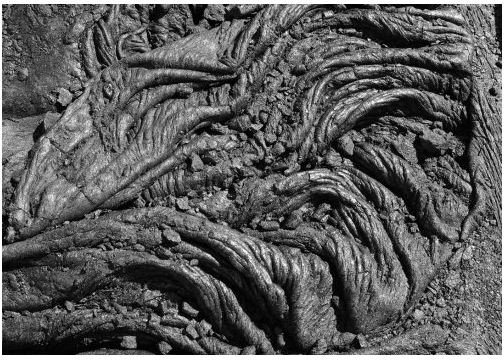
Pahoehoe is a Hawaiian term for “smooth.” A pahoehoe lava flow derives from a basaltic volcanic eruption that is extremely hot with a low viscosity. For this reason, the lava flows freely over a large surface area and takes a long time to cool. Types of pahoehoe lava flows are famous for their twisted, “ropey” texture. As the lava flow slowly cools, a smooth, delicate film forms over the surface. This film gets repeatedly broken by the hot, progressing bulk of the pahoehoe lava, creating a system of tubes, lobes, and ropes downhill. When the pahoehoe fully solidifies, it has the effect of a massive, rushing, black river flowing from the vent of the volcano.
Sheet Lava
Sheet lava is aptly named because it resembles a massive, black blanket of rock over a flat surface area. Like pahoehoe, sheet lavas are basaltic and wide-spreading. They emerge from fissure volcanic eruptions in large flat regions. As a sheet lava flow pools and begins to cool, the still molten interior will buckle the crust to create a mosaic of swirls, seams, and lobes.
Aa (pronounced: ah-ah)
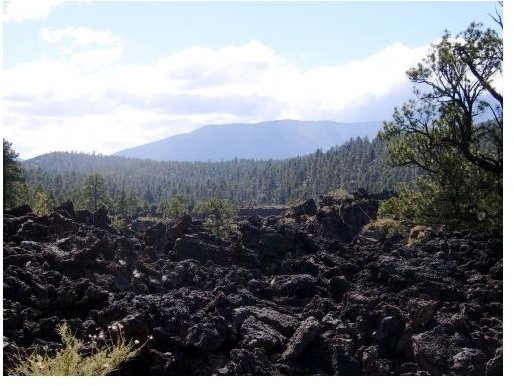
Aa is a Hawaiian term meaning “rocky” or “ragged.” Types of aa lava flows are characterized by their sharp edges, jagged surface, and heaping piles of crumbled volcanic rock. Unlike pahoehoe, aa is highly viscous and relatively low temperature, as the lava has lost its volcanic gases before the volcanic eruption. A heavy crust cools quickly over the surface of the aa flow, while fresh, hot lava bulldozes its way through and breaks the crust up into jagged piles of rock. This buildup can form a wall or a dam that contains the lava flow after awhile, preventing aa volcanic eruption from spreading over an extensive distance. Occasionally pahoehoe flows will graduate to aa as they move further from the vent and are allowed to cool. The eruption of Mauna Loa, Hawaii in 1984 was an example of an aa type of lava flow.
Block Lava
Block lavas emerge from a volcanic eruption highly viscous and moderately cooled. These types of lava flows tend to be thicker and heavier than aa flows but are often classified as the same. While aa is generally basaltic, block lava is composed of felsic rhyolite or andesite which is lighter in color, cools much faster, and travels slower than aa flows.
Pahoehoe l Aa l Pillow Lava
Pillow Lava
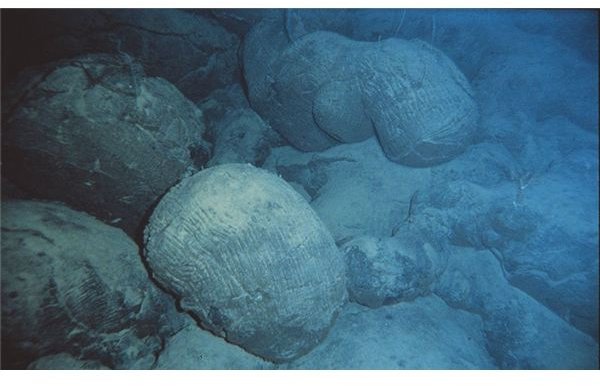
Pillow lava occurs when a volcanic eruption happens underwater on the ocean floor or beneath glacial ice. On contact with the water, the lava quickly solidifies as a bubbly, pillow-shaped rock, winning its name. Cracks in the pillow may ooze hot lava which solidifies upon exposure as well, giving the formation a soap-bubble appearance. Should you find pillow lava in the field, you can determine that the volcanic region was once covered in water or sheets of glacial ice.
Volcanic Bricks and Bombs
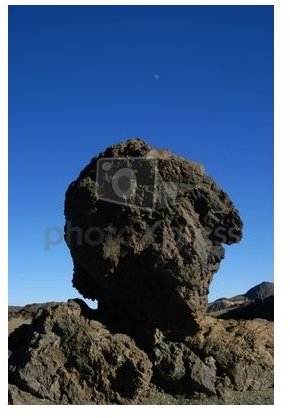
Volcanic bricks and bombs solidify while airborne during a volcanic eruption. Highly viscous lava that is nearly solidified will finish cooling in the air and hit the ground as a jagged, pyroclastic chunks called a “bricks,” while less viscous, basaltic lava may cool in the air giving it a streamlined, teardrop shape that is called a volcanic “bomb.”
Volcanic Brick
Volcanic Ash
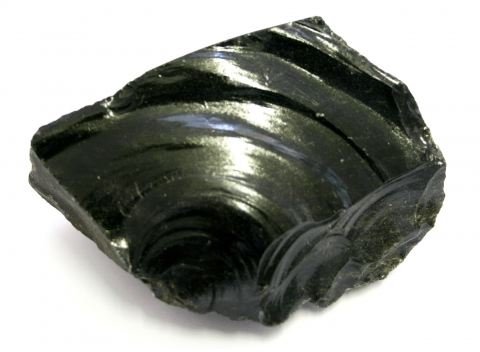
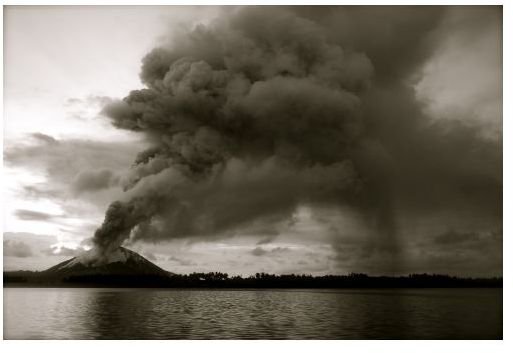
Volcanic ash is made up of small particles of rock and obsidian (or volcanic glass) that is pulverized and blasted skyward during a volcanic eruption. The most devastating ash eruptions occur as pyroclastic flows which may travel at speeds of up to 200 km/hour downhill and bury everything in the way. Unlike ash off forest fires and house fires, volcanic ash does not dissolve in water due to the nature of its composition. Though it isn’t poisonous, volcanic ash is abrasive and can irritate eyes and lungs when a person is exposed to it. A dense fall may suffocate livestock. Fine particles of ash may remain airborne for many years and drift over oceans and continents. Volcanic ash may compact and solidify as a sedimentary rock called tuff.
Obsidian Volcanic Glass l Volcanic Ash Eruption
Benefits of Volcanoes
Devastating as volcanic eruptions can be, they are also incredibly valuable to the environment. Soil resulting from a volcanic eruption is rich in minerals that help plants grow. Volcanic regions are generally dense with native plants and animal species that thrive on the nutrients provided by the volcanic eruption. Volcanic processes are responsible for many precious gemstones and mineral deposits that benefit our economy. Geothermal energy, a vital natural resource providing electricity, wouldn’t be possible without volcanoes.
References
https://library.thinkquest.org/17457/volcanoes/hazards.lavaflow.php
https://en.wikipedia.org/wiki/Lava
https://en.wikipedia.org/wiki/Volcanic_ash
https://science.jrank.org/pages/7256/Volcano-Volcanic-benefits.html
This post is part of the series: Exploring Volcanoes
A comprehensive guilde to some of the world’s most famous volcanoes, geysers, lava flows, and volcanic rock formations.