Estuarine Dependent Fish Life Cycle: Introduction and Diagram
Estuaries
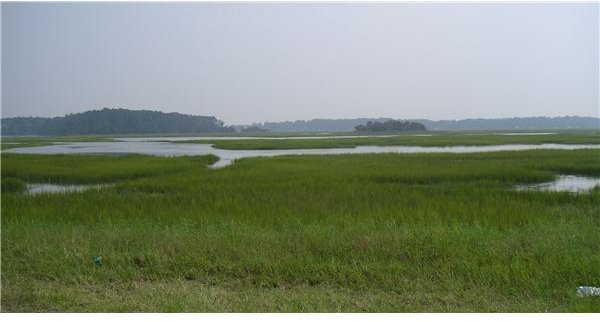
An estuary is, essentially, a place where rivers meet the sea. It’s a place where fresh river water mixes with salty ocean water, water levels have a tidal cycle, river sediments bring in a lot of nutrients, and at the ocean end there are waves. Many river deltas, semi-enclosed bays, fjords, and sounds are estuarine environments. A wide variety of habitats are found in and around estuaries, such as marshes, mud flats, mangrove forests, oyster reefs, and seagrass beds. These support highly diverse ecosystems of finfish, shellfish, and birds.
Estuaries play an important role in the life cycles of many marine fish species normally found offshore, by providing nursery habitat for their juveniles. The open ocean has fewer food sources than estuaries and much less cover from predators. Also, by spending time in a habitat separate from adults, juveniles can avoid competing for the same resources while too small to succeed.
Spawning and Larval Phase
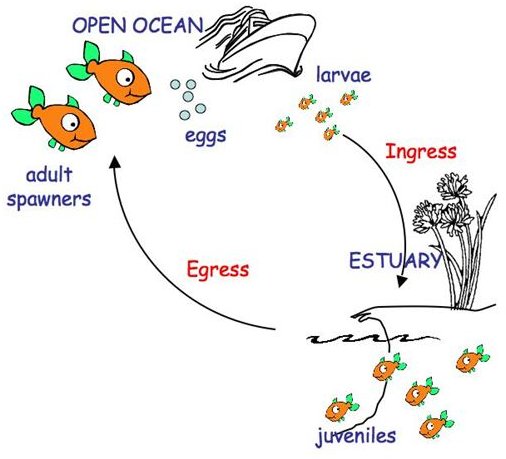
Adult fish typically spawn offshore in groups, by releasing eggs and sperm together into the water. The gametes mix to make fertilized eggs, which disperse into the ocean currents where they become part of the plankton. Eggs hatch into yolk sac larvae after a few weeks. After yolk is depleted, larval fish eat plankton smaller than themselves, such as diatoms, dinoflagellates, and copepods. Larval fish in turn are eaten by larger plankton, such as jellyfish, chaetognaths, and larval crabs.
Plankton are any living thing of any size in the water column that swim too weakly to directly control where they go. Like other plankton, fish eggs and larvae cannot actively swim long distances, but are carried by ocean currents. Larvae can, however, have some control of which direction they are carried by moving into and out of different currents, which flow in different directions depending on depth and often have tidal cycles near shore. In places where prevailing ocean currents have a known, predictable pattern, the location of larval fish at any given time will also have a pattern. Typically, larval fish of estuarine-dependent species move toward shore as they continue to develop.
Estuarine Ingress at Settlement Stage
Assuming that the fish do not starve, get eaten, or become lost on the wrong ocean currents, near the end of the larval duration they ingress into an estuary, usually under cover of night. Some species have a lunar pattern to their timing of ingress, which may be a sign that they actively choose their timing, or may simply reflect a lunar pattern of adult spawning.
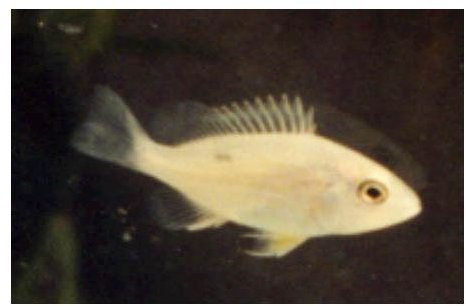
Larval fish undergo an extremely rapid transformation (or metamorphosis) into juveniles during ingress; juveniles resemble miniature adults. Transformation typically occurs overnight, and the change can be quite dramatic. For example, larval flounder have an eye on each side of the head like other fish; during metamorphosis, one eye migrates over the top of the head and to the other side so that both eyes are on the same side, as in flounder adults, all within twelve hours.
Estuarine-Dependent Fish Life Cycle Diagram
Juvenile Phase and Egress
Juvenile fish enjoy the safety and plenty of their estuarine nursery habitats as they continue to grow over the course of several months, or the span of a season. At the end of the season, they egress from estuaries as young-of-the-year adults and join adult populations offshore. Egress often occurs under cover of night as well, and tends to be influenced by physical factors like changes in water temperature.
Picture Notes
Estuarine salt marsh picture by article author.
The lane snapper, Lutjanus synagris, is an example of an estuarine-dependent marine fish that lives offshore as an adult. It ingresses into the estuary at a size of around 20 mm (3/4th inch). Photo was taken by article author.
Life cycle diagram also made by article author.
Article author’s MS thesis was about larval Lutjanine snappers.
This post is part of the series: Fish Life Cycles: Marine Fish
Marine fish are highly diverse, with a wide variety of different life cycles. Many inhabit different types of marine environments at different parts of their life cycles. Some are wholly marine while others also use the brackish habitats of estuaries or even freshwater.