Learn about the three most common types of volcanoes: shield volcano, cinder cone and composite volcanoes. Exploring and classify the world’s most famous volcanoes, based on shape and style of volcanic eruptions, including Mauna Loa, Mt. St. Helens, Mount Vesuvius, and Mount Fuji.
Volcanoes are not all created equally. They vary in size, shape, composition, and style of volcanic eruptions. With this guide, you’ll be able to tell the difference between the three most common types of volcanoes: the shield volcano, cinder cone volcanoes, and composite volcanoes. Famous volcanoes such as Mauna Loa, Mt. St. Helens, Mount Vesuvius, and Mount Fuji all fall into one of these three categories.
Shield Volcano
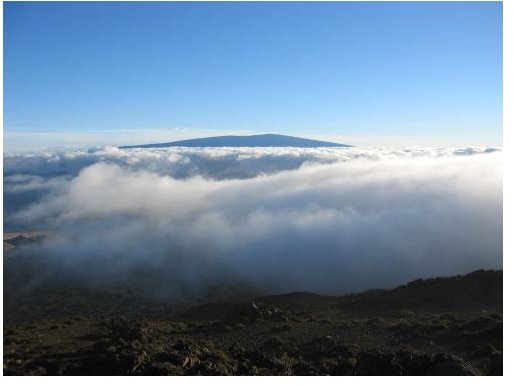
The shield volcano is aptly named for its appearance- short and broad with gentle slopes. Generally, a shield volcano produces successive and copious flows of smooth, hot, wide-spreading, basaltic lava. Due to its extreme temperature, the lava takes a long time to cool, allowing it ample time to cover many tens of kilometers- forming a vast shield of basalt before it solidifies into lava rock. Over thousands of years and hundreds of volcanic eruptions, the shield volcano is built up layer by layer.
One of the most famous volcanoes of Hawaii, Mauna Loa, is a classic example of a shield volcano. In fact, all the islands of Hawaii are shield volcanoes stacked one upon the other high enough to emerge out of the ocean. Mauna Loa measured from the ocean floor to its peak is actually the tallest volcano on the planet at a full 10km high.
Typically, a shield volcano eruption is not an explosive one. Because the basaltic magma is so fluid and hot, it tends to gush from the main volcanic vent in small spurts of lava. If water mixes into the magma, the hot steam may force the lava upward faster and stronger creating a fountain effect, however, an explosive shield volcano is a rare sight.
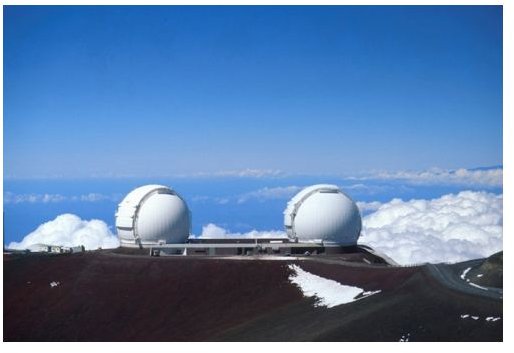
Mauna Loa, Hawaii l Observatory on Mauna Loa
Cinder Cone Volcanoes
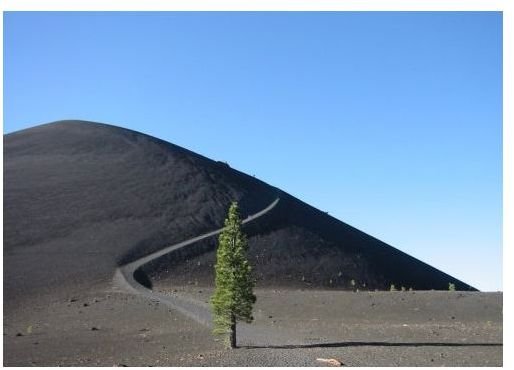
Cinder cone volcanoes (or scoria cones) are steep-sided, conical, volcanoes generally made up of pyroclastic (large and block-shaped) material. When cinder cone volcanoes erupt, large, solid lava fragments fall closer to the entrance of the vent while ash and smaller particles float further downhill. For this reason, the foundations of cinder cone volcanoes gently slope while the further you travel uphill, the more difficult and rocky your climb. Over time and the course of several volcanic eruptions, ash and lava build up layer by layer, welded together by their own heat. Cinder cone volcanoes may appear on the flanks of shield volcanoes and composite volcanoes or with their own central vent.
Pyroclastic volcanic eruptions from cinder cone volcanoes are of the most deadly variety. They occur when a buildup of heat and pressure from the underlying magma chamber rises close enough to the surface to blast the overlying rock into fragments of all shapes and sizes. Usually the eruption is explosive enough to carry a devastating, hot cloud of volcanic lava, gases, and ash at speeds of up to 200km/hour downhill- destroying everything in its path.
Paricutin, a cinder cone of Mexico, Cerro Negro, a cinder cone of Nicaragua, and the Red Cone volcanoes of California are a few of the most active and famous volcanoes in the world.
Cinder Cone Volcano
Composite Volcanoes
Composite volcanoes are often referred to as stratovolcanoes because of their layered structure of various strata- alternating lava, ash, and pyroclastic materials. Composite volcanoes are the steepest and most common volcanoes in the world, though not necessarily the most active. When someone describes their impression of a volcano, composite volcanoes are generally what they have in mind. Composite volcanoes are most commonly found in mountainous regions at a convergent plate boundary - such as the Andes Mountains. Mount Fuji in Japan, Mount Vesuvius in Italy, and Mt. St. Helens in Washington are three of the most famous volcanoes in the world.
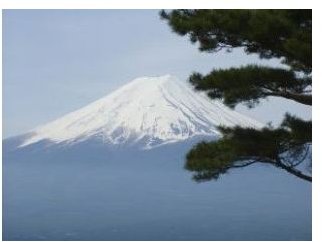
Fujiyama, nicknamed Mount Fuji, won its status as one of the world’s famous volcanoes with its last explosion in 1707—possibly Mount Fuji’s most deadly eruption in history—burying farmlands, villages, and Buddhist temples within 10km of the volcano. The majestic summit of Mount Fuji is today a popular rock-climber’s tourist destination.
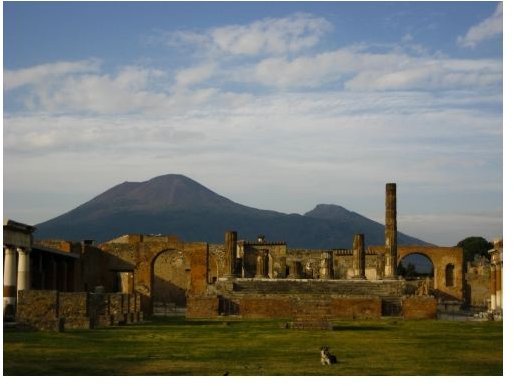
Mount Vesuvius, also active today, is considered one of the most dangerous composite volcanoes in the world. Mount Vesuvius was responsible for the devastation of the Roman city Pompeii and the deaths of some 25,000 people back in 79 CE—claiming its status as one of the world’s most famous volcanoes for the legacy it left behind.
The ruins of Pompeii have given geologists insights into the damage composite volcanoes are capable of. Mount Vesuvius blasted the city with 12 consecutive layers of ash and lava so quickly and ruthlessly that it preserved the horrified faces of its victims with startling detail. Tourists to the ruins of Pompeii can see firsthand how the incredible heat from the layers of ash, and the protection it served from moisture and air, seemed to capture the city (and all the people in it) at the base of Mount Vesuvius in one moment of time.
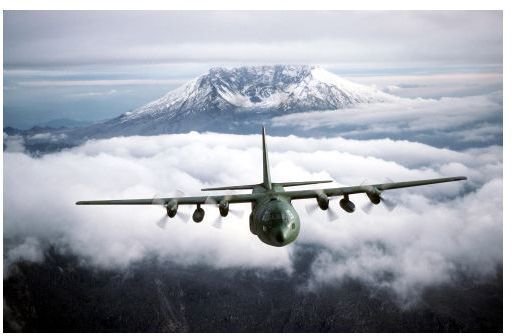
Of the United States’ most famous volcanoes, Mt. St. Helens tops the charts for its catastrophic eruption of 1980—still regarded as the most devastating volcanic eruption in American history. A massive avalanche of volcanic debris killed more than 50 people, destroyed more than 250 homes, and tore down miles and miles of railroad and highway, leaving the country in financial ruin. Native American lore describes numerous volcanic eruptions of Mt. St. Helens prior to white settlers—taking lives, damaging food sources, and forcing tribes to disperse.
Mt. Fuji, Japan l Ruins of Pompeii, Mount Vesuvius l Peak of Mt. St. Helens in the Clouds
Volcano Terminology
Magma: Molten rock deep within Earth that may cool and crystallize to form plutonic igneous rocks or be ejected to the surface as volcanic lava.
Lava: Magma that has been ejected to the surface through a volcanic vent or fissure and then cools to form volcanic igneous rocks.
Pyroclast: Fragments of volcanic material ejected with lava during volcanic eruptions.
Crater: Area surrounding a volcanic vent that has sunken in or eroded away as a result of weathering and volcanic eruptions.
Caldera: When the ceiling of a magma chamber is too weak to support the immense mass of the volcanic rock formation above, it collapses, and the entire volcano sinks into the magma chamber forming a caldera (a really, really, big crater.)
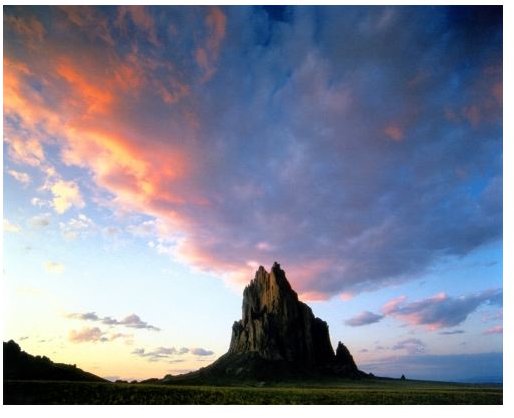
Diatreme: Sometimes referred to as a “volcanic neck.” When a volcano settles down after an explosive eruption, the vent may become filled with volcanic breccia which solidifies into igneous rock. If the surrounding material is weathered away, the resulting structure looks like a massive tower of black stone. Shiprock of New Mexico is a great example of a diatreme or volcanic neck.
Lava Dome: When lava is incredibly viscous, it may pile up over the vent and pool in the crater of the volcano instead of flowing over during volcanic eruptions. Here, lava will solidify to form a volcanic dome (or cork) that will plug the vent of the volcano until the next explosive eruption.
Parasitic Cone: A smaller cone on the flank of a large volcano with a feeder vent that connects to the main volcanic vent or magma chamber.
Fissure: A volcanic eruption that emits lava through a rift or elongated fissure in the ground instead of a centralized vent.
Fumarole: A small vent or geyser that periodically emits volcanic gases and hot water steam. The surrounding pool is rich in sulfur and carbon dioxide.
Batholith: A great, irregular mass of plutonic igneous rock that forms when a chamber of magma cools and crystallizes below the surface.
Dike: A vertical intrusion of igneous rock that cuts through the surrounding rock layers—forms when a vein of magma cools and crystallizes.
Sill: A horizontal intrusion of igneous rock that runs between the surrounding rock layers—forms when a vein of magma cools and crystallizes.
Diatreme Volcanic Neck- Shiprock, New Mexico
References
Press, Frank; Siever, Raymond. Understanding Earth: Third Edition. W.H. Freeman and Company, New York, NY, 2000.
https://en.wikipedia.org/wiki/Shield_volcano
https://en.wikipedia.org/wiki/Cinder_cone
https://library.thinkquest.org/17457/volcanoes/types.php
https://en.wikipedia.org/wiki/Stratovolcano
https://www.cotf.edu/ete/modules/volcanoes/vmtvesuvius.html
This post is part of the series: Exploring Volcanoes
A comprehensive guilde to some of the world’s most famous volcanoes, geysers, lava flows, and volcanic rock formations.