About the Florida Everglades: Largest Wetlands System in the United States
About the Everglades
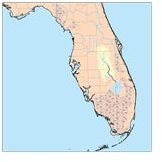
The Everglades, considered the largest subtropical wetlands system in the United States, are located in the southern part of Florida. Although many think of the Everglades as only the Everglades National Park, the system actually starts near Orlando with the Kissimmiee River which flows south into Lake Okeechobee. Water from the lake flows to Florida Bay at the southern end of Florida and mixes with the salty waters of the Atlantic Ocean.
Much of the biodiversity of the Everglades is due to extreme seasonal shifts of flooding in the wet season and fires and drought during the dry
season. Several interdependent ecosystems - mangrove swamps, sawgrass pairies, cypress swamps, pinelands, marine esturaries and hardwood hammocks - make up the Everglades. Like all ecosysystems they shift, die or grow in repsonse to environmental factors.
Ecosystems in the Everglades
Sawgrass Marshes & Sloughs - Sawgrass is found in the shallow river that flows from Lake Okeechobee to Florida Bay. Sawgrass thrives in slowly moving water, but usually dies in deep water and after a fire. Sloughs, about 3 feet deeper then marshes, develop in between sawgrass marshes and stay flooded year round. Animals including alligators, turtles, snakes, and fish live in the sloughs feeding on invertebrates and plants.
Hardwood Hammocks - Hammocks are small islands of trees growing on limestone mounds 1-3 feet above freshwater sloughs, pineland and sawgrass marshes. They are made of a mixture trees including the southern live oak, gumbo limbo, royal palm and bustic and saw palmettos. The trees are limited factors such as frost, fire, lightning, and wind; most trees in hammocks grow no higher than 55 feet. The white-tailed deer, green tree frogs and endangered red-cockaded woodpecker make the hammocks their home.
Mangrove forests - Red, white and black species of mangroves thrive in brackish water, where salt and fresh water meet. They have adapted to poor soils, storms and extreme water level changes. Mangroves in the Everglades produce large numbers of pink shrimp and stone crab; serve as nurseries for other crustaceans, fish and provide a nesting place for birds.
Pinelands - Located in one of the dryest areas, the Pineland is home to the South Florida slash pine which needs fire to maintain them. The pine bark insulates them from fire and their cones open with the heat to release the seeds. Heat resistant cabbage palm, saw palmetto, and West Indian lilac dominate the understory. The Eastern indigo snake, fox squirrel and the endangered Florida panther live here.
Cypress Swamps - The Big Cypress Swamp is almost 2,000 square miles and covers most of Collier County. Cypress trees, with buttressed trunks and “knees”, grow in strands on ridges of limestone and thrive in standing water. Pop ash, red maple, and swamp bay are also found with cypress.Several birds nest in the cypress including the Wood stork, red-shouldered hawk, and great crested fly-catcher.

Marine Estuaries - the area known as the Florida Bay includes the Keys and is made of mangroves which provide a nesting ground of turtle grass and algae. Sea turtles nest on the shore annually and feed on the beds of turtle grass. Manatee spend their winters in the warm waters of the bay, also feeding on the grass. Worms and calms eat the algae and small plankton.
Due to some environmental problems, there are also a number of endangered species in Florida.