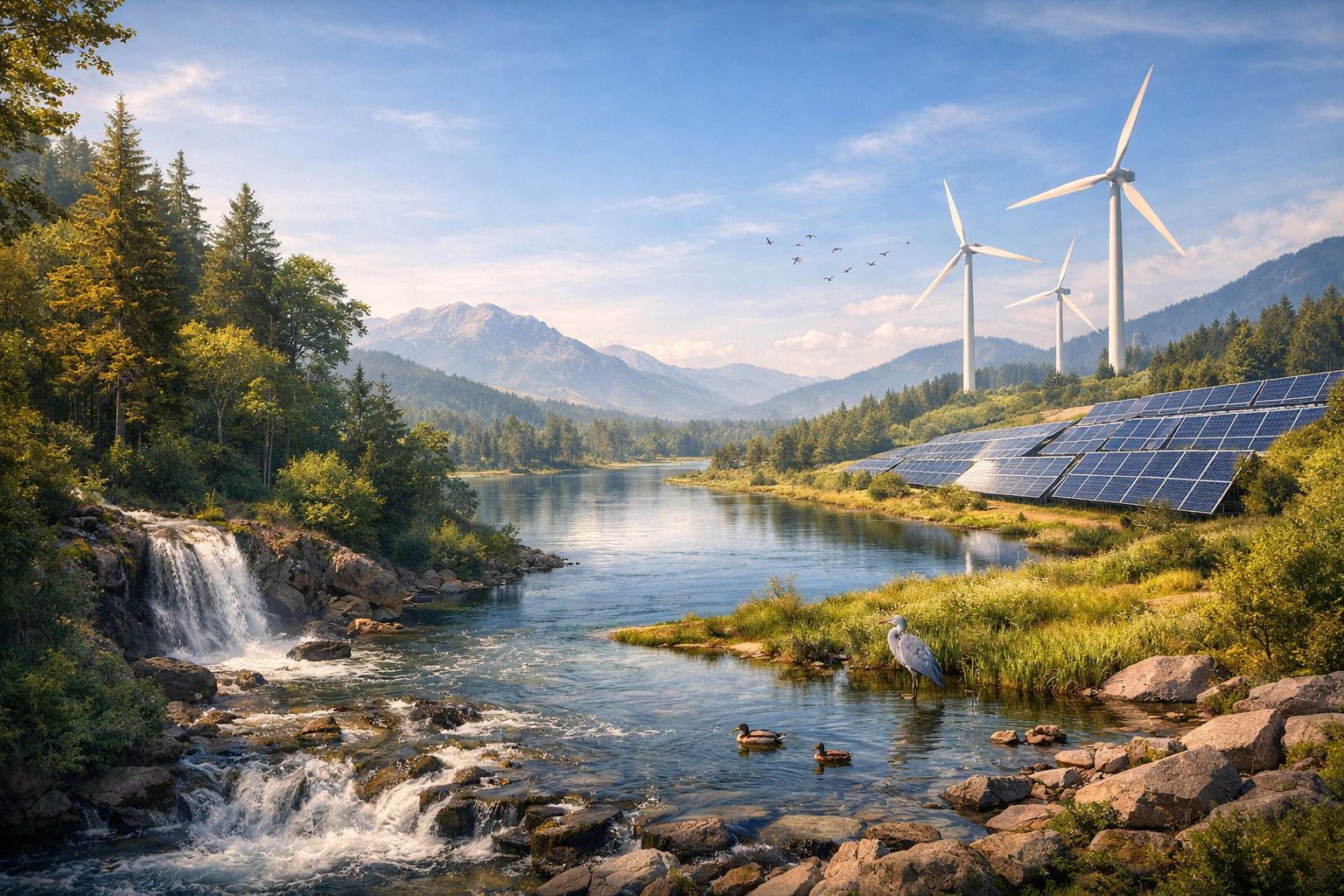
A comparison of George W. Bush ERA environmental policies with those in the beginning of Barrack Obama’s administration. Also why the U.S. can and should take the leading role in global environmental issues.
Bush Didn’t Get It
Comparing the Bush administration’s “response” to global environmental change and how the Obama administration is gearing up to respond is analogous to comparing the Indy 500 to the S&P 500. Beyond the common numeral there really is no comparison. President George W. Bush did some good things for our environment, such as creating a marine reserve in the Palmyra Atoll region of the Pacific Ocean, (Velasquez-Manoff, 2009) but his failure to recognize the implications of global environmental change and the planet as the cohesive ecological system that it is precipitated inaction, and thus a waste of valuable time in the efforts to both mitigate and adapt to this change.
The Big Picture
The Bush administration’s failure to see the big picture in reference to global environmental change can clearly be seen in the resulting outcomes of his eight years as president. The withdrawal of the U.S. from the Kyoto treaty is both an important symbol of American isolationism from Europe and a direct link as to why the country (and perhaps the world as a whole) has not reduced greenhouse gas emissions and other pollutants that affect the global environment. The Kyoto agreement is not without flaws but the unwillingness to negotiate, or inaction, was not conducive to a good outcome for the global environment.
“Greenhouse” Gases
According to the Energy Information Administration (EIA) the United States greenhouse gas emissions went up by 1.4% in 2007. An article in the LA times states carbon dioxide emissions rose by nearly 2.0% in the U.S. in 2007 while Denmark’s went down by 8%, the U.K. and Germany 3%, and France and Australia 2%. Granted, this is only a single year, but considering the breadth of the consequences and that Bush had been in office since 2000, these numbers sum up rather well the effect of his administration on global environmental change.
Bush Environmental Policies Overturned
The ironic nature of the Bush administration’s response to environmental change is that the best aspect of it is reflected in policy’s that did not take effect. The administration made a habit of changing environmental regulations, many of which have been overturned by the Supreme Court. It’s a tribute to our system that these efforts were not allowed to come to fruition. An example is the blocking of “changes to the rules that govern what kind of logging, mining or other activities can be allowed in national forests.” (Shogren, 2007) Carol Browner, head of the EPA in the Clinton administration and Obama energy “czarina”, is quoted as saying:
“As dreadful as the Bush administration has been with respect to clean air and forests and all these environmental issues, the courts have been really our savior. And have time and time again in the last years [it has] stepped in.” (Shogren, 2007)
Another example of Bush environmental policy being thwarted is President Obama’s retracting of regulations inserted by Bush before he left office. One such regulation “would have opened 2 million acres of public land in Wyoming, Colorado, and Utah for oil-shale drilling.” (O’Carroll, 2009)
Environment vs. Economy
It appears that Bush was mired in the old ways of pitting the environment against the economy. In an April 2008 speech Bush states “The Kyoto Protocol would have required the United States to drastically reduce greenhouse gas emissions. The impact of this agreement, however, would have been to limit our economic growth…” (The White House Office of the Press Secretary, 2008) I maintain that this did not have to be, and that Obama has offered a glaring contrast to this outdated thinking. Obama campaigned on stimulating the economy in part by creating “green” jobs and fostering energy efficiency that will both save money and reduce fossil fuel use.
Moving Forward
There are numerous goals and programs of the new administration that were never considered by the Bush administration. These include a national Renewable Portfolio Standard, proposing a carbon cap and trade system, and already making it so states such as California can pass their own automobile fuel mileage standards that will likely be followed by other states. One of the biggest and perhaps controversial measures thus far is the April Environmental Protection Agency ruling making carbon dioxide a pollutant. A fairly novel idea being studied is to provide incentives for land owners (and money for planting in government owned forest land) to plant trees that can provide sinks for carbon. This is being carried out by a new department called the Office of Ecosystem Services and Markets. (Wilkinson, 2009)
Will Obama Meet New Standards?
Even with these goals and very early achievements it is unclear if the overall “political will”, no matter how different from the last eight years, is sufficient to tackle the challenges of global environmental change, particularly when the will of the presidential administration may not be enough. There are many representatives who do not share Obama’s enthusiasm for environmental issues. As pointed out previously, there have already been compromises made that have decreased funding for environmental initiatives. The American people can help by not letting the environmental agenda once again take a back seat, though only time will tell just how strong the will and influence of the Obama administration is.
Opportunity for Leadership in Copenhagen
The U.S. is the world superpower. I argue that the latest world economic troubles only serve to accentuate the extent to which this is true, as economies of the world are suffering due to the domino effect triggered by the collapse of the U.S. housing market. The Kyoto treaty was only a piece of paper without the U.S. on board. The other major polluting nations such as China and India will not take the problem of global environmental change seriously until America does. Copenhagen is a chance to right the ship before it is too late. Our nation is just as capable of steering the ship in the right direction as it is in the wrong direction. This means allowing Earth to take the helm, and remembering humanity adapts to her, not her to humanity.
Update: Copenhagen; What happened?
Dissapointment seems to be the predominant reaction from environmental organizations to the Copenhagen Climate Summit. Indeed, no binding agreement, or even a pledge to make a binding agreement in 2010 was achieved. This was not, however, the true test of the Obama administration’s environmental policy. The real test is whether Obama can get a legitimate climate bill through the Senate. U.S. environmental leadership can still be the beacon it needs to be with a strong message from our lawmakers.
Sources
L.A. Times. (2008, September 26). Carbon emissions shock researchers . Retrieved February 7, 2009, from Los Angeles Times: https://articles.latimes.com/2008/sep/26/nation/na-warming26
O’Carroll, E. (2009, January 22). Obama halts some of Bush’s ‘midnight rules’ . Retrieved February 7, 2009, from The Christian Science Monitor: https://features.csmonitor.com/environment/2009/01/22/obama-halts-some-of-bushs-midnight-rules/
Shogren, E. (2007, April 3). Justices Thwart Bush Team on Environmental Policy. Retrieved February 9, 2009, from NPR: https://www.npr.org/templates/story/story.php?storyId=9307833
The White House Office of the Press Secretary. (2008, April). Remarks by President Bush on Climate Change. Retrieved February 8, 2009, from America.Gov Telling America’s Story: https://www.america.gov/st/texttrans-english/2008/April/20080416165403eaifas0.1469843.html
United States Department of Energy. (2008, December 3). Emissions of Greenhouse Gases Report . Retrieved February 7, 2009, from Enery Information Administration Official Energy Statistics from the U.S. Government: https://www.eia.doe.gov/oiaf/1605/ggrpt/index.html#intensity
Velasquez-Manoff, M. (2009, February 6). The tiny, slimy savior of global coral reefs? Retrieved February 7, 2009, from The Christian Science Monitor: https://features.csmonitor.com/environment/2009/02/06/the-tiny-slimy-savior-of-global-coral-reefs/
Wilkinson, T. (2009, February 3). New US office takes fresh approach to carbon . Retrieved February 6, 2009, from The Christian Science Monitor: https://features.csmonitor.com/environment/2009/02/03/new-us-office-takes-fresh-approach-to-carbon/