What Is Mechanical Weathering of Rocks?
What Is Mechanical Weathering?
Geologically, weathering of rocks is the continuous process of rock disintegration that happens at the Earth’s surface. The surface is primarily composed of rocks and soil that are exposed to the forces of nature. As a result, bedrock continuously disintegrates into smaller pieces. Rock weathering happens at a very slow rate, which cannot be detected through conventional means of observation. The rate of weathering differs due to factors like type of rock texture, mineral content, and the local climate. Mechanical weathering - where rock is broken down into smaller parts by physical forces - is one of the two main types.
Types of Mechanical Weathering
1. Abrasion - The word ‘abrasion’ literally means scraping of the surface of an object. This is exactly what happens with abrasion of rocks. Weathering by abrasion is responsible for the creation of some of the largest deserts in the world. The rock’s surface is exposed to blown sands - high velocity winds which blow throughout the day while carrying large sand particles. The sand blasts against the surfaces of the rocks, undercutting and deflating them. As a result, smaller rock particles are formed, which when exposed to further sand abrasion become sand particles themselves. This is how many deserts expand their presence.
Other common examples are fast-moving streams that turn blocky rocks into rounded rocks by tumbling them against each other and the bottom, and glaciers which grind the rocks they carry against land surfaces on a large scale.
2. Pressure Release and Exfoliation - Exfoliation is where the top of a large, dome-shaped mass of rock looks like it’s peeling in onionlike layers. The most common explanation in geology for this is the pressure release theory: The rock originally formed deep underground under conditions of very high pressure. When tectonic forces and erosion of overlying bedrock eventually move the rock to the surface with its much reduced pressure, the rock expands upward in a dome shape, creating cracks called sheet joints where the uppermost layers expand more than lower layers.
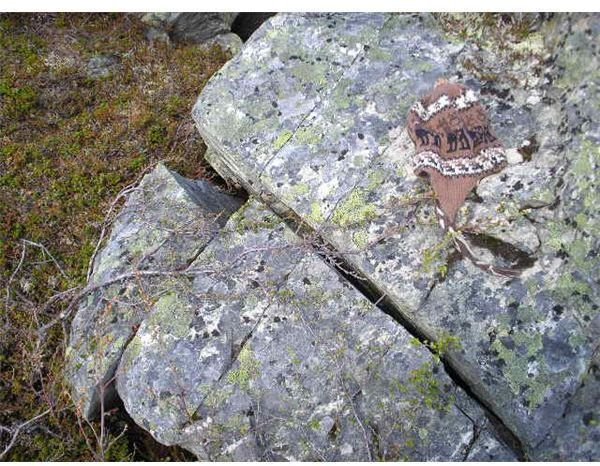
3. Freeze-Thaw Weathering — Also called frost wedging, this form of mechanical weathering is common in areas with freezing temperatures at night and above-freezing temperatures during the day. Small amounts of moisture collect within rock cracks and crevices during the day, which freeze at night. Ice has more volume than liquid water, so the cracks are forced wider. Then, more water accumulates in the cracks the next day, which freeze at night to widen the cracks further. When this happens repeatedly, the rock eventually breaks apart along the crevices.
Frost heaving, a similar process to frost wedging, occurs when a layer of ice forms under loose rock or soil during the winter, causing the ground surface to bulge upward. When it melts in the spring, the ground surface collapses.
Significance of Mechanical Weathering
Rocks that are weathered mechanically eventually form very smaller particles called sediments, which are the basic structural ingredient of all types of soil. Sometimes, sediments are washed away from where they originally formed due to various natural forces - a process called erosion. The removed sediments are then transported to other areas, where they can become compacted into new rocks (sedimentary rocks). Thus, mechanical rock weathering is an important part of the formation of both soils and new rocks, and an important part of the entire rock cycle.
Reference and Photo Credit
Plummer, Charles C. and David McGeary. Physical Geology 5th ed. Wm. C. Brown Publishers. 1991.
Frost-wedged rock picture by Chiton magnificus, used under GNU Free Documentation 1.2 license.
This post is part of the series: The Processes of Weathering in Geology
Rocks at the Earth’s surface break down over time through weathering. Mechanical weathering breaks them into smaller pieces with physical forces, while chemical weathering transforms their constituent minerals into different chemical forms. The end result is called soil. Learn the details here.