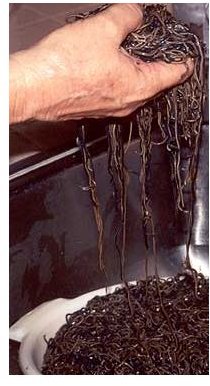
The annual spawning of palolo worms left a deep mark in the American Samoan culture, bridging the gap between it and biodiversity.
Palolo Worms: The Cultural Importance of this American Samoan Biodiversity
Being a group of volcanic islands in the Pacific, American Samoa is one of the few countries with rich biodiversity and with vast natural resources. Of these organisms, the palolo worms are distinctly important because they are responsible both for contrbuting to the richness of American Samoa marine diversity and at the same time an important factor for their cultural cohesion.
The Palolo worms, which are mostly found in tropical waters, are types of marine segmented worms under the families of Eunicidae and Nereidae of class Ploychaeta in Phylum Annelida. It was only in the last part of the 19th century that scientists discovered that these worms spend their lifetime burrowing in hard substrates of the coral beds, at depths that reach up to 23 meters.
Before spawning, these worms produce a structure that looks like a long chain made up of eggs and sperms. This structure is called the epitoke that grows up to 30 centimeters in length_._ Cunningly designed, these epitokes feature an eyespot, making it capable of detecting light. It is also this eyespot detail of the epitokes that made early observers of palolo worms to suggest these worms are particularly headless. The part of the worm’s body that remains buried in the substrate is the atoke.
During spawning season which occurs once or twice at the same time of the year, these worms release their epitokes that swims off spiraling like spaghetti twirls in the sea. If these epitokes are lucky enough not to be harvested by the locals, these epitokes burst up, creating a mucous made up of sperms and eggs. This makes the sea like a giant dish of milk.
This yearly reproductive feast of this important American Smaoan biodiversity has become a distinct part of their culture, that Samoan natives marked this happening as the start of a new year. In their earliest calendar, the rising occurs annually on the seventh night of the very first full moon after the end of equinox. During these times of the year, Samoans eagerly prepare home-made nets from cheesecloth to scoop these worms up. As the daybreak comes, there is a sort of celebration among them where everyone dines with their harvests cooked in a variety of ways.
Living in hard coral substrates, these worms’ survival and extinction is parallel to that of the coral reefs themselves. Government and other non-government endeavors are actively protecting these coral regions from the alarming anthropogenic pollution that is slowly sipping through this volcanic islands sanctuary. A very important concern is coral reefs protection, which may take simultaneous efforts both on the government’s and on the local’s end.
Protecting these coral reefs and securing the appropriate habitat for these palolo worms mean safeguarding the American Samoan culture itself.
Works Cited
palolo worm. (2009). In Encyclopædia Britannica. Retrieved January 25, 2009, from Encyclopædia Britannica Online