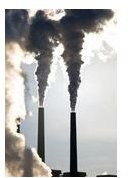
A year ago, our ranking of the largest producers of air pollution in the U.S. were based on hospital admissions for respiratory diseases caused by polluted air. Today, air quality monitoring systems furnish real time data about air pollution health risks while in a city or region. Know these cities
Classification of Air Pollutants
In order to determine if air pollution is getting better or worse, we went back to this article about air pollution in th U.S., Here, we gladly impart information about the changes in current air pollution conditions in American regions.
The Environmental Protection Agency (EPA) has instituted an air monitoring system covering each US region, thus creating awareness about health risks faced while in a particular area. The EPA’s AirData, has spurred many US cities in improving their air quality, thus making their respective turfs more inviting places to live and work in, or even just to visit.
Whereas before, statistics have it that about 800,000 deaths each year are attributable to outdoor air pollution. Today, much improvement was noted among US cities because almost every city, county or municipality would rather be counted as one of the greenest places in the US, rather than be tagged as the most polluted.
The Three Most Damaging Air Pollutants that Affect Environment and Health
Sulfur Dioxide (SO2) - that which is emitted in the burning of fossil fuels like coal and oil during industrial processes such as smelting.
Nitrogen Oxides (NOx) - emissions produced from engine sources like cars and other motor vehicles as well as those emitted from stationary sources like power plants.
Particulate Matter (PM) – these are the fine particles floating in the air and are further classified according to its sizes; PM10, particles with less than 10 microns in diameter and PM2.5 with particles less than 2.5 microns in diameter. Particulate matters or PM are emitted from vehicles, power plants and industrial processes in almost equal measure.
Other pollutants considered are Carbon Monoxide, Lead, and Volatile Organic Compounds (VOCs) which include hydrocarbons, alcohols, formaldehydes, and ethers. They also come from emissions produced by vehicles and industrial burning of fossil fuel.
Largest Producers of Air Pollution in the US
However, recent scientific research discloses that even low levels of air pollution can have a negative effect on human health due to the presence of mixed fine particulate matters. The EPA and America’s US city mayors have furnished lists of the largest producers of air pollution in the US. They are are categorized in accordance with the type of air pollutant that contributes to the poor quality of air in the U.S.
The ranking of these cities is no longer based on studies that link pollutants to the increased hospital admissions and emergency room visits in an area. Air particle pollution is the main cause of the respiratory disorders including death from long or short-term exposure to particulate matter (PM).
Find the lists below categorized according to types of air pollutant:
Top Ten Cities with the Highest Level of Particle Pollution Exposure – Short Term Category
- Pittsburgh, Pennsylvania -This city has consistently topped the list.
- Fresno, California - previously ranked as 3rd and still getting worse.
- Bakersfield, California- previously occupied the fourth position but was elevated to 3rd as LA dropped from it previous ranking
- Los Angeles, California - used to rank second in this category.
- Birmingham, Alabama -still the same rank as before
- Salt Lake City, Utah - this city was no included in the previous list of most polluted US city.
- Sacramento, California - ranking elevated one notch higher from its previous 8th– despite the addition of Salt Lake to this list.
- Logan, Utah - this city’s ranking dropped from its previous 6th position.
- Chicago, Illinois - another addition to this list, replacing Detroit’s previous ranking.
- Detroit, Michigan- dropping to the tenth from a previous 9th place.
Washington was a previous 10th placer, but today, Seattle, Washington tops the list of America’s Most Green Cities , having little or no risk in the city’s air pollution aside from other environmentally positive green factors.
Largest Producers of Air Pollution in the US (continuation)
Top Ten Cities with the Highest Level of Particle Pollution Exposure – Long-Term or Year-Round Exposure Category
- Bakersfield, California - Elevated from its previous 3rd position, replacing LA .
- Pittsburgh, Pennsylvania - Consistently ranks second in this list.
- Los Angeles, California - Dropped from its previous ranking as the number one in this category.
- Visalia, California -Elevated from its 5th previous position, replacing Birmingham in its previous ranking.
- Birmingham, Alabama- Dropped one notch lower due to the addition of Visalia
- Hanford, California - This city’s elevation from its previous 9th position denotes worsened air pollution & increased health risks
- Fresno, California - Elevated from its previous 8th position in this category.
- Cincinnati, Ohio - Dropped from its previous 7th as pollution index was surpassed by Fresno.
- Detroit, Michigan - Elevated from its previous 10th place.
- Cleveland, Ohio - A new addition to the list.
Atlanta was dislodged from the top ten ranking in the previous list under this category.
Top Ten Cities with the Highest Level of Ozone Pollution
- Los Angeles, California - Consistently tops this list.
- Bakersfield, California - Consistently ranks 2nd to LA.
- Visalia, California - Consistently ranks 3rd in this list.
- Fresno, California - Elevated one notch higher, dislodging Houston from this previous position.
- Houston, Texas - Dropped from its previous rank as Fresno took over its previous ranking.
- Sacramento, California - A consistent placer in this position.
- Dallas-Fort Worth, Texas - A consistent placer in this position.
- Charlotte, North Carolina - A new addition to this category, dislodging New York.
- Phoenix, Arizona - Another new addition to this category, dislodging Baltimore,
- El Centro, California - Another new addition to this category, Baton rouge.
Three US cities were dislodged from the top ten list in this category, namely: New York, Baltimore and Baton Rouge
Is Air Pollution in the US Getting Better or Worse?
The EPA continuously monitors all aspects in the industrial sectors, including those involved in providing transport services for land, sea, and air. Provisions of the Clean Air Act are strictly enforced and the EPA directs each provincial government unit to regulate or institute necessary measures on any violations committed by cities, towns, or counties.
Thus in our information update about the current state of U.S. air pollution, we are drawn to the conclusion that some US cities have improved. At least, we can now monitor on our own if a particular region’s air pollution is getting better or worse.
Reference Materials and Image Credit Section:
References:
- https://www.epa.gov/air/data/geosel.html
- https://www.citymayors.com/environment/polluted _uscities.html
Image Credit:
- Image courtesy of Wikimedia Commons