The History of the Green Revolution
Difficulties of Food Production
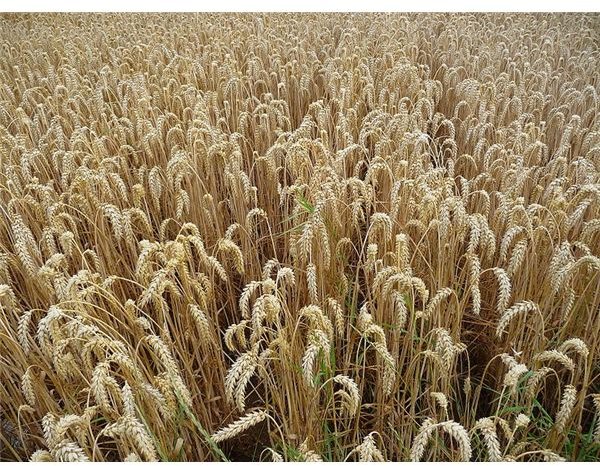
Food production is difficult to manage. Not only do farmers need large amounts of lands to grow food, but certain foods can only produced once a year. Even worse, there can be several variants of a particular crop which only grow well in certain regions and not all variants produce a large quantity of food.
Other factors can also contribute to food production. For example, certain diseases can ravage crops as well as natural disasters such as famines which can devastate crops in particular seasons. Before the advent of the Green Revolution, human populations were in control due to the limited amount of food available to certain nations. It would take an agricultural movement to change all of this.
Norman Borlaug and the Rise of the Green Revolution
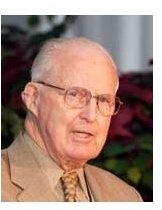
The history of the Green Revolution started in Mexico in the year 1944. At this time, Mexico was having trouble with wheat production and its rising population helped worsen the problem. During this time, a plant breeder named Norman Borlaug worked with the Rockefeller foundation and the Mexican government to produce new wheat variants that were resistant to diseases. In addition, these wheat variants were more productive and combined with new agricultural practices such as irrigation, Borlaug’s wheat variants were widely successful in producing more wheat.
Borlaug used several techniques to maximize the production of the wheat. For example, he decided to breed certain wheat plants to create a plant that would produce the the most while also allowing them to respond to fertilizer. As a result, these high-yielding wheat plants were able to produce more food on less land, thereby allowing more food production. Even sunlight was considered in the equation with developers allowing wheat plants to grow in limited light which also allowed the plant to be grown practically anywhere.
Effects of the Green Revolution
Norman Borlaug, as well as foundations such as Rockefeller and Ford, revolutionized agriculture with the history of the Green
Revolution. For example, in 1954, Mexico was self-sustainable in wheat and ten years later, Mexico was actually exporting wheat in large quantities. In addition to wheat, other crops were also modified to be high-yielding plants with examples such as rice which helped nations such as India and China in feeding their massive populations. Countries around the world were saved by these developments, and continue to produce new crops which are more productive and resilient to diseases.
In conclusion, the history of the Green Revolution was vital for countries whose growing populations were difficult to manage. The genius of Norman Borlaug did not go unnoticed as he later received the Nobel Prize for his discovery in producing high-yield crops. Even with these feats of feeding the world, the Green Revolution still receives some criticism due to its practices.
References
Sources:
Briney, Amanda. “Green Revolution: History and Overview of the Green Revolution.” https://geography.about.com/od/globalproblemsandissues/a/greenrevolution.htm
Muir, S. Patricia. “What is the Green Revolution?” https://people.oregonstate.edu/~muirp/grrevhis.htm
Images:
3268zauber. “Weizenfel Anfang Juli.” https://commons.wikimedia.org/wiki/File:Weizenfeld_Anfang_Juli_2009.JPG
Samsara. “Norman Borlaug.” https://commons.wikimedia.org/wiki/File:Norman_Borlaug_crop.jpg
This post is part of the series: All About the Green Revolution
Learn about the history of the Green Revolution as well as various problems that are associated with it.