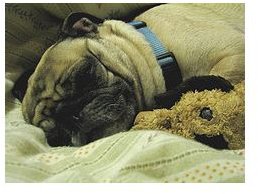
How does sleep work in animals? For starters, smart animals may need more REM sleep, though it does not necessarily imply it is to make them more intelligent. Discover some interesting facts about animal sleep that you may not have known.
Do you wonder how does sleep work in animals, or why certain kinds of animals require different amounts of sleep? For instance, why do some animals need 20 hours of sleep a day when others only require three hours? It has long been debated whether there is a correlation between the intelligence level of an animal and the amount of REM sleep that it requires. Until recently, there has been little evidence that explains the difference in sleep needs of mammals. New studies give a more accurate and in-depth look into the reasons for the variations in sleep patterns and habits of animals.
New studies are producing more evidence that REM sleep, the duration of sleep that is highly active, may be directly linked to intelligence in mammals. This kind of study, already conducted on humans, indicates that cognitive functions need enough REM sleep to function correctly. In fact, certain abilities, such as consolidating memories, have been shown to improve by as much as fifteen percent when a person gets enough quality REM sleep.
How Does Sleep Work in Animals?
With other species, the evidence is less precise and dramatic. By following that line of thinking, it seems logical that the mammals that sleep the most have more developed brains and intelligence levels, but this is not demonstrated as accurately in mammals as it is in humans. However, researchers did not stop with this information.

They conducted studies and pursued modalities in research that indicated a direct correlation between the metabolic rate and sleep patterns in animals. For instance, animals that have a large body size need more non-REM sleep in order to help them conserve their energy. On the other hand, some sleep deprived animals may die faster than others. While there is no definite conclusion, most experts agree that the need for sleep varies from species to species, as does the function of sleep, and there must be more research to substantiate some of the more popular theories about animal sleep.
One of the most relevant studies in measuring REM needs in animals is the research done comparing evolutionary influences on sleep patterns and analyzing how animals sleep. By understanding how does sleep work in animals, one can see how tracking back through evolution revealed animal populations, which were under high stress related to the fear of being preyed on, needed less sleep than those that were not at risk from predators. These ecological studies seem to be relevant and correlate with the theory that the intelligence of the animal and REM sleep needs is not as direct as other causes such as evolutionary and ecological reasons.
References
Longborough University, Longborough Sleep Research Centre, “What’s Sleep For?”, accessed 01/11/2011
American Psychological Association, “Wild Findings in Animal Sleep,” Beth Azar, January 2006, Vol. 37, No. 1, accessed 01/11/2011
Image Credits
Koala, Flickr, used under Creative Commons Attribution 2.0 Generic license
Dog, Flickr, used under Creative Commons Attribution 2.0 Generic license