Global Warming Greenland: Sea Level Rise in Greenland due to Melting Glaciers and Ice
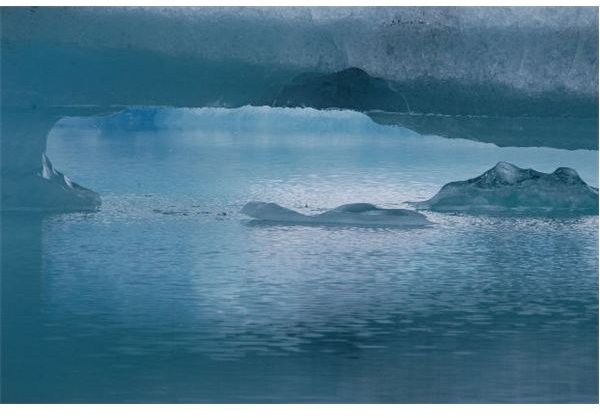
Greenland’s Rapid Ice Meltdown
Greenland glaciers and the Arctic sea ice are melting at rapid rates described by scientists as almost “at the tipping point”. Tipping point as scientists explain is when the climate system has reached its maximum capacity for change and all those gradual changes we felt in the past will suddenly surge into high gear.
Studies show that despite our efforts to stop filling the air with greenhouse gasses, the amount of gasses now trapped in the atmosphere has already brought warmer temperature. Hence, it’s no longer possible to undo the chain of events that will globally transpire following the climate changes and warming of temperature.
There is too much carbon dioxide and other greenhouse gasses already trapped in the atmosphere causing intense solar heat beating down on larger bodies of water. Arctic sea ice continues to melt creating more open ocean water. Accordingly, the ocean has enormous capacity to trap heat and in the process, it expands. This is what scientists call as “thermal expansion”.
The Significance of 2009 NASA Satellite Laser Images of Thinning Glaciers
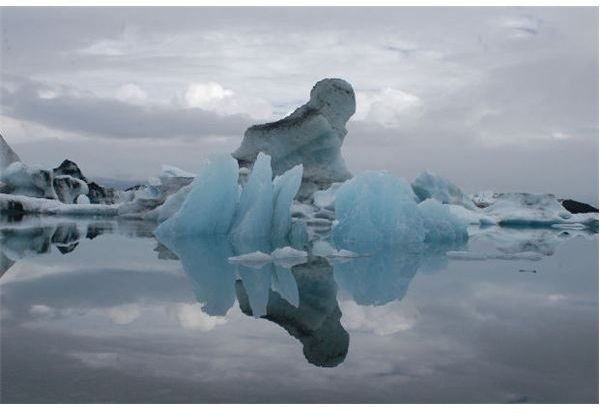
British Antarctic Survey and the University of Bristol researchers have reported on their analyses of NASA’s comprehensive satellite laser Images which show the continuous thinning out of Greenland’s glaciers. The magnitude of the glaciers’ ice melts flowing into the sea has started to penetrate Antarctic coastlines and are spreading out to Greenland’s interiors ice sheets. The ocean driven ice melts coming from the glaciers are now causing greater ice loss in Greenland’s interior ice sheets and ice shelves.
Reports from British Antarctic Survey disclose that there is a continuing pattern of thinning and melting glaciers which was estimated at about 9 metres per year. Thus, glacier flows have extended to the inlands by hundreds of kilometers. Out of 111 glaciers under the researchers’ observations and studies, 81 glaciers thinned at a rate twice faster than the rate of snowfall that could thicken the ice sheets and ice shelves located in Greenland’s and Antarctica’s inland. As a result the inland ice sheets and ice shelves are likewise experiencing rapid ice loss.
The Rise in Sea Levels
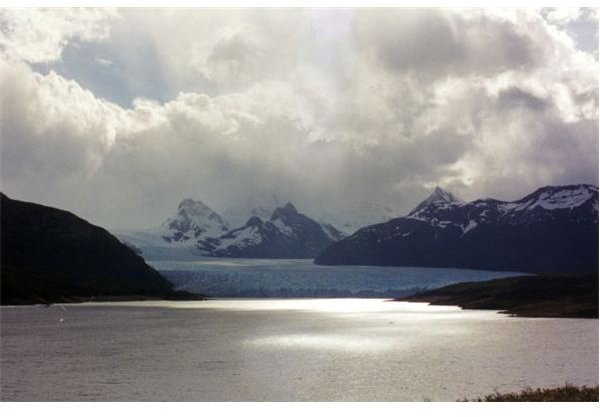
After all the ice and glaciers have melted away, the next problem will be the rise in sea levels. There is now more volume of water all around us. In fact, ¾ of the Earth’s surface will be brimming. As the globe enters another phase, the season will change into summer. There will be more thermal heat to beat down on a vast expanse of water. The volume of evaporation and moisture will then be greater creating low- pressure areas and depressions in the atmosphere.
The rise in sea level will gravely affect those who have built their towns and cities, and mega-cities in low-lying coastal areas. There are those who have formed their habitats in deltas and major rivers as well as nations thriving in their small islands. Scientists do not see a bright future since no amount of green house prevention can undo what is slowly taking place.
Scientists predicted even before that there will be rains, downpours, and storms and strong winds brought by the Earth’s spinning motion will entangle and trap one of these low- pressure areas and there will typhoons, cyclones, “tsunamis”, and hurricanes. Scientific projections have it that even just a middle range occurrence will have devastating effect in terms of flooding.
Unfortunately, these natural occurrences have all transpired and are still being experienced globally.
Environmental Impact of Glacier Ice Melts and Rising Sea Levels
Scientists may sound like prophets of doom but they cannot help it if their models and studies lead to even greater devastations and detriments as their conclusions:
-
Too much carbon dioxide dissolving in seawater will eventually cause water contamination. Consequently, there will be water shortage that will greatly affect agricultural and livestock food production. Hence, the next generations represented by our children and grandchildren are bound to face water and food shortage.
-
Re-emergence of ancient fungi and microbes buried millions of years ago, and will thrive on the Earth’s new thermal temperature. There will be new kinds of diseases that may be airborne or carried by any form of animal especially the dreaded insects like the flies and mosquitoes.
Other information about global warming tells us that what is currently happening is all part of a natural global cycle that will bring about global climate change. Our only mistake is, we filled the Earth with Co2 at more than the levels that the atmosphere can naturally handle; hence, we are now experiencing a much greater impact.