Damages to Environment From Dredging & Deep Sea Trawling
Harmful Fishing Methods
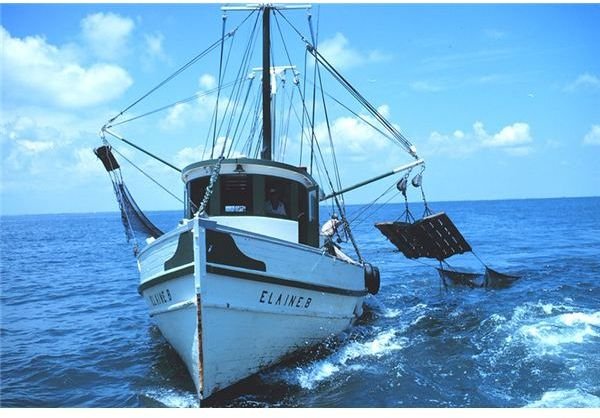
To understand the problem of the fishing industry and why it is destroying our oceans, we must understand what the various methods are that are being employed by fishing fleets, how they work, and what the negative consequences are of such practices. Two of the most commonly deployed methods used by fishing fleets around the world, and two of the most destructive, include trawling and dredging.
Trawling:
Fishing fleets will often use massive nets that are pulled behind a single boat in a method known as trawling. Often times, larger nets are used that require the cooperation of two boats in order to cast and drag the nets along the ocean; when this method is used it is known as pair trawling. The boats in question, known as trawlers, can range in size from the typical small fishing boat that is around 25-30 hp upwards to the massive fishing vessels known as factory trawlers that can be over 10,000 hp. Even the smaller vessels will often be double trawlers, carrying nets on both sides of the ship increasing their destructive range.
When these massive nets engulf the sea, they capture and kill everything in their wake including not only members of the target fish
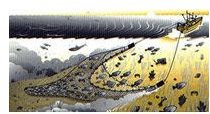
species that can not be used because they are too young, etc. but hundreds of other non-target species such as fish, sea turtles, crustaceans, and dolphins that can not escape the nets as well.
The massive catch is taking more life out of the ocean than nature can replace. Since all members of the species are killed, young and old alike trawlers leave little life behind to reproduce and continue the species (which of course means that these fishermen are cutting off their own livelihoods in the process).
Bottom Trawling and Dredging:
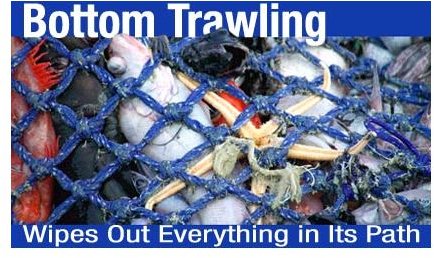
Increasing the destructive powers of trawling, many fishing fleets use a method known as bottom trawling in which these heavy massive nets are drug along the sea bottom in order to catch even more fish and marine life which have now where to swim to get out of harms way.
The nets are not only large in size and thus the scope of marine life in its path is more indiscriminate, but they are also equipped with large chains, weights, or other equipment that can weigh thousands of pounds which crush everything they encounter. So when these nets pass through an area the not only catch and kill everything in the path of the net, but they leave a path of destruction along the the bottom of the sea floor as well. Where there was once a thriving community of marine life rich in biodiversity, a wasteland takes its place after a pass of a bottom trawler.
Dredging is a method fairly similar to bottom trawling and often used in conjunction with trawling where large heavy dredges, often up
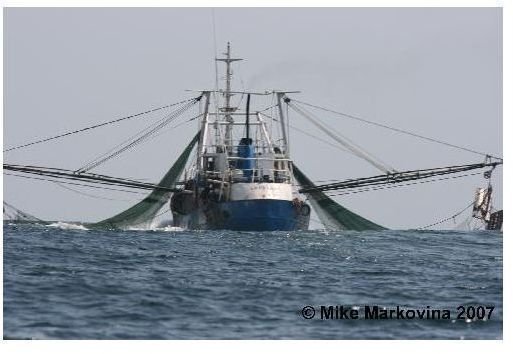
to 4.5 meters wide, are forced along the sea floor to disturb any fish or marine life in the area making it easier for the nets to catch them. There are many damages to the environment from dredging.
These methods are among the most intrusive, destructive, and wasteful methods of fishing. Out of an average catch, only a portion of that is usable. Target fish species that do not meet with regulations are tossed back, usually dead. Likewise, sea turtles, coral, crabs, dolphins, non-target fish species and other marine life are also thrown back into the water dead or dying.
This non-targeted and unused product of trawling, called bycatch, is one of the biggest dangers to many species that are already threatened with extinction. Additionally, the fragile ecosystems, such as those built around slow growing deep water coral, are so devastated that it will take years for them to ever recover, and some may be unable to do so. So the impact is not just taking too much fish that does not support a sustainable rate, but the parts of the oceans that are being destroyed will not begin to support life again for quite sometime making the availability of fish disappear even faster.
The illustrations below (provided courtesy of Oceana) show you an active sea bottom community before dredges and bottom trawlers passed through. Next to them, you see the barren wasteland that is left after the fishing fleet has ransacked the area. Click on an image to enlarge.
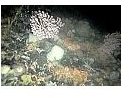
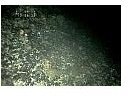
Some of the coral ecosystems that are being destroyed are thousands of years old, and the destruction of bottom trawling is so profound that it can actually be seen from space. This is far more than merely over fishing. Trawling is literally wiping out our oceans.
Although trawling is among the worst and most widely used method employed by the fishing industry, it is not the only harmful method used. In part three of this series exposing the fishing industry we will look at some other practices that fleets use to declare war on our oceans.
Resources
The photos in this article were used with permission and provided courtesy of Greenpeace and Oceana. To learn more about their work to save our oceans visit the following links:
Oceana: Stop Destructive Trawling
Greenpeace: Threats to Ocean Life
This post is part of the series: The War on The Ocean: Exposing the Truth About the Fishing Industry
For decades the fishing industry has been behaving recklessessly leaving massive wakes of destruction in its path leaving most people in the dark about the real effect that the industry is having on the oceans and communities of the world. This series will examine the truth they have tried to hide.