Firewood that is not properly stored can become infested with insects or rodents, and grow moldy or rot. Proper wood storage prevents these problems from happening. Learn how to store firewood, the best place to store firewood, and other answers to commonly asked questions.
Freshly Harvested Wood
If you harvest your own wood in the forest or purchase freshly harvested wood, you will need to season the firewood before use. Seasoning consists of letting the wood air dry for about six months. Seasoned firewood burns 20 percent hotter and more efficiently heats your home. It also resists fungus growth and insect infestation. To increase the speed of drying, split the wood as soon as possible. After you split the wood, you can stack it and wait for it to dry.
Choosing a Location
The best place to store firewood is outdoors, covered with a tarp or inside a woodshed. Choose an outside storage area that is at least 25 feet away from your house. Wood stored next to your home can rot or stain the siding of your house. Keep the ground around your firewood stack clear, to deter insects, snakes, and rodents from entering your pile. Trim weeds and rake up leaves regularly.
How to Store Firewood
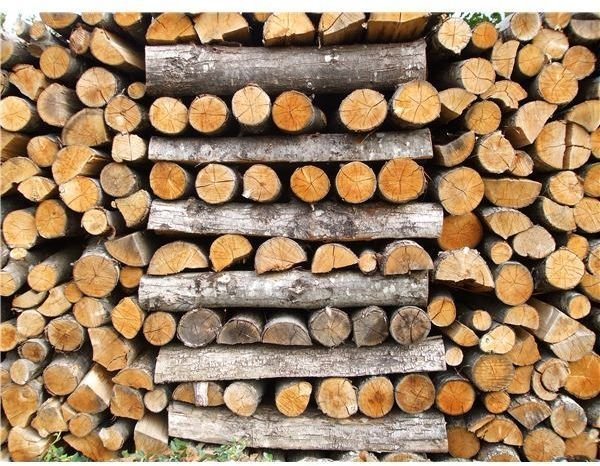
Store firewood off the ground and stacked in a way that allows air circulation to prevent fungus growth and insect infestation. In addition, the firewood needs to be protected from rain.
Step 1: Keep the Wood off the Ground
Whether you store your wood outdoors or in a woodshed, it needs to be off the ground. The firewood only needs to be high enough off the ground to allow air to circulate underneath it. Stacking the wood on top of pallets or on a wood rack, such as the Stack-N-Store wood rack, allows for sufficient air circulation.
Step 2: Stack the Wood to Allow Air Circulation
The best way to stack the wood to allow for air circulation is to alternate the direction you stack the wood with each layer. For example, lay the first layer of wood in a north to south direction and the next layer in a west to east direction.
The Size of Your Stack
To keep your firewood stack stable so that it does not fall, build your stack twice as wide as it is tall. The maximum height of your stack should be 6 feet tall. Any taller and it will be difficult to get wood off the stack when you need it.
Cover the Stack
Firewood stored in a wood shed does not need to be covered. Cover wood stored outdoors with a tarp to protect the wood from rain. Place the tarp loosely over the wood pile to allow air to circulate around the wood.
Common Questions about Storing Firewood
How much firewood should I bring in my home at a time?
Bring no more than two week’s worth of firewood into your home at a time.
Can I spray insecticides on my firewood to kill insects?
Never spray insecticides on your firewood. It is not safe to inhale smoke from burning firewood that has been exposed to insecticides. Proper wood storage itself will prevent or minimize insect infestation.
Is it OK to store firewood in a damp basement?
Do not store firewood indoors or in a basement where it will be subjected to heat and moisture. Wood stored in hot or humid conditions is prone to insect infestation and the growth of mold.
References
Firewood Facts: New Mexico State University - PDF
Firewood Facts: Oregon Department of Agriculture
Firewood and Insects: The University of Maine