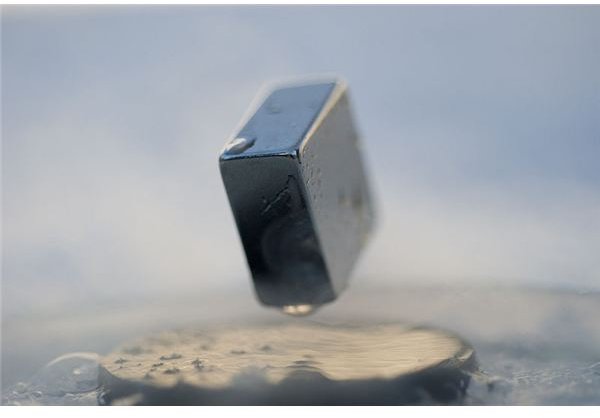
A material that is superconductive can store electrical energy without any losses. This can help power stations to store energy effortlessly during hours when the demand is not at a peak, and distribute the stored energy whenever it is needed. Superconductivity can reduce transmission losses to zero
When you talk of superconductivity, you are referring to a phenomenon of certain materials, that are at characteristic temperatures, exhibiting no resistance to electricity passing through them. The electrical resistivity of a metal reduces as temperature is lowered, and when it is at absolute zero , the resistance becomes zero. Ceramics also exhibit properties that can help superconductivity.
The Elements of Superconductivity
Superconductivity was first discovered in 1911, by Onnes, who was studying the resistance of mercury at temperatures in the cryogenic or low temperature zones. Such temperatures are those that are below minus 240ºF. Absolute zero is said to be at minus 459.67ºF which is also said to be zero on the Kelvin scale. A temperature of zero degrees Centigrade is 273 Kelvin. Superconductivity has been observed by scientists at ranges from 2 to 16 Kelvin depending on the metal and much higher temperatures of 90 to 125 Kelvin in ceramics. The cooling of these materials is done using liquid helium or liquid nitrogen. The temperatures that are needed to achieve zero resistance are called critical temperatures.
Image Source: Wikimedia
The Advantages That Can Accrue From Superconductivity
The complete absence of electrical resistance allows electrons to pass through such superconductors freely and thus allows the material to carry large amounts of electrical current without this energy being converted to heat as in normal circumstances. This effect has been proved to last for years, thus allowing the superconductor to act as a reservoir for power that can be tapped whenever necessary. Such superconductors, if used to transmit energy, can also do so with practically no transmission losses. Presently about ten percent of energy is lost due to transmission, and when you consider the huge amount of power that the world needs, the use of superconductors can reduce the need for power generation. This could also have huge environmental benefits as power stations are reputed to the biggest emitters of greenhouse gases (GHG).
Peak loads for electrical power vary depending on the industries and other major consumers of power in a region. Such loads also vary depending on climatic conditions when air conditioning or heating equipment is needed. Generation of power has to be kept matched to the load requirement, and any mismatch causes failures in generating equipment. If it is possible to store excess power, generating plants can then work at optimum capacities without having to bother about connected loads. Superconductors can help to store excess power that can then be tapped whenever such energy is needed. This can greatly reduce the need for power generation, again bringing with it environmental and other benefits. It is estimated that almost 40 percent of the fuel requirements in the world are used by power generating equipment.
Hurdles for Superconductors
A major disadvantage in making superconductors is the energy needed to lower the temperature of the conducting material to its critical temperature. Even so, studies have shown that half of the power saved from reduced transmission losses is sufficient to cool the superconductor to the desired temperature. Companies in the United States have already started making such superconducting cables for very high load density areas, like business district areas in large cities. Consolidated Edison and American Superconductor are two such companies.
Ongoing Research

One of the most startling discoveries linked to superconductivity came from Switzerland, where researchers discovered that ceramics that are normally considered insulators became superconductors at fairly high temperatures compared to those required for metals. While this discovery has been exciting and has raised the hopes of scientists, the fact that ceramics do not take kindly to being drawn or shaped renders the use of ceramics for superconductivity applications quite difficult.
The theory to explain high temperature superconductivity is still unclear, and the idea that such superconductors can work at room temperature remains in the realms of fantasy. Over the years certain claims have been made by persons for just such discoveries, but all of them have failed to pass concerted scientific scrutiny. There have been iron based superconductors that have raised temperatures to about 50 Kelvin, which is a temperature that is considered technically exploitable.
Laboratory experiments have led to transmitting 1000 kilowatts of power with an enclosure diameter of 40 cm. This quantity of power is the full quantity of power produced by large power generation plants. Such power if transmitted at low voltages can further reduce the requirements for transformers, which in itself can add up to huge savings. A major problem in making superconductors is to find such superconducting material that can be drawn into wires and coils to help in the transmission process. Superconducting materials can even lead to the making of generators and motors that would be just a tenth of present sizes, again leading to huge savings in energy requirements.
Image Source: Wikimedia
References
-
Intechopen - Superconductivity Theory and Applications
AdvertisementSuperconductors.org - The History of Superconductors
Advertisement