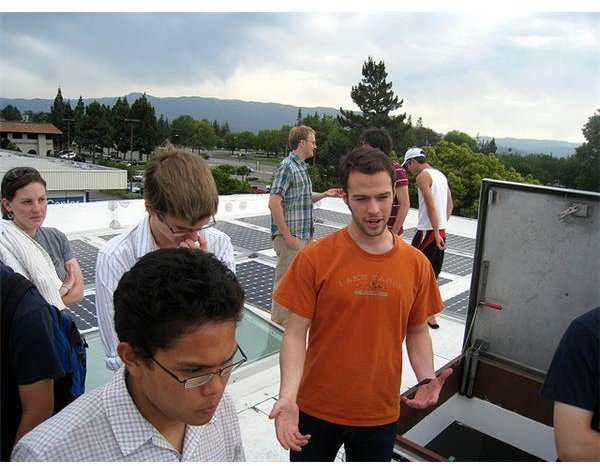
Net energy is the difference between the energy used to produce an energy resource and the quantity of energy derived from that product. Producing only the needed quantity of energy by a home or commercial building is net zero energy.
Economist Douglas Reynolds, in a paper (Energy Grades and Historic Economic Growth ) writes: “Energy is the driving force behind industrial production and is indeed the driving force behind any economic activity. However, if an economy’s available energy resources have low grades, i.e. low potential productivity, then new technology will not be able to stimulate economic growth as much. On the other hand, high-grade energy resources could magnify the effect of technology and create tremendous economic growth. High-grade resources can act as magnifiers of technology, but low-grade resources can dampen the forcefulness of new technology. This leads to the conclusion that it is important to emphasize the role of the inherent nature of resources in economic growth more fully.”
So what do net energy and net zero energy have to do with economics, industrial production, and the quality of energy?
Net Energy
Conceivably the most noteworthy factor, and one that is often neglected in many alternate energy schemes , driving production is “net energy,” the simple idea that for energy arrangements to succeed, more energy must be produced by the energy source than is required to obtain the energy.
Net energy pertains to the ratio of the quantity of energy created to the quantity of energy spent to generate it. It is a fact that some energy has to be always invested so that new provisions of energy can be obtained, irrespective of the quality of the energy resources or the expertise applied to get it. Society depends on the net energy surplus derived from energy-reaping attempts so that operation of its constructing, circulation, and preservation arrangements goes on without any stop.
More specifically, net energy is the quantity of constructive energy that is available after the quantity of energy committed to drill, pipe, refine, and build infrastructure has been deducted from the entire measure of energy developed from a given source. In other words, as far as possible “Energy out” must surpass “energy in.” Thus net energy can be defined as the remnant energy that can be used to do more work.
The analysis of energy is founded on the second law of thermodynamics that explains the alteration in the quality of energy that comes along with its transition from one form to another. Exergy consequently describes physical quality deviations amongst different kinds of energy. Exergy is the highest quantity of physical effort that can be pulled out from a given course of energy. Exergy is computed by multiplying the heat equivalent of a fuel or heat source by the suitable Carnot aspect [1-(Ta/To)], where Ta and To are the ambient temperature and output temperature of the procedure, evaluated on the Kelvin scale.
Net Zero Energy
Net Zero Energy is the uncomplicated idea of a home bringing forth the same quantity of energy that it uses up on a yearly base. Net zero energy is attained when the right blend of effective mechanical tools, building resources, lighting and gadgets are coupled with an appropriately sized solar electric arrangement. The concept of net zero energy is thus more or less related to buildings. Let us explore how this is possible.
A net zero-energy building (ZEB) is a housing or business building with significantly reduced energy needs that can be met with inexhaustible technologies. Notwithstanding the enthusiasm over the expression “zero energy,” we miss a common explanation, or even a common perception, of what it entails.
The way in which the zero energy goal is defined affects the effort that architects will have to put into the design and whether they can ultimately assert victory. The ZEB definition can highlight demand-side or supply-side schemes, and whether fuel shifting and transition reporting are included, to conform to a ZEB goal.
Now, for the first time, with our fossil fuels fast vanishing and their remaining supplies becoming ever more challenging and costly, we are capable of fully realizing how much the level of our future communal alternatives is far more restricted than we conceived. At the center of the ZEB concept is the proposal that buildings can get together all their energy necessities from low-cost, topically accessible, nonpolluting, inexhaustible sources. At the most rigid level, a ZEB yields adequate renewable energy on site to equal or exceed its yearly energy use.
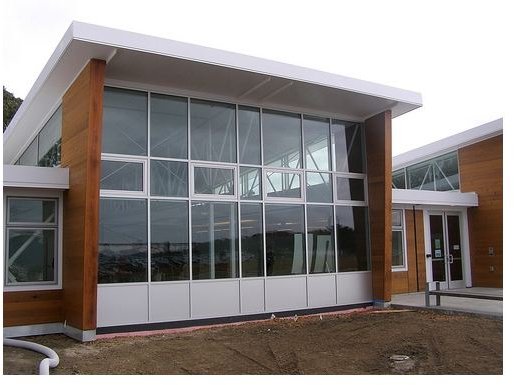
Whether net zero energy is precisely probable is easily answered: it is without doubt possible. Using wide-ranging energy efficiency standards and big solar arrays will reach zero energy, but may not come near to attaining net zero cost. Our energy future will be made distinct by restrictions, and by the way we react to those limits. Human beings can surely live within restrictions; the greater part of human history met under circumstances of comparative inaction in energy use and economic action. If the energy conversion is sensibly handled, it will almost unquestionably be feasible to retain, inside this steady-state circumstance, a lot of the benefits that we have come to take pleasure in over the past decades.
References
International Energy Agency, Environment, www.iea.org/Textbase/subjectqueries/ keyresult.asp?KEYWORD_ID=4139
Douglas Reynolds, “Energy Grades and Historic Economic Growth,” Journal of Energy and Development, Volume 19, Number 2, (1994): 245-264.
www.hubbertpeak.com/Reynolds/EnergyGrades.htm
Picture references
Usgbc - Crissy Field Center
Saketvora - Stanford 708