Compostable planter pots are those that are biodegradable. They are available in most gardening stores. If you are looking at pots to start your seedlings and which would need to be disposed of afterwards, you can even make your own compostable pots using biodegradable material.
An Eco-Friendly Alternative to Plastic Pots
Compostable planter pots are considered environmentally-friendly as they are made from materials that are compostable. Thus waste volumes are reduced. Most nurseries use plastic pots that they say are recyclable, but depending on the time they take for degrading they cannot really be considered as compostable. However plastic pots can be washed and reused a number of times and are good as an option for reducing waste.
There are a number of other alternatives to plastic that can be considered really eco-friendly because the materials they are made of are truly biodegradable. You can get pots that are made of coir fiber, which is the outer shell of coconuts. These are excellent alternatives to the plastic pots. In a number of developing countries like India, garden pots are earthenware pots that are made from locally available clay. The pots are made on a potter’s wheel and sun dried before being put into a kiln for hardening. These pots are fragile and require careful handling. Plant pots are also made from sphagnum peat and recycled wood fiber. They can be used as biodegradable flowerpots. Another advantage of biodegradable planters is that they can be planted straight into soil and the roots will just grow through them. So if you have plants that do not like their roots disturbed, nurture them in biodegradable pots and then plant the pot straight into the ground without removing the plant.
Compostable pots are available at most nurseries and garden material suppliers. You can also order from online stores, though you may have to order in sufficient quantities to reduce shipping costs.
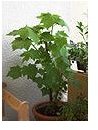
Image Source: Wikipedia : https://commons.wikimedia.org/wiki/File:Sparrmannia5.jpg
Making Your Own
Cardboard tubes, newspaper and toilet rolls can easily be used for making compostable plant pots. Milk containers make good plant pots. Once the plant is ready to be planted into the ground, you can cut away the container from the side and put the plant into the ground with the roots undisturbed.
Cardboard tubes can be cut into sections of the required length and put into trays. Fill the cut tube with potting compost to make a layer at the bottom. Then put in your plant with the necessary soil and allow the plant to grow till it is ready to be put into the ground.
Making pots out of toilet paper or newspapers is simple. Be sure to decide the shape and size of the pot before you start. Pots made of such material cannot be very deep and this may be a restrictive factor. Making the pots square can save you a lot of space if you are putting all the pots into a tray.
Plant pots and flowerpots are not things that will last forever; they will become part of the refuse at some stage. So if they are made of compostable or biodegradable material it is a big advantage.
References
Eco-friendly plant pots - https://www.ecofriendlydaily.com/home/garden/friendly-plant/
Plant pots - https://www.growveg.com/growblogpost.aspx?id=134
Bio degradable Pots - https://www.ecofriendlyexperts.com/biodegradable-pots/