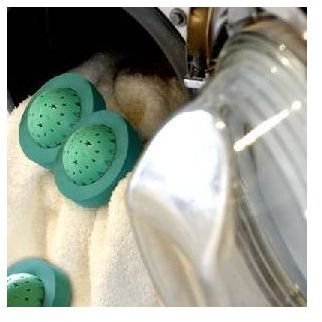
Let’s take a closer look at the Eco-Balls, the green laundry products promoted as environmentally friendly methods for clothes washing. These reusable plastic balls are getting good feedbacks as effective detergent-free laundry aid. They make use of powerful ionizing ceramic granules. Find out how..
The Eco-Balls
The Eco-balls are good examples of green laundry products, currently recommended as a green cleaning alternative for clothes washing. This product was voted in UK as one of the Ten Best Green Household Products in January 2005 by The Independent. We will take a closer look at how these reusable plastic balls could help lessen our environmental problems.
How do Eco-balls Work?
The eco laundry balls are placed inside the washing machine and interact with the dirty clothes. Inside these plastic balls are ceramic granules containing substances like calcium carbonate, sodium carbonate, epoxy resin, polyamide resin, sodium citrate, cellulose, iron oxide plus a few more. These substances are said to be hypo-allergenic and have antibacterial elements, while being chemical free at the same time.
While inside the washing machine, these green laundry products are said to be capable of ionizing the water. This means the water becomes filled with positive ions that act as magnets to attract the negative ions. The negative ions referred to, are the dirt or soil attached to the clothes being washed. Hence, as the dirt elements are magnetized, they are lifted out of the fabrics and subsequently combine with the positive ions in the water. This is how the clothes-washing process taking place inside the washing machine tub. The matter of rinsing the clothes now requires less water, less time, and less energy to do the laundry.
The powerful ionizing actions of the ceramic granules make detergent-free laundry cleaning possible, thus upholding the eco-friendly and energy efficient concept in cleaning alternative to replace the traditional laundry detergent .
The positive results of the use of detergent-free laundry products like the Eco-balls were confirmed and noted by present users as well as by the product reviewers. Nevertheless, there are also those with negative views. Let’s find out the pros and cons.
Pros & Cons of Detergent-Free Laundry Products
Pros
-
Water run-offs contain non-toxic and non-polluting ingredients.
-
The absence of harsh chemicals makes the product hypo-allergenic, thus ideal for washing baby clothes.
Advertisement -
The clothes have no static cling or powdery residues. The fabrics are less distressed and are kept color-safe.
-
Savings on water usage is significant since the 2nd cycle in the tub is the final stage. The second round of spinning the clothes in the washing machine tub with the eco-balls will be able to extract the few remaining negative ions or dirt.
Advertisement
Cons
-
The detergent-free product works efficiently only on clothes that are not heavily soiled or stained. To remove ordinary stains and collar grimes, intensive scrubbing and use of green detergents are still necessary.
Advertisement -
Dirt on denim pants and jackets requires more water and time in interacting with the Eco-balls before they could be considered reasonably clean.
-
The clothes tend to have an unpleasant smell when they are hung indoors to dry, particularly during bad weather conditions.
Advertisement -
There is still a need to add fabric softeners; clothes, especially those made from organic cotton materials, turn rough and stiff.
-
The detergent-free balls are usable for washing machines only.
Advertisement
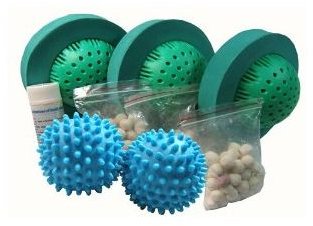
The majority of users find these green laundry products quite satisfactory and acceptable. Most of them are contented with the results because of the economical advantages they derive from its use. Some say it’s just a matter of getting used to the idea of a fragrance free laundry process. The general view about it, though, is the quality of clothes washing the user achieves is more or less equivalent to the quality of clothes that were washed using a very minimal amount of green laundry detergent. One proof that it has gained popularity is that the product is now widely used in the U.S. and can be bought at online stores; formerly, it was available only in the UK and other European countries.
Eco balls as green laundry products hold much promise as an alternative green cleaning system due to their efficiency in energy and water usage. Perhaps the negative views are manageable and worth the small trouble of not soiling the clothes with too much grime or stain. This way, clothes would be easier to clean using the Eco ball’s powerful green laundry ceramic granules. After all, non-toxic and cost-efficient cleaning implements are better alternatives.
Reference Materials and Image Credit Section
Reference Materials:
- Eco Balls customers’ reviews — https://www.amazon.com/Laundry-Balls-plus-dryer-balls/product-reviews/B000TXS64K/ref=dp _top_cm_cr_acr_txt?ie=UTF8&showViewpoints=1
- https://www.grownupgreen.org.uk/news/?id=802
Image Credits: