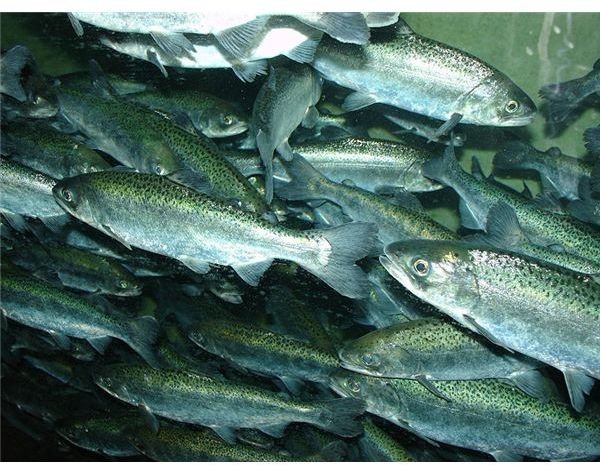
Salmon is a super food, with valuable wellness benefits. Unfortunately, not all salmon are created equal. Is wild, or Alaskan, salmon environmentally friendly? Is farm-raised salmon safe to eat? Here are the important differences between wild and farm-raised salmon.
Salmon Benefits
Adding fish to a weekly diet offers important health benefits. Some fish, including salmon, are rich sources of Omega-3 fatty acids. Omega-3s boost brain function and can reduce the risk of heart disease, colon cancer and stroke. Studies show that eating fish promotes eye health. Salmon is a fatty fish from northern waters–the approved type of fish for a healthy human diet. According to Dr. Andrew Weil, recent studies show that fatty fish “can also help treat depression, bipolar disorder, autism, and attention deficit hyperactivity disorder.” There are obvious benefits to adding salmon to one’s diet. But, there is reason for caution.
Warnings
For all the good that salmon and other fatty fish promise for human health, there is reasonable cause for concern. Two major problems are pollution of the seas and oceans, and problems with aquaculture. Dr. Weil describes what many already know — the oceans of the planet are gravely polluted with environmental toxins that are deadly for sea creatures and for human beings. According to Dr. Weil, mercury and polychlorinated biphenyls, which are carcinogens commonly known as PCBs, infect lakes, rivers and oceans.
A 2006 study by the University of Maryland’s Center for Food, Nutrition and Agriculture Policy revealed that “only 36 percent of Americans eat fish once a week or more, while nearly a third of us (29 percent) eat fish once a month or less.” The drop in Americans eating fish is related to warnings about mercury in fish. The problem trumps the United States Department of Agriculture (USDA) and the American Heart Association, which recommend eating two servings of fish per week. All hope is not lost.
However, there is hope: if one follows guidelines for purchasing fish, one can enjoy fresh salmon and its rich health benefits, and help bring some species back from the brink of extinction.
Wild Salmon
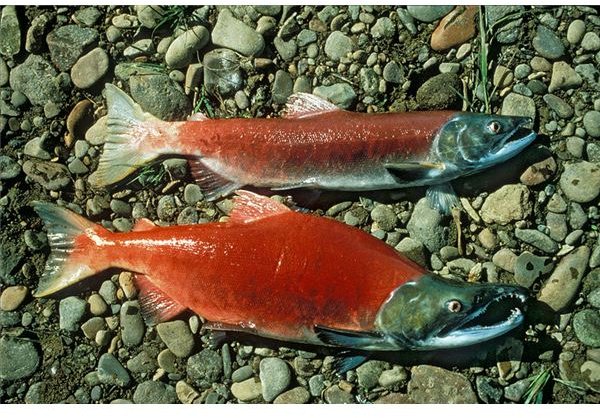
Wild salmon run in cold northern seas and offer omega-3 fatty acids, which have beneficial properties. Wild salmon have no added chemicals, antibiotics, preservatives, growth hormones, or GMOs. According to Alaska’s Department of Health and Social Services, wild fish with lower levels of mercury include wild Alaska salmon, black cod, herring, and sardines.
Alaskan salmon run in the purest waters and have the cleanest runs on the planet. Alaskas wild salmon’s levels of mercury are low, but pregnant women should research consumption guidelines. Although wild Alaska salmon may be more expensive than farm-raised salmon, the health benefits of wild Alaskan salmon far outweigh the cost.
Farm-Raised Salmon
Is farm-raised salmon safe to eat? Maybe, maybe not. Aquaculture is the practice of raising fish in pens for human consumption. With problems that resemble those associated with factory farming, fish farms present multiple health dangers. While some people think that fish farming helps to preserve fish that are threatened or endangered, people do not know that fish farming does not protect wild fish and is its own threat to the environment.
Farmed fish are fed growth hormones, antibiotics amd other drugs to control diseases that result from fish being too close together in fish pens. These diseases spread to wild fish beyond the pens and wipe out wild fish populations. Farm-raised salmon does not taste as good or look as healthy as wild salmon. When shopping for salmon, avoid salmon sold as “Atlantic Salmon,” which are farm-raised and full of toxins.
Conclusion: Alaskan Salmon is Healthier and Safer
Savings in dollars does not justify the problems associated with raising salmon or any fish in pens. Consider adding other wild fatty fish to the diet. Dr. Weil writes that Alaskan salmon, herring, sardines, anchovies, mackerel, mahi mahi, and Alaskan halibut are abundant in the seas and are well managed. Buying these fish will preserve their numbers. WIth guidance about servings per week and mercury levels, it s possible to enjoy fresh fish and reap the considerable benefits of omega-3 fatty acids. If safe fish is not an option, consider taking distilled omega-3 supplements.
Resources
Mother Earth News: Fish and Your Health
Mother Earth News: Eat Fish for Omega-3 Health Benefits
Dr. Andrew Weil: How Dangerous is Farmed Salmon?
Alaska Fish Facts and Consumption Guidelines
Images:
- https://commons.wikimedia.org/wiki/File:Salmon.JPG
- https://commons.wikimedia.org/wiki/File:Chinook _salmon,_Oncorhynchus_tshawytscha.jpg
- https://commons.wikimedia.org/wiki/File:Salmon _at_Hanford_Site.jpg
- https://commons.wikimedia.org/wiki/File:Oncorhynchus _nerka_2.jpg