Government authorities are fed up with the chewing gum litter problem caused by gums basically made from tire materials. The government spends millions of dollars to fund chewing gum removal projects & the best way to end it is for the revival of the organic chewing gum made from natural chicle sap.
The History of Organic Chewing Gum
In 1870, the world’s first organic chewing gum factory was built by American inventor Thomas Adams in New York; Adams discovered the gum base ‘chicle" from a Mexican General who was exiled in New York. Instead of finding use for the substance as a substitute for rubber to make toys and rain boots, Adams gave up the idea and went into developing the substance in the same way it was introduced to him by the Mexican general, as chicle chewing gum.
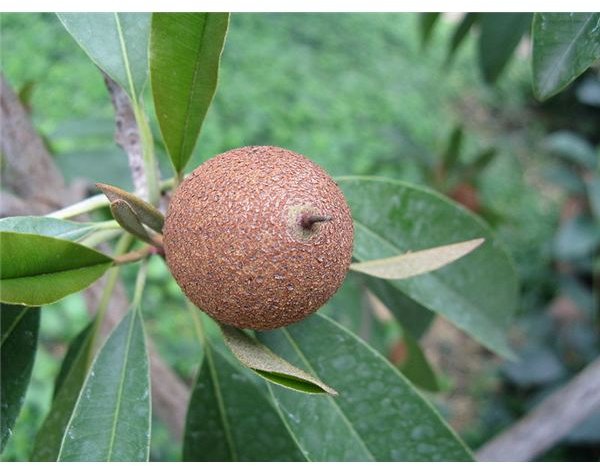
Back then there was no chewing gum litter problem. This was because the sap they chewed was all natural and a hundred percent biodegradable. People were chewing gums made from the all natural gum base “chicle”, which came directly from the sap of spruce or sapodilla trees.
The Problems with Today’s Chewing Gums
The demand for chewing gum became so high in almost every part of the world, that manufacturers had to find artificial substitutes in order to supply the people’s clamor for gums . Everybody seemed to be chewing gum, but a sapodilla or spruce tree can only be tapped once, it will take another three or four years before the chicle gum base can be extracted.
An artificial gum base solution was finally formulated, and manufacturers didn’t find it necessary to disclose the ingredients that were used to produce this artificial gum base. This was vaguely referred to in chewing gum wrappers as “gum base”. The curiosity on what this gum base is made of, stemmed from the fact that chewing gums have become a global litter problem and that they are hard to remove. Singapore had deemed it fit to ban chewing gum as early as 1992 as chewing gum litter problem had become a nuisance.
It was established that the mysterious gum base is made from styrene-butadiene rubber, polyethylene and polyvinyl acetate; with minimal amount of natural latex ingredient. These ingredients are basically the same compounds used in producing rubber tires and plastic bags. Hence further investigation of all factors surrounding chewing gum and how it affects the environment revealed the following:
-
Based on 2005 statistics 650,000 metric tons of chewing gum were produced during each year and they all ended- up stuck somewhere in our environment. Another 5 years of chewing gum produced, will amount to 1 million metric tons of chewing gum wastes. Unless, chewing gum litter is cleaned off, scientists believe that gum chewed by persons with coughs , sneezes, dirty hands, body fluids of persons with bacterial infections, are stuck carelessly around still carrying live bacteria. Hence the people in said areas especially in crowded places can catch microorganisms while airborne .
-
Now this was quite alarming since the incidences of airborne infectious diseases seem to be occurring globally and frequently. Government authorities in the U.S. and U.K. implemented more vigorous methods of chewing gum removal. However, an analysis of the cost it takes to clean up each stick of chewing gum is estimated at $1.50-$3.00. Hence if there are about 374 trillion sticks of chewing gum manufactured each year, the cost it would take to clean up even a third of what has been produced is obviously tremendous.
Advertisement -
Chewing gum manufacturers have been asked to come up with non-sticky or biodegradable chewing gums. In addition, there is a proposal for these manufacturers to take part in cleaning up the mess they are partly responsible for.
The Revival of the Chicle Chewing Gum
A small cooperative located near the Mexican rainforest has been reviving the industry as well as the skills needed in order to produce an easy-to-remove certified organic chewing gum. Workers known as “chicleros” are being trained to preserve the rainforests and they are at the same time tasked to get the sap from the trees. Similar to how chewing gum was before, the renewed chewing gum is said to breakdown and dissipate immediately after chewing.
Accordingly, the cooperative is made up of small groups of producers that have been supplying organic chewing gum. mostly to Japan. These small production units found it best to form themselves into a cooperative in order to meet another world demand for chicle.