Natural Pesticides and Homemade Pesticides for Organic Gardening
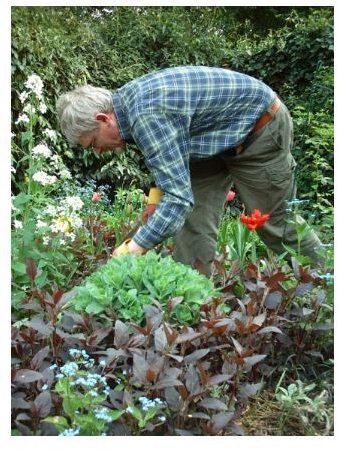
Organic is Better
Organic gardening is healthier for gardeners, consumers, and the environment. Chemicals from farm and lawn runoff in Florida have been linked to red tide, which not only kills sealife, but causes respiratory problems in humans and animals. Lawn and garden chemicals leach into our groundwater, and are still present in municipal water supplies, even after processing. It is unclear what the long term effects of these chemicals is on human health, but in recent years many disorders such as infertility, ADHD, Bipolar Disorder, and Autism have become more and more prevalent in industrialized societies where chemicals are most used.
Cautions When Using Natural Pesticides
Organic gardeners must even be careful what natural pesticides they use. For example Nicotine cannot be used on edible crops, due to the fact that it has the same toxicity symptoms as organophosphate insecticides. Nicotine poisoning symptoms include vomiting, nausea, headaches, difficulty breathing, stomach pains, and seizures. Source
There are natural pesticides recommended for organic gardening that have been proven to be safe on both edible and ornamental crops. There are also pesticide mixtures that you can make right in your kitchen that work well on both insects and fungal diseases.
Safe Natural Pesticides for Edible Crops - Neem Oil
Neem Oil is derived from the Neem tree (Azadirachta indica), which is a sacred tree in India. An oil is pressed from the seeds, and has been used for centuries in organic gardening and as an Ayurvedic medicine. Neem oil is a natural pesticide considered so safe for spraying on edible crops that the EPA (U.S. Environment Protection Agency) exempted it from the typical requirements for maximum pesticide residues on agricultural products.
There have been studies, however, that show that it is not safe for pregnant women or women trying to conceive to ingest neem oil. Therefore, if you are in one of those two groups, it would be best to have someone else spray your garden, and use gloves when handling neem oil treated crops. Make sure to wash the crops well before preparation. Source
Safe Natural Pesticides for Edible Crops - Spinosad
Spinosadtm (spinosyn A and spinosyn D) are natural pesticides that are derived from a soil bacterium, Saccharopolyspora spinosa. It was reportedly originally found near an abandoned rum distillery in the Caribbean, and has not been found in nature since that time.
Spinosadtm can be used to control a variety of insect pests, including leaf beetles, fire ants, fruit flies, thrips, leafminers, sawflies, and spider mites, while causing no harm to most beneficial insects such as ladybugs, pirate bugs, and green lacewings, or to predatory mites.
Studies have shown a slight toxicity to birds, and moderate toxicity to fish and aquatic invertebrates, so it is not for use in our aviaries or water gardens.
There are several brands of Spinosadtm available for home gardeners.
Recipe for Homemade Pesticides for Organic Gardens
You can buy all sorts of organic oils and soap sprays, most at a reasonably high cost. Years ago, I was given this formulation by Cathy Crowley of Crowley’s Nursery outside of Sarasota, FL for a homemade natural insecticide and have used it ever since. With the exception of using Spinosadtm on my fire ants, I’ve never had to use anything else.
Ingredients
Mix together:
-
1/3 cup of Murphy’s Oil Soap (use the name brand, because the generics may have harsh soaps that can burn your plants)
-
1 tablespoon baking soda
-
1 gallon of water.
Procedure
Spray this mixture only in the early morning or in the evening, when it’s cooler. If it’s sprayed in the heat of the day, it will burn the plants.
This insecticide is effective against aphids, spider mites, leaf miners, scale, and some chewing insects. It is also effective against fungal diseases such as rust, black spot on roses, and powdery mildew.
Other Natural Insecticides
Fungus cannot live in the alkaline environment created by the baking soda. The oil and soap smothers most insects, or interferes with their breathing so that they die.
Milk is also used for powdery mildew, botrytis, and black spot. Whole 4% milk is mixed with water and sprayed on plants. A weak solution is 1:9 parts milk to water, while a strong solution is 1:1. A stronger solution may work for a week, but a weaker solution may only work for 3 days. You will have to experiment to see what works bets for you.
While milk controls black spot and rust on roses, and keeps it from spreading to other plants, it is not a cure.
Organic gardening is the wave of the future. Neem Oil and Spinosadtm are only the beginning. There is research being done every day to find more and better natural pesticides for organic gardening. In the meantime, I hope that one of the suggestions above will suit your needs.