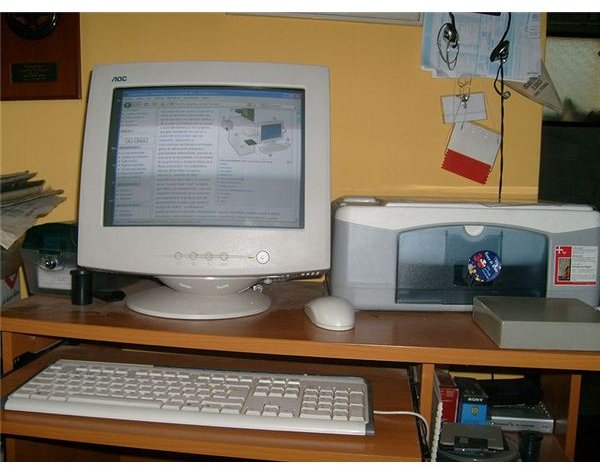
You can either leave the computer on all night or turn it off. This article explains what happens if you always keep your computer on so that you have all the facts to decide on the better, greener way to save energy and the life of your computer.
Why Do Some People Keep Their Computers On?
Some people leave the computer on even if they are not using it. There is a myth surrounding computers that leaving them ‘on’ saves on energy and increases hardware life.
The myth started in the days of older hardware that actually used to wear out by regular usage of the power button. That was the time of the monochrome cathode ray tube based monitors. They did consume plenty of energy and pulled up a heavy amount of electricity when started. The CPU, however, was highly susceptible to heat. People were advised by hardware experts to use cooling devices that further consumed energy. So in fact, they were not saving energy. The energy they saved by keeping those x86 computers on throughout the day and night, was consumed by the usage of external cooling devices.
Coming back to the present, it is not necessary to leave the computer on all night. The technology is designed so that there is not much expansion and contraction of internal hardware when it heats up during usage or when it cools down when the computer is off. The solders won’t break as there is negligible expansion and contraction of the devices. The heat produced is much less when compared to the early computers and hence, there is no risk in turning the computer ‘on’ and ‘off’ regularly.
Note: With current technology, power consumption when turning on the computer is far less than the power saved by keeping the computer in sleep or hibernate mode.
What Happens When You Keep The Computer On Constantly?
A computer which is turned off is always better than the one which is left on overnight. Check out the following information where I try to make my point based on recommendations from Energy Efficiency and Renewable Energy people (EERE).
Power Consumption
Though people might say they save energy by simply putting the computer in sleep or in hibernate mode, the computer still consumes energy. Talking about modern computers, a PC consumes around 24% of energy in ‘sleep’ when compared to the energy consumed when in use. A laptop consumes around 3% of energy in sleep mode when compared to the average power consumed during use. These statistics are based on tests on my PC and laptop. They may vary in your cases. The consumption also depends the age of the PC or laptop.
Important: Talking of power consumption , even a computer that is turned off consumes energy. In fact, any electronic device that is turned off yet connected to the power strip consumes a certain amount of energy. If you wish to save energy, turn off the power strip so that your computer does not consume any energy.
Dust Accumulation
An active electronic device accumulates more dust than a device that is turned off. The reason is the magnetic field created by the usage of that device. Same is the case with computers. If your computer is ‘on’ 24/7, it tends to gather more dust than a computer that is turned off every night.
Memory Clogging
If you keep your computer on, it does not get a chance to refresh the entire memory. Some applications do not remove data from memory even after you close them. When you turn off the computer, all the data in electronic memory is removed and the computer is fresh when you turn it on in the morning.
Wear and Tear
Against the popular myth that the computer’s life is prolonged when always kept on, the life actually decreases in the case. The chances of wear and tear increase when you keep the computer running all night. The CPU keeps on working by sending in interrupts to detect any activity. The computer’s fan keeps on running. This will cost more in the long run than what you save by keeping the computer on.
Power Surges
If you are awake and notice power fluctuations, you can simply disconnect the computer from the mains or turn off the power strip. You don’t get to know about it when you are sleeping without turning the computer ‘off’.
Important: In fact, even a computer that is turned off is not protected from the power surges. To keep the computer protected and to cut down energy costs, it is recommended that you use a surge protector. You can simply turn off the power strip when you know you won’t be using the computer for more than two hours (recommended power settings from EERE).
This rounds up the discussion on whether to leave the computer on or turn it off when not using them. The above arguments drive the point that turning off your computer will not only save more energy but also increase its life.
References
US Dept of Energy, https://www.energysavers.gov/your_home/appliances/index.cfm/mytopic=10070
Image from Wikimedia Commons by Penarc